

Picture this: you step into your backyard for the first time, but it’s not just grass and a few bushes anymore. Instead, your vision has jumped off the paper and onto the ground, every path and curve exactly in place, the sun glinting just right on your pool’s edge, and the new pergola inviting everyone to linger. This transformation is thanks to the careful artistry and practical power of 3D landscape design. But just how detailed can these virtual layouts get, and what should you really expect when you invest in a visual blueprint for your next outdoor project?
Let’s unpack the pieces—slowly, visually, as if we were walking through Urban Oasis’s own portfolio of landscapes turned living realities. Throughout this guide, we’ll reveal not only what those photo-real concepts look like, but what’s included, how they’re created, and why they feel so lifelike. In practice, 3D landscaping details aren’t just another digital convenience. They are the difference between “pretty close” and “exactly what you dreamed of.”
Bring ideas to life before a single stone is laid.
Understanding 3D landscape design—what it really means
3D design for landscaping isn’t simply a digital upgrade. It’s a full sensory preview of your outdoor space, allowing you to see, rotate, and even ‘walk through’ a complete visual interpretation before any machinery enters your yard. Modern 3D landscape planning, like what Urban Oasis creates, builds on two-simple but game-changing—ideas:
- Visualization gives you a lifelike tour of your future backyard, side garden, or commercial courtyard, often down to the flowering species and light fixtures.
- Interactivity lets you and your designer adjust, tweak, or swap features on the spot, which is more engaging and effective than old paper sketches.
According to a study published in the National Center for Biotechnology Information, moving to 3D visualization improves user satisfaction by more than 30% compared to traditional approaches. That’s a statistic with roots in real world reactions—after all, customers want confidence before they commit to moving earth and building dreams.
If you want a technical breakdown, think of it like this:
- 2D design: A bird’s-eye schematic, showing boundaries, plant beds, hardscape lines, maybe some icons or green shading.
- 3D design: A digital, interactive model that can be explored from any angle, with depth, color, shadows, textures, and lifelike context.
That’s what sets 3D layout landscape solutions apart—not just shape, but substance. It becomes “your” backyard, before it’s even built.
How a 3D landscape project begins
The journey from blank canvas to immersive design starts well before a computer mouse nudges any tree into place. At Urban Oasis, here’s how you might expect it to unfold:
- Initial consultation: What do you imagine? How will you use the space? Is it for quiet afternoons or big summer gatherings?
- Site analysis: The actual measurements, sunlight angles, utilities, and even wind patterns are gathered.
- Concept sketching: Basic layouts in 2D. Zones are mapped. Paths, patios, pools, lawns and all functional elements are considered.
- Developing the 3D model: This is where the magic happens and the flat world pops into dimension. You get adjustable visuals, virtual tours, and the power to suggest changes.
- Revision and approval: Feedback leads to tweaks, which you see instantly in the model.
- Construction drawings: Once approved, technical plans translate the vision into numbered, physical steps for builders.
This sequence isn’t unique, but it is why streamlined processes like Urban Oasis’s deliver on both creativity and details. Preparation matters. So does collaboration. And, of course, technology: now your dream patio won’t bump into a forgotten utility line or get baked mid-July because the sun angle wasn’t accounted for in 3D.
Inside the details—what’s included in a 3D landscape layout
Now, let’s get down to the details—the true selling point of 3D design. When someone asks, “What’s included in landscape design at the 3D level?” the answer should be almost everything you could imagine, and a few things you might overlook.
- Topography: Slopes, hills, visible grading, and minor dips in the land. Every bump counts.
- Hardscape elements: Decks, pathways, patios, retaining walls, steps, outdoor kitchens, fire features, and even water elements like pools or fountains.
- Softscape features: All plantings, including trees, shrubs, flower beds, groundcover, and lawns, perfectly placed, sized, and even seasonally represented.
- Structures: Pergolas, gazebos, pavilions, and privacy screens, scaled precisely.
- Outdoor lighting: Placement of all fixtures, and, sometimes, how the landscape looks at different times of day or night.
- Furniture and decor: Outdoor seating, firepits, planters, and sometimes temporary items, for a truly lived-in look.
- Environmental features: Irrigation lines, drainage, and even suggestions for sustainable planting schemes based on soil and sunlight.
- Material and color options: Swap wood tones for stone or change paving patterns instantly to see which suits your taste.
You may be surprised at how far designers can zoom in: bark texture on a favorite maple, the dappled shade beneath a tree, or reflections in the pool water. Modern design platforms (as explored in the research on 3D dynamic landscape simulations utilizing artificial intelligence) allow for fine-tuned environmental effects and material customization.
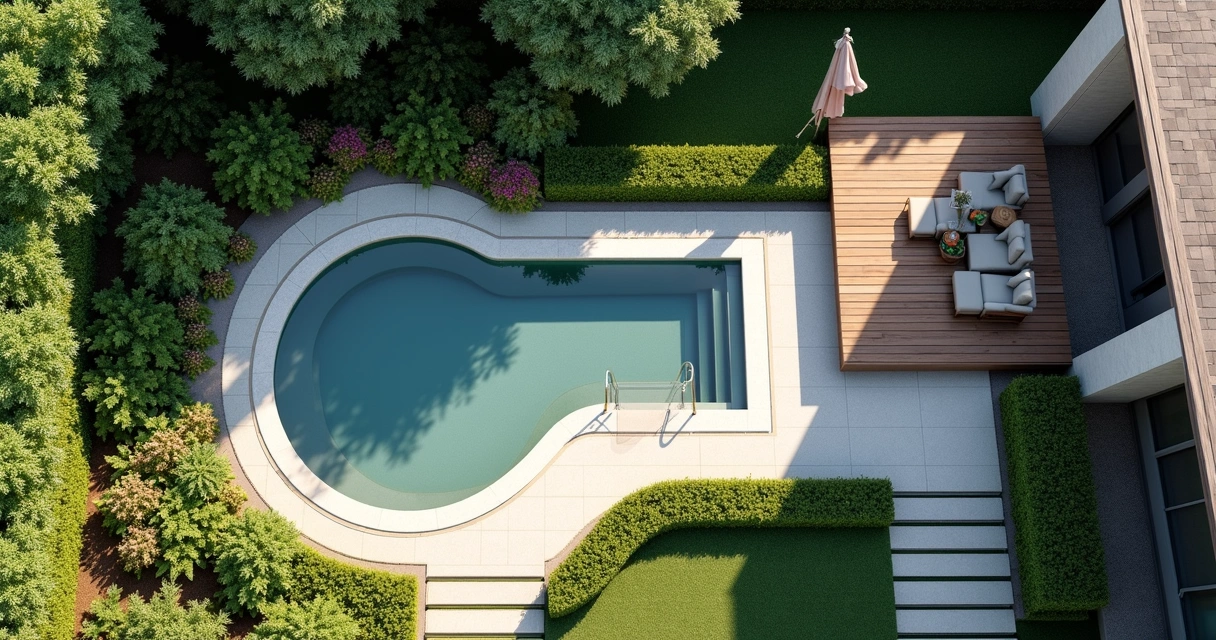
A closer look at the level of detail in 3D layouts
Beyond broad strokes, 3D landscape artists are all about precision. You’ll find:
- Accurate scaling:
A tree placed in the model is sized by age and species—so a new sapling won’t be confused with a 30-foot oak.
- Textural realism: Materials are rendered so you can “see” the grain of the decking, the sheen of pavers after rain, or the softness of a mossy border. This realism is stressed in studies on 3D spatial data visualization in landscape design, which show that accurate textures help users form stronger connections with proposed spaces.
- Sun and shadow simulation: Designers can shift the sun’s position by season or time of day, letting you check for afternoon glare or cool shade—before you build.
- Vegetation stages: Some models depict how planting beds evolve over months or years, so you see both instant impact and long-term growth.
- Architectural features: Roofs, railings, windows, and doors are shown for context, making it easier to relate the outside to the existing home or building.
- Site-specific elements: Fences, mailboxes, utilities, and drainage are visible so nothing gets missed later.
And for project management, these details translate to precise, actionable steps for crews—eliminating reworks, confusion, and surprise costs.
Realism versus artistic touch in 3D landscape designs
There’s a delicate balance here. While realism helps people trust the process and picture themselves enjoying the result, a little artistic flair adds “wow factor.” It’s common for designers to:
- Place virtual families, kids, or pets enjoying the space
- Add seasonal effects: leaves turning, flowers blooming, or nighttime ambiance
- Show “before and after” transitions for dramatic effect
- Highlight features with moving water, flickering fire, or shifting shadows
These touches aren’t just for fun—they build emotional connections. Clients can really feel the space’s potential. And as the user satisfaction study in landscape visualization points out, interactivity and convincing visuals push outcomes from ‘good’ to ‘delightful.’
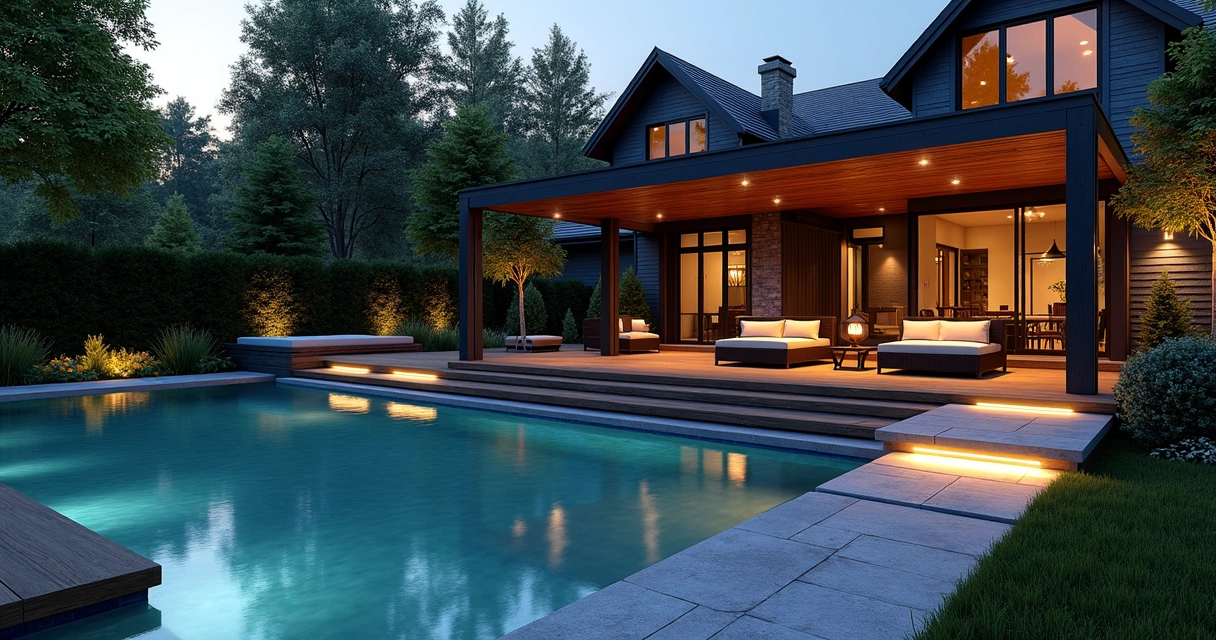
How customization works—it’s your space, so own it
Perhaps the biggest advantage of 3D landscaping is customization. Want to see how your yard could look with a kitchen instead of a garden bed? Or maybe you’re unsure if an L-shaped patio works better than a rounded terrace. No problem. With the digital mockup, you can:
- Swap plants, trees, and flower color schemes
- Change outdoor furniture arrangements
- Try different materials, like composite decking vs. natural stone
- Enlarge or shrink patios and walkways
- Preview how lighting transforms the space after dark
- Test water features in different spots—pond or fountain, front or back
- Experiment with kids’ play spaces or pet runs in various corners
This isn’t just a bonus; it’s a core part of the process. By making adjustments in real-time, people get a sense of agency and satisfaction that’s empowering. It also saves money and headaches down the line. You don’t need to visualize everything in your mind—you see the result instantly.
You’ll find more on how 2D and 3D designs enable customization for outdoor living layouts at Urban Oasis’s resource page on design technology.
How 3D designs meet technical requirements for building
It’s easy to fall in love with a beautiful picture, but building that picture requires technical rigor. What makes 3D layouts so valuable is the way they integrate with construction documents and actually help make projects possible. Here’s why:
- Accurate measurements: Plans can be exported to scale, for use by contractors and engineers.
- Material lists: Every square meter of stone, type of plant, and cubic yard of mulch is counted for budgeting and procurement.
- Topographic data: Elevation models from programs like the U.S. Geological Survey’s 3D Elevation Program ensure landscaping won’t be ruined by water runoff or erosion down the road.
- Regulatory compliance: Local building codes or HOA rules can be incorporated before construction starts—avoiding legal headaches.
Recent studies on 3D landscape indices now provide quantitative metrics for density, volume, and spatial analysis, which means precision landscaping isn’t just art, it’s actionable data.
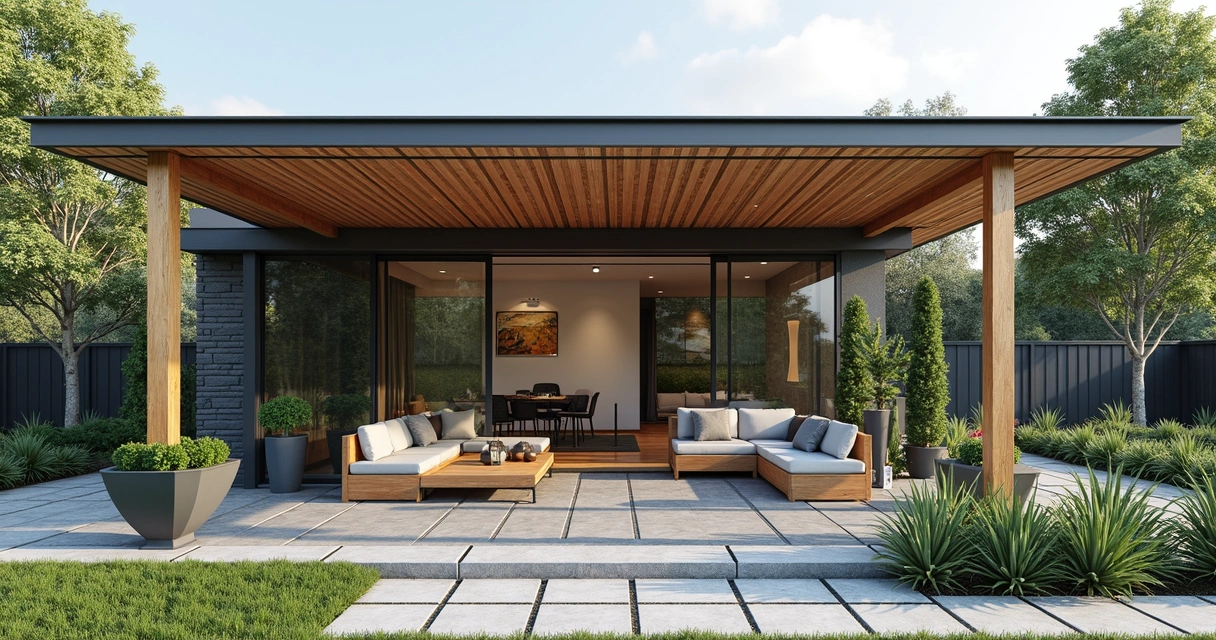
Why user satisfaction—and peace of mind—are higher in 3D design
Let’s step back. Why do people walk away thrilled after seeing their vision in 3D? Studies repeatedly show (like this one on 3D dynamic landscape design) that interactive, virtual mockups increase understanding and lower design anxiety. You can “see” before you spend—no guesswork, less risk.
This is true for both residential and commercial projects. A business might preview crowd flow in a courtyard retreat. A homeowner might count how many friends fit comfortably on a patio for summer gatherings. Either way, the clarity of 3D details removes the fog of uncertainty and makes decision making easier.
Using 3D tools to communicate throughout the process
One thing often overlooked is how 3D landscape design improves communication—between customers, designers, contractors, and everyone else involved.
- Instant feedback makes for smoother collaboration
- Shared visual references cut down on misunderstandings
- Changes can be made early, not late, saving time and cost
- Everyone can “tour” the design, regardless of technical background
- Clients often report feeling more confident about their investment
The process is rarely totally linear. Ideas sometimes circle back or shift entirely based on seeing them “in the wild.” A shaded extension maybe gets swapped for a sunny garden. Or the original pool moves a few feet left to catch more afternoon light. Being able to respond, visually, and on the spot, smooths it all out.
How designers at urban oasis use 3D landscape modeling
Teams like Urban Oasis are committed to using these details not just as pretty sales tools, but as problem-solving instruments. Each project moves through:
- Careful listening to client needs for functionality and style
- Technical mapping of the property, considering things like drainage and exposure
- Highly detailed 3D modeling, with back-and-forth input at every stage
- Collaborative review to finalize every choice—plants, structures, furnishings, lighting, and more
- Construction following precise drawings and technical specifications
By focusing on sustainable options and adaptability, they deliver spaces that are unique to every family, business, or vision. You can see how this plays out in action by browsing through their outdoor project gallery.
Examples of details often included in modern 3D layouts
- Exact window, door, and house siding materials for contextual blending
- Existing and new plant heights, including mature and juvenile renderings
- Furniture style and fabric previews
- Solar studies to show the landscape at different times of day or year
- Audio simulation placements—speaker locations, ambient water sound pathways
- Lighting at night, including path lights, pool lighting, uplights on trees, subtle wall washes
- Realistic water flow in streams, fountains, and rainwater features
- Color-coded irrigation zones and drip lines
- Dynamic feature previews—firepit in use, barbecue grill with smoke, umbrellas for shade
- Eco-friendly and native planting schemes for sustainable maintenance
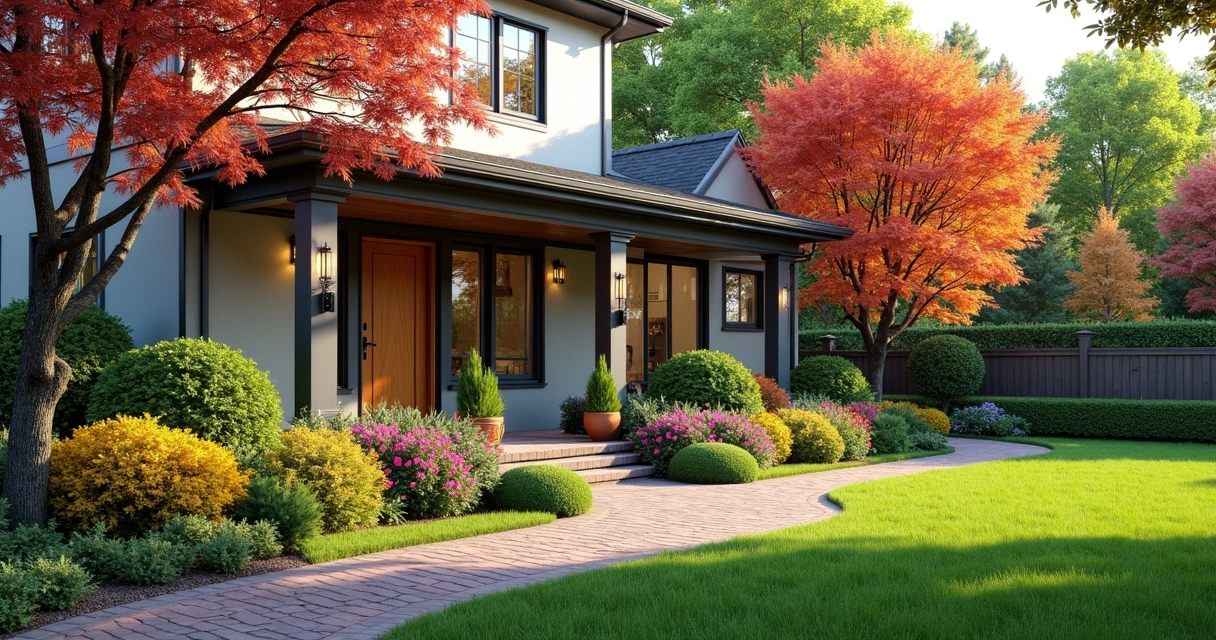
The difference 3D makes—real-world impacts
If you were to build your outdoor retreat based only on a flat sketch, you might face some hard surprises later. Steps too steep, trees too close, shadows in the wrong place, or that perfect spot for a hammock actually crowded by a wall. With a 3D landscape plan, those issues surface long before you break ground.
This means fewer costly changes, happier clients, and more resilient, beautiful spaces. Reviewed research consistently supports this: even modest 3D additions can lift user satisfaction by 30% or more.
To read more on design techniques that make these results possible, take a look at this landscaping guide, or explore broader design ideas in their landscaping blog section.
What does it feel like to use a 3D landscape plan?
It’s a preview. But it’s also peace of mind.
Many users share a mix of excitement and surprise when touring digital landscapes for the first time. There’s a sense of anticipation—”I never thought my backyard could look like that.” There might also be a sense of security: knowing what you see is truly what you’ll get.
Some clients revel in making small discoveries: a hidden bench under a shade tree, the glow around the pool at sunset, or a winding path that just feels “right.” Others appreciate how decisions about investment become simpler—materials, furniture, and even garden size are much easier to justify when they’re experienced visually ahead of time.
No digital plan can perfectly simulate every flower’s scent, or the feel of sun-warmed deck boards underfoot. But the gap is shrinking—every year, new software and design standards bring these models closer to reality, as highlighted in research on 3D spatial data visualization processes for landscape design.
Future trends in 3D landscape design
The boundary between virtual and real is thinning as emerging technologies add new layers:
- AI-driven design adaptation: Artificial intelligence now suggests optimal plant placements, predicts growth patterns, and even simulates long-term maintenance needs (see this study on AI in 3D landscape simulations).
- Integration with real-time sensors: Soil, light, or moisture readings can be fed into mockups to test scenarios.
- Augmented and virtual reality walkthroughs: Full-immersion previews let you “walk” a space at life size—sometimes before the designer has finished their coffee.
- Better measurement for sustainability: Enhanced modeling of stormwater runoff, native planting, and eco-friendly materials.
These changes are making high-detail 3D planning more affordable and accessible, not only to high-end commercial properties, but to anyone hoping to see their ideal outdoor space come to life.
Conclusion—what to expect, and why it matters
So when people ask, “How detailed is a 3D landscape design?” the answer is simple: As detailed as you want it. The best designers, like those at Urban Oasis, work with you to create a plan that feels personal and precise. Every pathway, terrace, plant, and pool is mapped out in advance. The position of every light, tree, and even your favorite lounge chair is chosen with care.
You don’t have to gamble on drawings and promises. You can know, with certainty, that what you see is what you’ll get—down to the finest detail. Whether you dream of a cozy urban garden, a family haven, or an entertainment-ready oasis, the 3D landscape design process is your ticket to confidence and creativity.
If you’re ready to see what’s possible for your own outdoor space—and want to experience these 3D landscaping details firsthand—take the first step. Fill out the form below and connect with Urban Oasis. Let’s bring your vision to life, one detail at a time.
Frequently Asked Questions
What is included in 3D landscape designs?
3D landscape designs include accurate property mapping, hardscape elements like decks and patios, softscape details such as trees, shrubs, lawns and seasonal plantings, realistic textures, outdoor lighting placement, furniture and decor, and sometimes day-night simulations. Many also feature material options, drainage and irrigation plans, and realistic previews of structures like pergolas and pools. Urban Oasis includes all these layers, ensuring the design reflects both function and style.
How detailed are 3D landscaping plans?
Modern 3D landscaping plans are extremely detailed. They show true-to-scale objects, correct plant maturation, texture on surfaces, sun and shadow at different times of day, and even seasonal changes. Realistic details extend to lighting simulations, water reflections, and specific furniture arrangements. As research demonstrates, these models can replicate natural contexts so well that satisfaction and user confidence are much higher.
Is 3D landscape design worth it?
Yes, for most people and projects, investing in 3D landscape design pays off. The ability to visualize, customize, and test ideas before breaking ground minimizes risk, reduces costly changes, and increases confidence. Studies have found that user satisfaction increases significantly when projects are previewed in 3D. With firms like Urban Oasis, you’ll also enjoy personal collaboration and peace of mind.
How much does a 3D landscape layout cost?
Pricing for 3D landscape layouts depends on project complexity, size, and the number of revisions. Basic models for simple gardens may be a few hundred dollars, while extensive multi-phase designs with complex environmental simulations can cost more. However, the investment can easily balance out by saving on mistakes, surprises, and making sure every detail fits your budget before work begins. A consultation with Urban Oasis will offer clear cost estimates tailored to your project.
Can I customize my 3D landscape design?
Absolutely. Customization is at the heart of 3D landscape design. You can experiment with different plantings, materials, color schemes, furniture arrangements, lighting styles, and more—with changes reflected instantly in the digital model. Urban Oasis designers work closely with you through every stage, ensuring your outdoor space matches your style, needs, and dreams.