
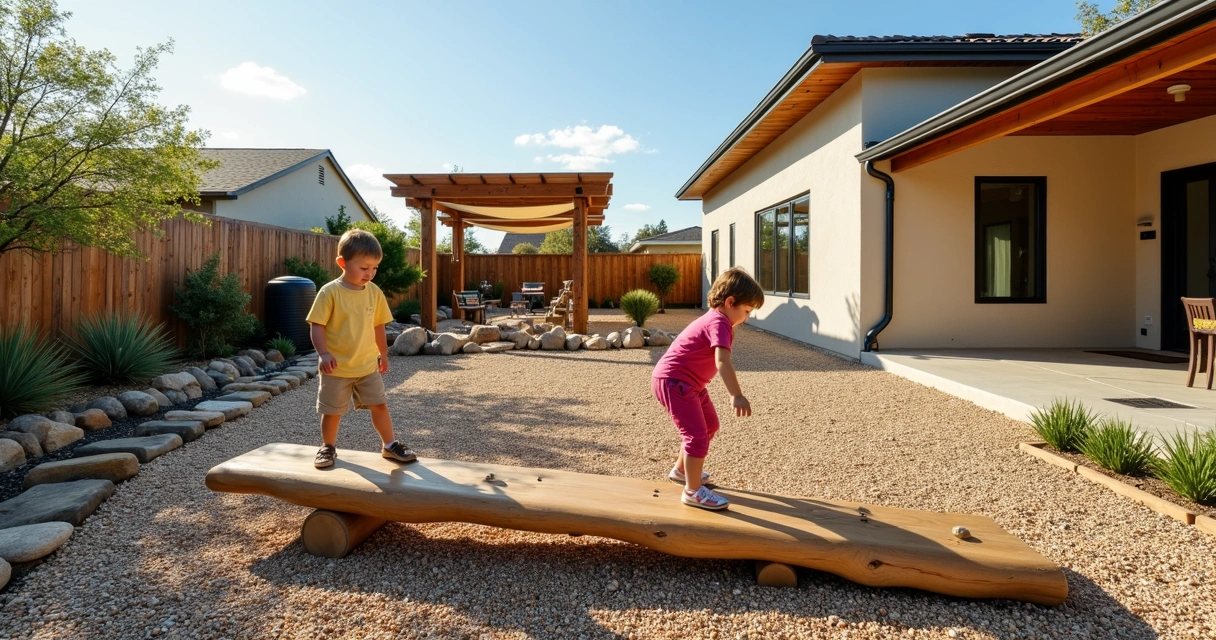
As someone who has watched Austin evolve over the years, I’ve noticed the city’s unique relationship with water. Our climate is sun-drenched and our summers are fierce, peppered with both lush green springs and parched late summers. It’s no surprise that local families are always searching for ways to create fun, memorable outdoor experiences for their children without sending the water meter spinning. Over the years, I’ve learned that with some creativity and the right approach, it’s possible to design family-friendly play spaces that are as gentle on the environment as they are joyful for kids.
Save water, spark imagination.
In this guide, I’ll walk you through my perspective on building water-saving play spaces that suit both Austin’s climate and our community spirit. Along the way, I’ll pull inspiration from local guidelines, research-driven best practices, and what has worked for families just like yours. Whether you’ve got a sprawling backyard or a small patio, there’s something here for everyone.
I’ll also share how Urban Oasis brings thoughtful, sustainable outdoor living to life, and give you resources to ensure your play space is as beautiful as it is responsible. Ready to create a space where laughter, shade, and sustainability thrive side-by-side? Let’s get started.
Why focus on water-saving? Austin’s climate and conservation goals
Living in Austin means valuing every drop—especially when creating outdoor spaces where children play and learn. Here in Central Texas, we experience regular cycles of drought, extreme heat, and unpredictable rainfall. The city has, therefore, adopted sensible water rationing and sustainability practices.
As of September 2025, automatic irrigation systems in Austin are limited to just one day per week to support water conservation efforts. These measures are not simply about compliance; they focus our attention on smarter landscaping and play space choices that minimize water usage without compromising on fun or aesthetics. In my experience, families appreciate solutions that go beyond just “getting by”—they want spaces that express their style, enrich their lives, and foster sustainability.
According to city data, Austin’s per capita water usage has dropped from over 160 gallons a day in 2011 to around 131 gallons a day in 2023 (Austin water conservation trends). That’s nearly a 20% decrease, achieved by collective action and innovative outdoor designs.
Urban Oasis, a leader in outdoor transformations, is deeply aligned with these goals—focusing on blending family needs with both water-saving and stunning design. From the first sketch to the finishing touch, we believe in bringing sustainability into every step.
How much water do outdoor play spaces really use?
I’ve found that many people underestimate just how much water a traditional play yard or backyard can consume. Features like lawns, splash pads, and even sandboxes with vegetation can push up your monthly usage—sometimes by thousands of gallons.
Let’s consider the numbers. If you water a typical 1,000 square foot lawn using standard sprinklers, you could end up using 400-700 gallons per week in summer. Now, multiply that over a month or account for larger areas, and you realize why outdoor water use is such a focus in Austin’s conservation efforts (saving water by following Austin’s watering guidelines).
The reward for water-saving solutions isn’t just a smaller bill—it’s knowing that your kids can play under the Texas sun while you’re keeping your corner of the city greener.
Principles of water-saving play space design
When I approach any family outdoor project, I always start with these core principles:
- Prioritize native and drought-tolerant plants
- Minimize high-water-use turf
- Incorporate permeable surfaces
- Maximize shade naturally
- Use smart irrigation and involve kids in water-wise habits
Each of these concepts works together to create a play space that is both kid-attractive and water-smart. Let’s look more closely at how each plays out in an Austin context.
Choosing drought-tolerant landscaping for play zones
Kids love rolling in the grass, hiding behind bushes, and watching butterflies flit from flower to flower. But in Austin, a lawn-heavy landscape is not the most practical choice.
Instead, I focus on blending drought-tolerant native plants with creative hardscaping and low-water turf alternatives. These swaps make a remarkable difference—not only slashing water usage, but also drawing in birds, pollinators, and a whole new layer of natural discovery for children.
Some personal favorites for local play areas include:
- Buffalograss or Zoysia for low-water grass patches
- Texas Sage, Blackfoot Daisy, and Bluebonnet for color
- Soft mulched paths for safe foot traffic
- Clusters of native shrubs as playful hiding spots
Of course, plant choice isn’t just about survival—it’s about creating spaces that feel magical. A ring of native wildflowers around a small playhouse, for example, can spark hours of imaginative fun. For more ideas on integrating these types of plants, explore the low-water landscaping ideas for Texas yards from Urban Oasis.
Artificial turf and low-water ground covers
One of the questions I get most often is, “What can I use instead of thirsty sod?” Artificial turf is a realistic alternative when you want the effect of lush grass without constant irrigation.
Modern quality turf is soft, safe for little feet, and can be installed over permeable sub-bases to help with rainwater absorption. You’ll never need to break the watering rules again. Urban Oasis offers artificial turf solutions that complement both play and relaxation areas.
Other smart ground cover options I have seen work well:
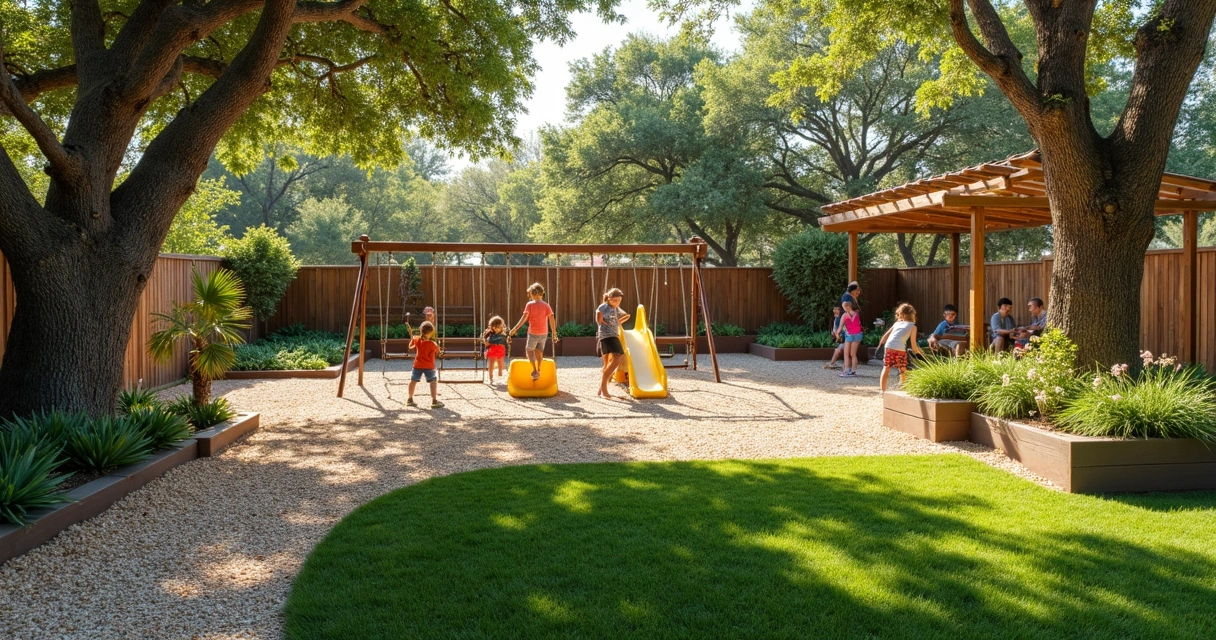
- Decomposed granite for pathways and play patios
- Rubber mulch, made from recycled tires, for soft play surfaces
- Wood mulch around trees and shrubs to hold soil moisture
- Clover or flowering ground covers that need little water
When installed thoughtfully, these materials add color, safety, and visual interest while keeping your water bill low.
Designing play features for low water use
A water-saving play space doesn’t mean dull or uninspired. In fact, some of the most inventive designs I’ve seen come from thinking beyond the default grass-and-sprinkler formula.
Swapping out water-hungry play elements
Traditional splash pads, slip-and-slides, or even plastic swimming pools can use a surprising amount of water. If you still want some water play, I suggest designs that recycle and reuse the water, or consider options that deliver similar fun but use little to no additional water.
- Shaded sand zones with hidden treasures or “dinosaur dig” themes
- Log and boulder pathways for climbing and balancing
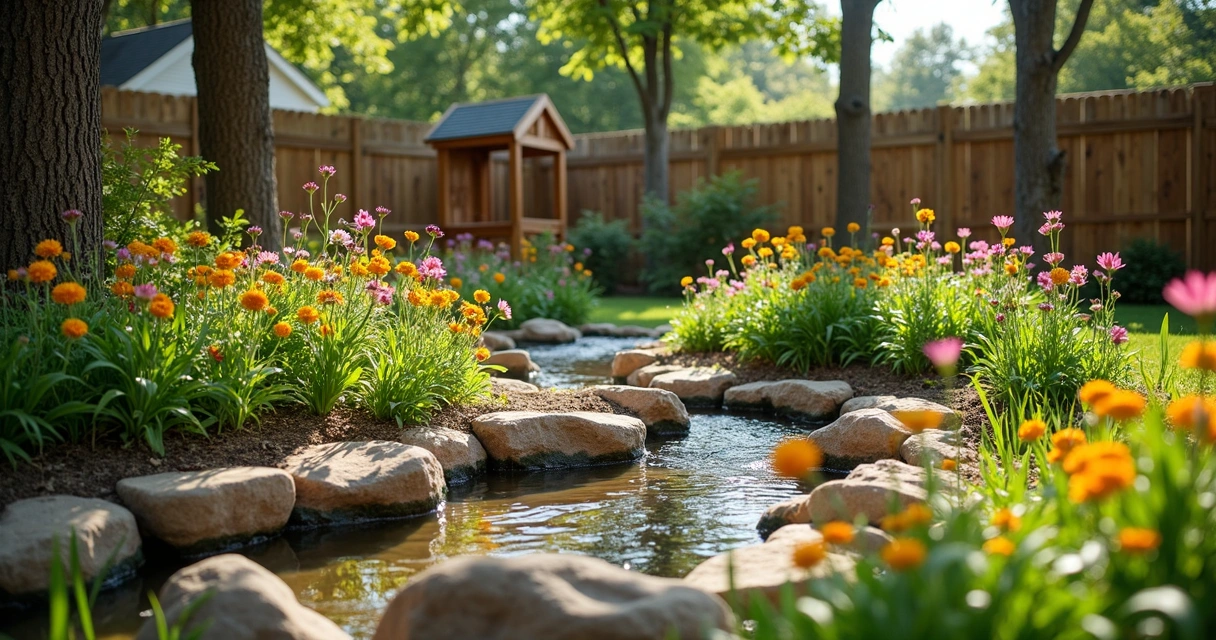
- Natural “dry creeks” with smooth stones for imaginative play
- Built-in chalkboards, music walls, or sensory stations for creativity
- Rain gardens that double as butterfly gardens and water-capture areas
When play features, landscaping, and paths flow together, the result is an area that draws kids out for hours—rain or shine.
Embracing rain gardens and natural water capture
Rain gardens are one of my favorite additions to any Austin landscape. These planted depressions capture rainwater runoff, slow it down, and filter it into the soil. There are so many educational and environmental benefits, from reducing flooding to teaching kids about natural cycles (how rain gardens keep water on land).
Rain gardens are powerful tools for conservation because they use rainfall, not tap water, to create green play spots. If you have a sloping yard or excess runoff, consider tucking in a rain garden with kid-safe, native flowers. Children can help plant, watch insects visit, and even measure rainfall.
Shade structures and cooling strategies
Anyone who has played outside in July understands that heat, not just drought, shapes how much kids use outdoor spaces. I often recommend integrating shade thoughtfully—using both natural and built solutions.
- Fast-growing native trees for dappled, living shade
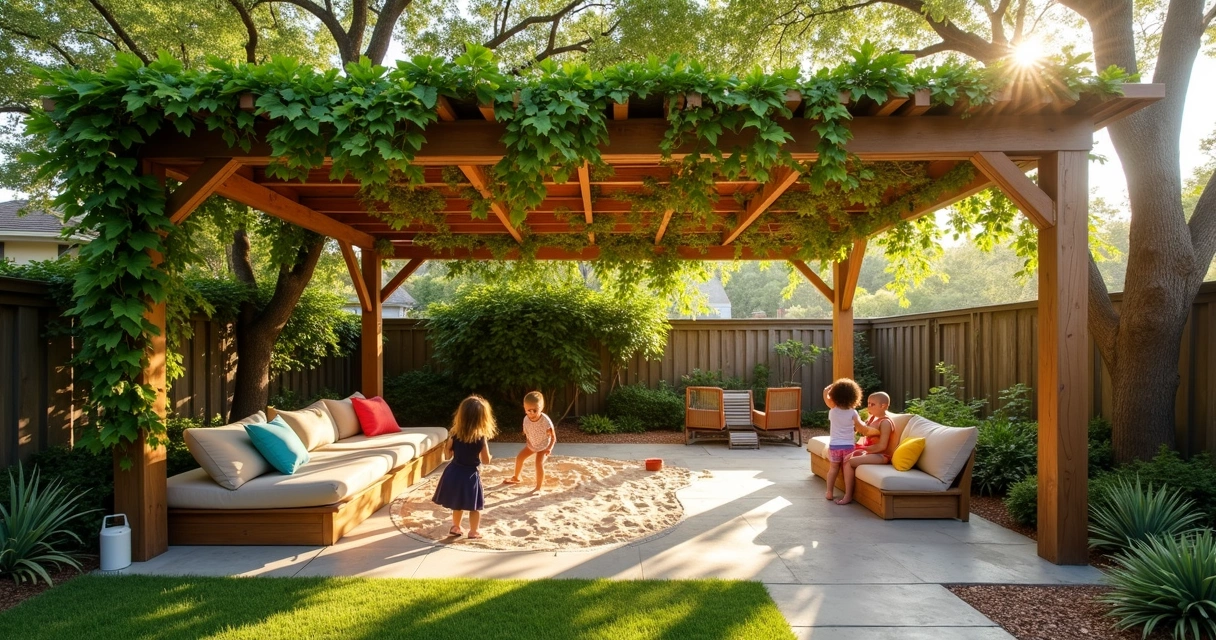
- Pergolas with vines for flexible cover
- Removable canvas sails or shade cloths
- Tall shrubs, teepee structures, or play tents
In the design process, I always prioritize orienting seating, patios, and play sets where they benefit most from shade in the afternoon. Urban Oasis has extensive experience with custom pergolas and shaded patios designed precisely for Austin backyards. For those interested in some stylish ideas for outdoor entertaining, their guides on outdoor entertaining spaces are a rich source of inspiration.
Smart irrigation, maintenance, and involving your family
Even with the best low-water plans, some watering is occasionally needed, especially for young plants. I always advise investing in smart irrigation that adapts to weather, soil, and local restrictions.
Drip irrigation, soaker hoses, and moisture sensors deliver targeted hydration—enough to keep plants healthy, without waste. I’ve seen clients cut outdoor use by more than half with just these changes.
But perhaps the best part of building a water-wise yard is involving children in the process. Simple roles, like filling a rain barrel or mulching flower beds, help them learn how their actions protect the environment on a tangible level.
- Let kids track rainfall with simple gauges
- Assign watering duties with hand-held hoses (not sprinklers)
- Teach “soil touch tests” for plant thirst
When you involve children, conservation becomes second nature.
Maintenance tips to keep up your water-saving gains
After the installation dust settles and your family is enjoying a beautiful, water-smart play area, it helps to have a seasonal maintenance plan. Here are some tried-and-true strategies I use myself:
- Apply fresh mulch in spring and fall to lock in soil moisture
- Check irrigation lines for leaks once a month
- Trim shrubs and trees for airflow, reducing heat stress on plants
- Watch for runoff and tweak grade or rain gardens as needed
- Add compost seasonally for strong, deep root growth
Most water-saving yards actually become easier to manage over time—the roots dive deeper, soils hold moisture longer, and you spend less on thirsty plants and constant mowing.
Ideas for kids: Playful, nature-friendly projects
Sometimes, the most joyful additions to a play space are also the simplest. Over the years, I’ve seen a few ideas rise to the top for both fun and water savings:
- Bug hotels and butterfly stations: Assemble logs, sticks, and pinecones to invite pollinators without needing water
- Painting rocks for a dry creek bed or garden paths
- Herb spiral gardens with low-water Mediterranean herbs for sensory fun
- Building wind chimes from found or repurposed materials
- Creating “secret garden” nooks with clusters of native grasses or screening bamboo (contained in pots)
Each of these projects not only gives children a daily adventure, but also connects their sense of play to the cycles of nature—perfect for Austin’s climate and water vision.
Planning your water-saving transformation: Steps to get started
If you’re ready to create a family-friendly outdoor haven while conserving water, I recommend starting with these steps:
- Assess your current space. What zones are used most? Which get the most sun or shade?
- List what you want from the space. Play? Gardening? Entertaining?
- Identify water-hungry areas—these are your best targets for improvement.
- Map natural features. Trees, fences, slopes, and runoff zones all affect plant and play design.
- Explore native and drought-friendly plant lists. The Urban Oasis landscaping guide is kept current with ideas for Texas yards.
- Consult a professional for design and implementation. Like Urban Oasis, experts can ensure each detail fits your style, budget, and Austin’s latest water guidelines.
A smart plan is the path to sustainable play.
If you want a play area as distinctive and responsible as your family, filling out Urban Oasis’s lead form is a practical first step to transforming your space. We design, install, and maintain water-wise play environments that match Austin’s vibrant family life.
How Urban Oasis builds water-saving family spaces in Austin
From my experience working with Urban Oasis, I’ve seen that every project starts with listening. We discuss your family’s unique routines, dreams, and budget before sketching a single line. The process—consultation, design, revision, approval, and careful installation—ensures every square foot is both fun and responsible.
Our team specializes in:
- Custom play zones that blend with native landscapes
- Low-water planting plans using local flora
- Smart irrigation and rainwater harvesting integrations
- Creative hardscaping that adds safety, style, and value
- Education and hands-on involvement for families and kids
Every play area tells a story—one where water savings, creativity, and family connections live happily side by side.
Connecting with Austin’s water conservation movement
Austin’s city-wide commitment to conservation is both inspiring and practical. Following your street’s watering schedule and adopting water-wise practices at home can save up to 14,000 gallons a month and reduce your bill by as much as $150 (Austin watering days and savings).
At the community level, participating in local workshops, joining neighborhood rain garden projects, or even submitting your play space to city showcases helps reinforce Austin’s reputation as a leader in forward-thinking landscape design. These efforts keep Austin green, engaging, and resilient.
Urban Oasis is proud to support Austin families on their conservation journey, turning challenges like heat and drought into opportunities to dream, build, and play in new ways.
Conclusion: The future of outdoor play in Austin starts in your backyard
Looking back, I can say with confidence that some of the happiest—and most sustainable—memories happen right at home. By rethinking lawns, mixing in smart irrigation, prioritizing shade, and choosing the right plants, you can design a play space that saves water and grows with your family.
Building a water-saving play space is not just about cutting a bill. It’s about nurturing creativity, responsibility, and togetherness—values I see at the heart of every thriving Austin family.
If you’re ready to bring these ideas alive, I invite you to get to know Urban Oasis. Our team would love to help you turn your vision into a sustainable, beautiful space that your family and neighbors will enjoy for years to come.
Frequently asked questions
What are water-saving play space ideas?
Water-saving play space ideas include using artificial turf or low-water grass, planting native drought-tolerant plants, creating rain gardens, installing permeable surfaces like decomposed granite, and building play structures under shade from trees or pergolas. Features such as sensory gardens, log balance beams, and natural play elements replace water-intensive toys or lawns. These ideas let kids play and explore without driving up water use.
How can I build a drought-tolerant yard?
To build a drought-tolerant yard, start by replacing traditional sod with native or adapted plants, which thrive with little water. Use mulch to keep soil moisture, minimize lawn areas, and add gravel or permeable pavers for paths. Drip irrigation and rain gardens manage water efficiently. For detailed techniques and inspiration, you can check resources like the Urban Oasis landscaping guide, which is packed with ideas tailored for Texas’ climate.
Where to find water-saving materials?
Water-saving materials like artificial turf, decomposed granite, rubber mulch, and drought-resistant plants are available at most landscape supply centers and garden retailers in Austin. For installed solutions, professionals like Urban Oasis can source and recommend the best water-wise materials to fit your design needs and family routine.
Is it worth it to install artificial turf?
Artificial turf can be a great investment for families who want greenery without the heavy water use and maintenance of natural grass. It is especially practical for shaded areas, high-traffic play zones, and spots where regular grass fails. Modern turf products look realistic, feel soft underfoot, and allow for creative play layouts. Urban Oasis specializes in artificial turf installations that hold up beautifully in Austin’s harsh summers.
What are the best native plants for Austin?
The best native plants for Austin play spaces include Texas Sage, Blackfoot Daisy, Bluebonnet, Buffalograss, Turk’s Cap, and Flame Acanthus. These species are tough, low-maintenance, attractive to pollinators, and safe for children and pets. Austin’s local nurseries and designers work with dozens of other options, but starting with these tried-and-true natives makes building a water-wise garden fun and stress-free.