
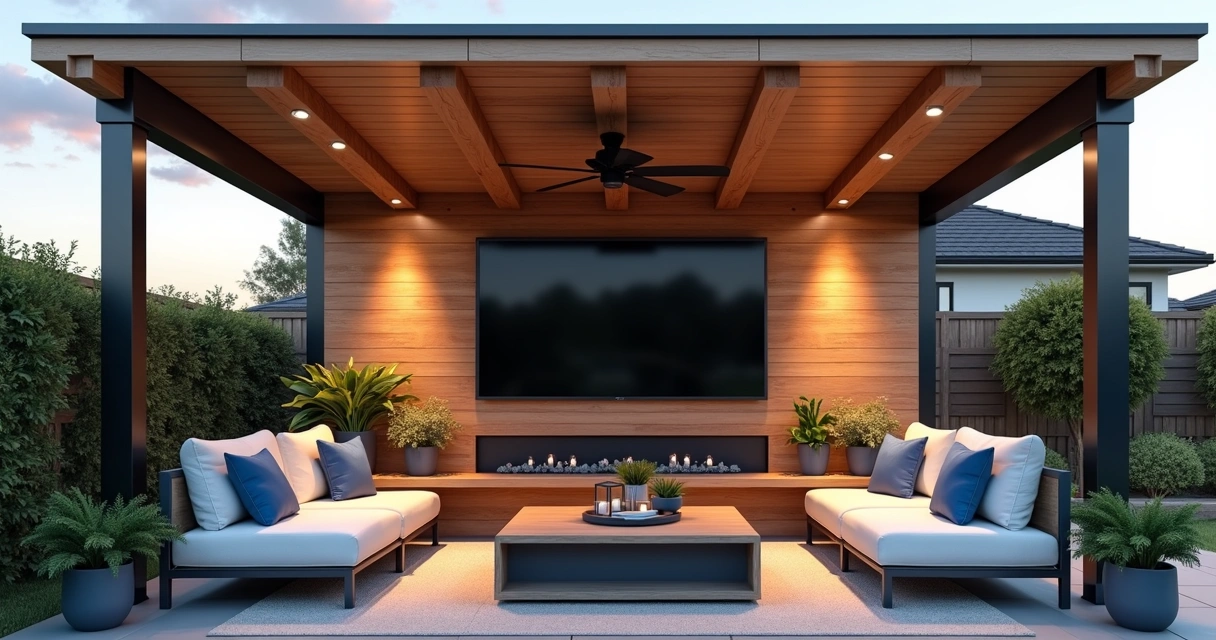
If you have ever wished to watch the game outside without squinting, or stream a quiet movie night under a soft ceiling fan, a covered patio can make that feel easy. The screen becomes part of the space. The space becomes part of your week. With the right plan, you can enjoy it through the heat, in a cool fall breeze, or on a damp spring evening. That is the promise of a smart outdoor TV plan built for Austin’s bright light and sudden showers.
I have seen families turn a tired slab into a living room that just happens to be outside. Sports fans get their Sunday back. Kids bring snack bowls out to the sectional. And movie lovers, well, they finally fix that glare. If you want this to be smooth, start with the basics, then add the details that make it yours.
Bring the big game outside.
Urban Oasis designs and builds covered patios, pergolas, and full outdoor rooms that fit your style, your budget, and your day-to-day routine. If you are thinking about an outdoor TV setup in Austin, the team’s process covers planning, design, approvals, and construction so you can simply enjoy the final result.
Ready to start a plan tailored to you? Tell us a bit about your space and goals. We will listen first, then offer clear next steps.
Ready to elevate your outdoor space? Fill out the form to start a free consultation and let Urban Oasis design the perfect outdoor environment for relaxation, entertaining, and lasting value.
What makes a great covered patio with a tv
A great outdoor entertainment area gets three things right. Sightlines. Comfort. Protection. If the screen is visible from the seats without neck strain, if the breeze is steady and the cushions dry fast, and if the gear is safe from rain and heat, you are already ahead.
In Austin, sunshine can be intense and the UV index runs high at mid-day. That is why screen placement and shading matter. The UV Index explained by the EPA can help you understand when glare is likely to peak. Aim for a shaded, covered location that limits direct sun on the screen. A north or east facing wall often works well.
Comfort comes from the right mix of fans, airflow gaps, breathable fabrics, and a layout that works for both a crowd and a quiet night for two. Protection starts with the right TV enclosure or a weather-rated TV, sealed cable runs, and safe power with GFCI protection. The National Electrical Code sets the baseline for outdoor wiring and outlets, and it is worth following closely.
Plan the view, then design the cover
Before you pick a roof style, pick the viewing angle and main seating. You can sketch it, or tape it out on the patio. Sit where the sofa will go and check sightlines. Walk the path from the kitchen. Look for glare blocks you can add, such as a beam, a privacy screen, or an adjustable shade.
- screen height: center of the screen near seated eye level, usually 42 to 48 inches off the floor.
- viewing distance: about 1.5 times the screen diagonal for sports, a bit more for movies.
- glare control: add side curtains or a louvered section that you can tilt.
- future proof: leave space to upgrade the screen size later.
If you need a full roof, look at a hip or gable addition that matches your home’s lines. If you prefer adjustable light, a pergola with slats or a louvered top blocks high sun while letting in morning light. Urban Oasis can help compare patio installation options and roof types so the cover looks like it was always meant to be there.
 Choose the right tv and mounting style
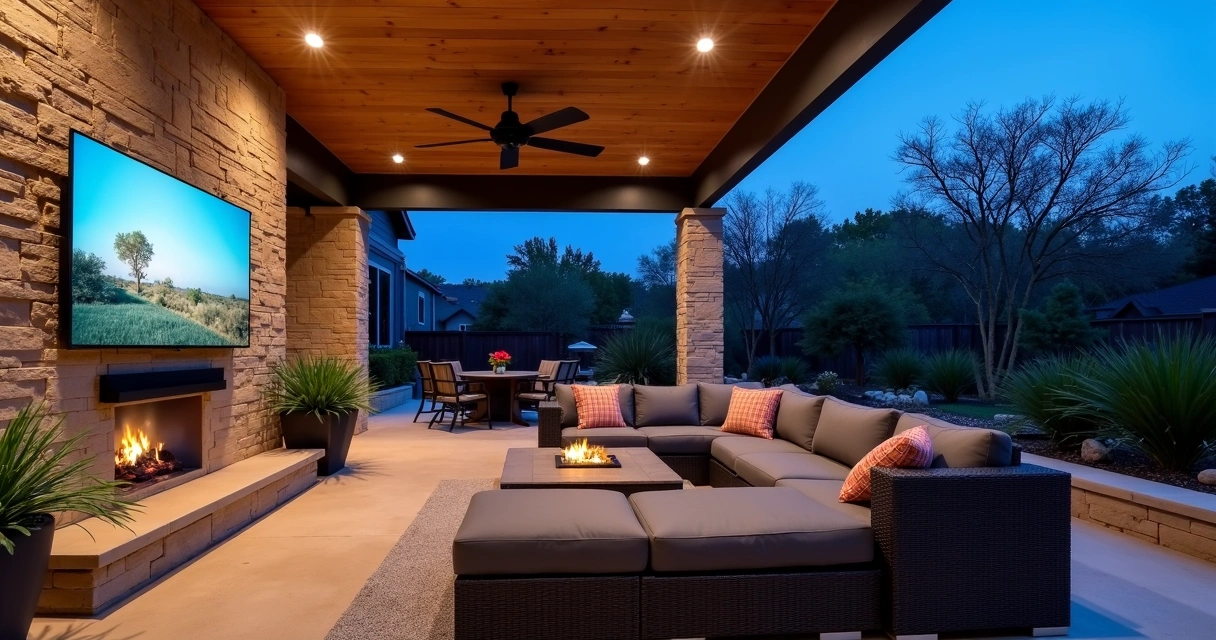 Choose the right tv and mounting style
You have two main paths for a screen outside. One is a weather-rated television designed for open-air use. The other is a standard indoor TV secured inside a sealed, ventilated enclosure. Both can work if you match the choice to your cover and light conditions.
- brightness: look for 700 to 1000 nits for shaded areas. If some sun reaches the wall, more brightness helps cut glare.
- anti-glare: a matte finish and a fixed tilt mount can reduce reflections from water and paving.
- size: sports feel better big. In many patios, 65 to 75 inches is a sweet spot without overpowering the space.
- sound: even a slim soundbar can get lost outdoors. Plan for a weatherproof soundbar or a pair of speakers to match.
If you install an enclosure, make sure it has gasketing, UV-stable seals, a way to drain small amounts of water, and active or passive ventilation. To understand protection levels, check IP ratings from the IEC so you know what dust and water exposure the case can handle.
Power and wiring should be outdoor rated and GFCI protected. This is not a nice-to-have. It keeps people safe during storms and wet days. The OSHA ground-fault fact sheet gives a simple overview of why this matters in damp locations. Mounts should be rust resistant, with stainless or coated hardware, and lagged into solid framing or masonry anchors.
Tough weather, gentle on gear
Austin weather jumps around. A sudden gust. A fast summer shower. Dust in a blue norther. Your gear can handle it when you design for it.
- drip edges and overhangs: a two-foot overhang above a TV helps keep water off and shade on.
- sealed cable paths: run wires inside the wall or in UV-rated conduit. Keep entry points sealed with gaskets.
- venting: hot air rises. Add a small vent gap above enclosures or allow for convection in your cabinet.
- covers: a soft cover helps keep dust and pollen off the screen when not in use.
Lightning happens. Unplug during severe storms, and add a whole-circuit or inline surge protector. For personal safety during storms, the NWS lightning safety guidance is a quick and clear reminder.
Sound you can hear without cranking it
Open air eats bass. It is not your ears. Sound just drifts away without walls to hold it. The fix is simple. Place speakers closer to seats and add a compact subwoofer. You can hide a sub in a bench or cabinet. For balanced sound, consider:
- Two to four weatherproof speakers, spread to cover the seating area.
- A weather-rated soundbar for simple setups, plus a small sub.
- In-ceiling or in-beam speakers under the cover for a clean look.
Run speaker wire in conduit and land it in a weather-resistant box near your amplifier. It looks neat and it lasts longer.
Layouts for sports, movies, and family time
 Layouts for sports, movies, and family time
Different nights, different needs. You can plan a layout that flexes with you.
- sports zone: a long sectional facing a larger screen, bar stools behind the sofa, and a narrow counter for snacks. Add task lights under the bar counter and a small fridge nearby.
- movie lounge: deep seating that lets you sink in, soft throws, dimmable lights, and a low, quiet fan. A projector can work under a dark cover at night, but on bright days a TV is easier.
- small yard: wall-mount the TV, use two club chairs with ottomans that double as extra seats, and add a small bistro table off to the side.
- poolside watch: angle the screen away from water glare, add anti-slip flooring, and plan a small rinse station to keep wet footprints in check.
- four-season kit: ceiling fans for summer, radiant heaters for winter, and roll-down shades to block wind.
For ideas that blend style and function, this guide on designing outdoor spaces for entertaining in style shows simple shifts that make gatherings feel smooth. If you want an adjustable roof to tune light and shade by season, take a look at custom pergolas that pair well with TVs and speakers.
Materials that look good and work hard
Moisture and heat test every finish outside. Choose materials that shrug at both. Composite decking and porcelain pavers resist stains and clean fast. Stone and stucco feel natural and stand up well. For cabinetry and TV walls, look to marine-grade PVC, sealed hardwoods, or powder coated aluminum.
- ceilings: tongue-and-groove cedar with a clear coat, or fiber cement planks if you prefer paint.
- walls: stone veneer or smooth stucco set a calm background for a screen.
- fabrics: solution-dyed acrylic stays brighter longer under sun.
Urban Oasis works with these finishes every week during patio installation, so you can pair texture and durability without guessing.
Lighting sets the mood
Light in layers is your friend. You want enough to move around, less on faces, none on the screen. Try this mix:
- Soft ceiling lights on a dimmer for general light.
- Step lights or strip lights at floor level for safety.
- A gentle backlight behind the TV to reduce eye strain at night.
If you care about night sky and neighbor comfort, the lighting basics from DarkSky give simple tips on shielded fixtures and warmer color temperatures outside.
Keep it cool, warm, and still
Comfort makes people linger. Ceiling fans push air across skin, not just down the center of the space. Place fans in a row above the seating, and match blade span to the area. In summer, misting lines can help on the perimeter, but keep them away from the TV wall. In winter, a few quiet radiant heaters warm people directly without blasting air. For safety with portable units, see heater tips from the CPSC and keep clearances as labeled.
Connectivity and controls without clutter
Streaming outside should feel as snappy as inside. A single weak Wi-Fi bar will not cut it. Add a weather-rated access point near the patio, and wire it back with Ethernet if you can. The FCC guide on home networks covers simple ways to improve coverage and channels.
For sources, a compact media cabinet can hide a streaming device, a small AVR, and a surge protector. Use short HDMI runs to the TV, and put a conduit in the wall to make future upgrades easy. A single remote or app that dims lights, starts the fan, and launches your stream feels a bit magic. I think it is worth the setup.
Codes, safety, and a smooth build
Outdoor power needs the right boxes, covers, and breakers. GFCI outlets, wet-location covers, and in-use covers keep water out while cords are plugged in. Conduit protects low-voltage runs and speaker wire. If you trench for power or data, use the right depth and mark it well.
Permits vary by city. In Austin, adding a roof or expanding a patio can trigger permits, and sometimes HOA review. Urban Oasis handles that part as part of the process, which keeps the timeline clear. If you are curious about the bigger picture of improvements that tend to hold value, this overview of top outdoor living trends that are boosting property value in Austin is a handy read.
Budget ranges and what affects them
 Budget ranges and what affects them
Costs vary with cover type, materials, and tech. A simple shaded patio with a weather-rated TV and two speakers can land in a modest range. A full roof addition with stone, custom cabinets, four speakers, a sub, heaters, and motorized screens costs more. Size, wiring complexity, and site access also play a part.
Many homeowners phase upgrades. Start with the cover, seating, and basic TV. Add sound and lighting later. Then refine storage, heaters, and shades. Urban Oasis can phase a plan so each step looks finished, not half-done. For ideas and stories from local projects, check the latest outdoor living insights.
How a project usually flows
- consultation: talk goals, measure the space, and pick a rough direction for the TV and seats.
- design: refine layout, choose materials, decide on TV type, sound, and lighting. You will see how pieces fit.
- revisions and approvals: adjust details, then handle permits and any HOA items.
- build: pour footings, set structure, run power and low-voltage, finish surfaces, then install gear.
- final walkthrough: test streaming, fine-tune lights and fan speeds, and note any tweaks.
Urban Oasis keeps the steps clear and checks on site often. If you want a deeper look at layouts that host well, this piece on designing outdoor spaces for entertaining in style shows how small changes shift the feel for guests and for you.
Mini guide for an outdoor tv setup in austin
 Mini guide for an outdoor tv setup in austin
Here is a quick checklist tailored to this climate and light:
- Place the TV under shade, facing north or east if possible.
- Use a bright, matte screen or a sealed enclosure with ventilation.
- Run outdoor-rated power on GFCI with wet-location covers.
- Add a Wi-Fi access point near the patio, hardwired back to your router.
- Choose speakers close to seating and a small sub for balanced sound.
- Set dimmable, low-glare lighting and a soft backlight behind the screen.
- Plan for surge protection and unplug during big storms.
If you want help turning those points into a plan with drawings, budget, and schedule, Urban Oasis is here for it. The team designs, builds, and stays close at every step, from first idea to last cushion.
Ready to elevate your outdoor space? Fill out the form to start a free consultation and let Urban Oasis design the perfect outdoor environment for relaxation, entertaining, and lasting value.
In short, a good outdoor TV plan in Austin is not just about a bright screen. It is about shade, smart wiring, steady airflow, and seats you cannot wait to sink into. Get those right and your covered patio becomes a place you actually use, on a random Tuesday and on the biggest game day of the year.
Urban Oasis brings design sense, build skill, and a clear process to make that happen. If you are ready to turn ideas into a real space, reach out. We will meet you where you are and shape a plan that fits your home and your life.
Frequently asked questions
What is the best outdoor TV setup in Austin?
The best setup starts with shade, then a bright, matte-finish screen sized for your seating distance. Under a full cover, a weather-rated TV or a sealed enclosure both work. Add GFCI-protected power, a pair of weatherproof speakers plus a small sub, and dimmable, low-glare lighting. For smoother streaming, place a wired Wi-Fi access point near the patio. If you want help tailoring the details, Urban Oasis can design a layout and install plan that suits your home and routine.
How to protect outdoor TVs from weather?
Keep the screen under a roof or pergola, add a drip edge above, and avoid direct sun when you can. Use a weather-rated TV or a sealed enclosure with ventilation. Run cables in conduit, seal wall penetrations, and use in-use covers on outlets. Surge protection helps during storms, and soft covers keep dust off when idle. For safety and code basics, follow the National Electrical Code and review lightning safety on stormy days.
Is it worth adding a TV to my patio?
If you enjoy sports, movies, or family nights, yes. A well-planned covered patio with a TV gets used more often and can support resale interest. It turns the yard into livable square footage. Pair the screen with comfortable seating, fans, and simple lighting, and it starts to feel like your favorite room. Urban Oasis can phase the project so you start with the basics and add features over time.
Where can I buy outdoor TVs in Austin?
You can purchase through an outdoor living contractor as part of a build, from general electronics retailers, or directly from manufacturers. The best route depends on whether you also need mounting, wiring, and weather protection. Many homeowners prefer turnkey installation so the TV, sound, power, and controls arrive together and work on day one.
How much does an outdoor TV installation cost?
Cost depends on the cover type, TV size and weather rating, sound system, wiring complexity, and finishes. A simple install under an existing cover with a weather-rated TV and two speakers may sit in a lower range. A full roof addition with stone, cabinetry, multi-speaker audio, heaters, and motorized shades is higher. Urban Oasis can provide a clear, itemized estimate after a short site visit and design chat.
Ready to elevate your outdoor space? Fill out the form to start a free consultation and let Urban Oasis design the perfect outdoor environment for relaxation, entertaining, and lasting value.