

Have you ever walked outside after cleaning your home, only to return hours later and find a thin film of dust across the furniture? For many people, especially those who live near busy roads or dry construction areas, dust isn’t just a housekeeping headache. It can be a serious, unseen guest that makes its way quietly into our lungs and can aggravate allergies. Yet the outdoors, with all its beauty, holds one of the best solutions: the green, living walls we create in our gardens. Urban Oasis has seen how the right plants can turn a dusty patio into a serene, cleaner retreat. This article unpacks how living barriers can improve not only your view, but your quality of life as well.
Nature quietly protects
The story of dust in the garden isn’t just about keeping things neat. It’s about finding room to breathe better, sleep better, and maybe, just maybe, smile a little more when you step outside.
Why airborne dust and allergens matter in urban spaces
You might not always see dust or pollen floating, but it is everywhere. In cities, traffic, construction, and even wind find ways to pick up tiny particles and send them your way. These particles settle on plants, patios, and into the air you breathe each day.
For many, the conversation about dust and allergens begins with sneezes, red eyes, or kids with sniffles. For others, it’s about keeping their homes, businesses, and outdoor spaces inviting and low maintenance. Urban Oasis understands both concerns, often working with clients who need help making external spaces comfortable for relaxing or hosting guests.
- Allergen control: Gardens can help filter out pollen and mold spores.
- Visible dust: Lowering settled dust keeps patios cleaner and outdoor furniture inviting.
- Healthier spaces: Filtering the air with green walls lowers exposure to pollutants and lessens allergies, and that’s not just wishful thinking.
Every leaf is a filter.
Before jumping into which species guard best against urban dust, it’s helpful to see why landscape design choices matter. The smallest tree choice or hedge line can quietly shield you from the steady tide of city debris.
How living barriers filter air and block dust
If you’ve ever watched rain clean a dusty sidewalk, you’ve seen a little of what gardens can do. Now, imagine a living wall standing between your home and the road, capturing dust every day, quietly and persistently.
The science behind plant filtration
Plants slow the wind. Their surfaces—leaves, stems, and twigs—trap dust, pollen, and microscopic pollutants. Every time wind rushes through, particles settle or stick, rather than swirling straight onto your porch or through the window. For people with allergies or in high-traffic zones, this isn’t just minor. Recent studies show certain hedges trap considerably more airborne pollution than others.
But it’s not just about trapping. Some plants, especially dense species with tiny, textured leaves, actually hold on to dust and give microbes a chance to break down some pollutants—the air gets cleaner before it drifts through the rest of your yard.
Visual and practical difference
Think of this: a single row of roses is beautiful. But for blocking dust? It’s not enough. Compare that with a thick, layered hedge—different heights, leaf shapes, perhaps some feathery grasses at the base. The thicker, more diverse, and more textured the planting, the more effective the barrier.
Layered hedges catch more than just your eye.
 Choosing plants for maximum dust protection
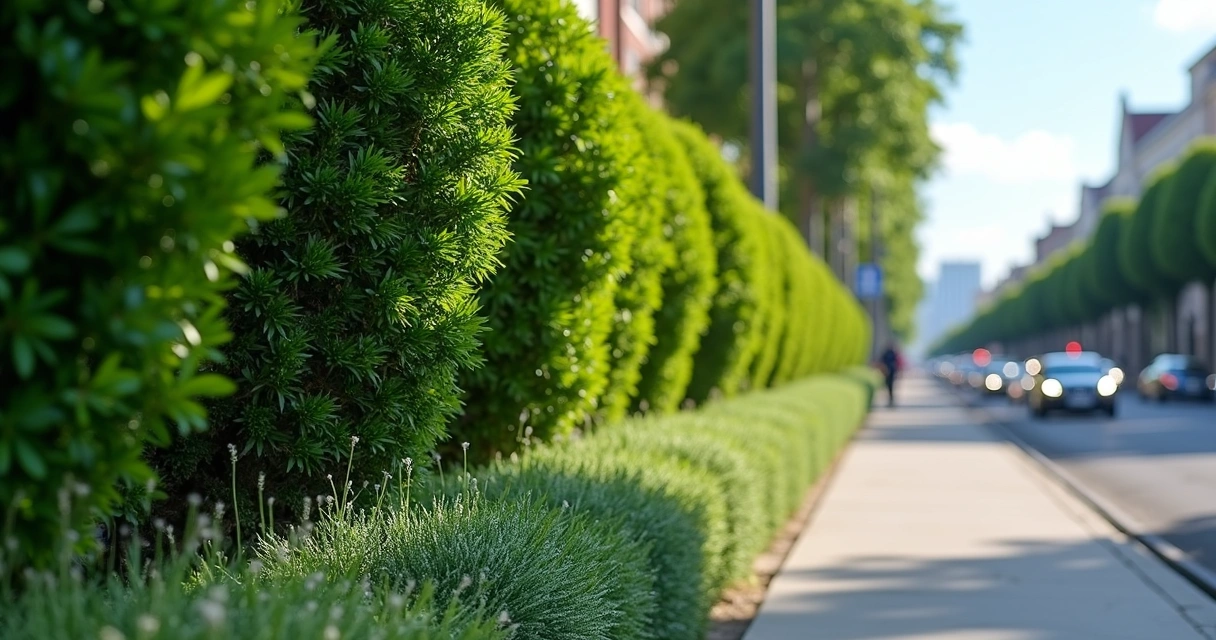 Choosing plants for maximum dust protection
The heart of an effective green barrier is plant selection. Not all shrubs, trees, or grasses offer the same benefits. Certain species stand out, not just for their looks, but for their dust-trapping talent. The team at Urban Oasis always starts with local conditions—sun, wind, soil, and, just as important, what works within the client’s style and maintenance preferences.
Key features of effective “air-cleaning” greenery
- Dense growth: Leaves close together with intertwined branches form a tight mesh.
- Textured foliage: Hairy, sticky, or rugged leaves catch and hold particles better.
- Multiple layers: Combining different types of plants (small trees, shrubs, grasses) increases capture.
- Height and width: At least 1.5 meters tall and 1 meter broad, as studies recommend, to create a meaningful protective screen.
Top performing species for dust and allergen barriers
- Cotoneaster franchetii: This shrub’s small, hairy leaves are especially effective at trapping fine pollution particles, capturing up to 20% more particulate emissions than most others, making it a good fit for high-traffic areas. (Research from the Royal Horticultural Society)
- Taxus baccata (Common Yew): Known for its dense, needle-like leaves that provide a large, sticky surface area, it is a subtle but powerful addition, helping trap both dust and airborne pollution. (Findings from air quality research)
- Thuja plicata (Western Red Cedar): Grows quickly, stays thick, and absorbs pollutants as well as dust, ideal for creating green screens with added privacy. (Environmental benefits cited in horticultural guides)
- Elaeagnus × submacrophylla (Oleaster): Large, evergreen leaves offer year-round protection and filter particles even in dry seasons.
- Miscanthus sinensis ‘Morning Light’: This ornamental grass not only stands tall—up to 6 feet—but its fine textured blades act like nets for airborne dust and add movement and beauty. (Widely recognized for living fences)
Including these in layered combinations, either with native species or other robust evergreens, creates a living fence that’s as functional as it is attractive. Urban Oasis often combines these for customized outdoor solutions that also fit clients’ budget and lifestyle needs.
Setting up your garden for cleaner air
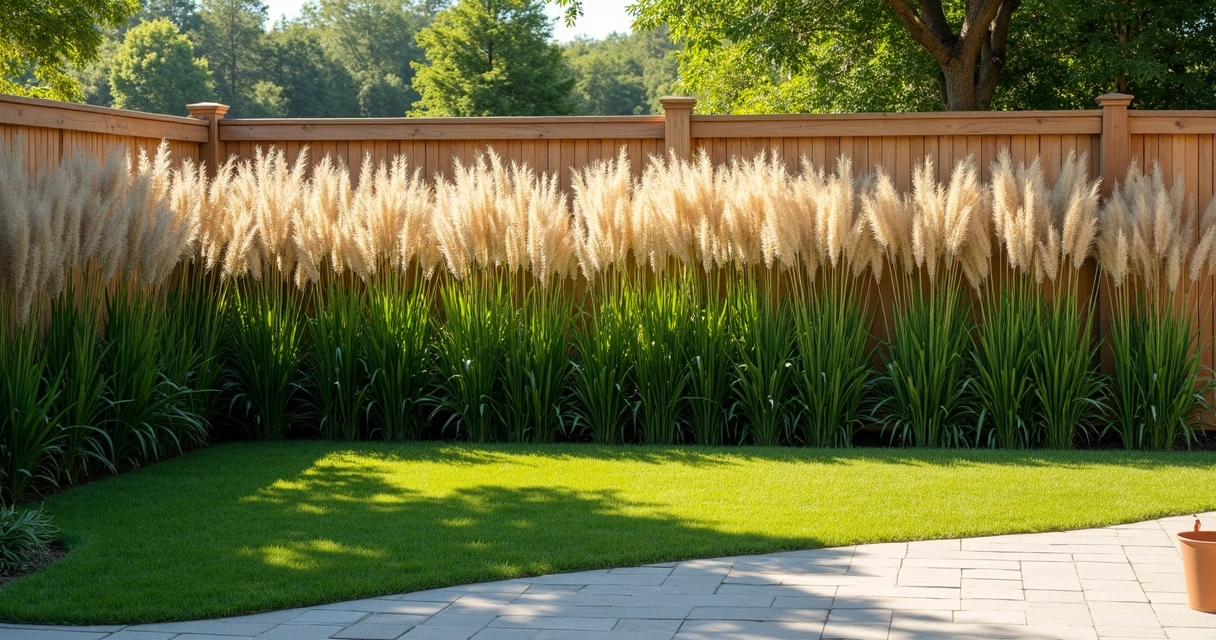 Setting up your garden for cleaner air
Designing a green barrier isn’t just about picking a bunch of good plants from a list. It’s the thoughtful placement, the understanding of wind patterns, the layering, and, yes, the real-life unpredictability of growth. Urban Oasis usually works step-by-step with clients, and the process—while rarely totally linear—often looks something like this:
- Identify main dust sources: Where is the wind coming from? Where do cars, trucks, or dry soil send dust your way? That’s your front line.
- Set the perimeter and focal points: Don’t hedge the whole yard unless you want to. Sometimes a barrier is enough at a patio’s edge, driveway, or along the boundary with a dusty road.
- Layer your defenses: Combine tall shrubs, lower evergreens, and feathery grasses. Put the tallest at the spot of greatest exposure.
- Plan for access and maintenance: A dense barrier can’t stay thick without occasional shaping or pruning. Leave just enough space for you (or your gardener) to reach in.
- Think about water and light: Sun or shade? Fast-draining or damp soil? Choose species accordingly, or check some ideas in this plant guide for your region.
The best barriers grow with you.
Going native with dense hedges and grasses
Native plants are almost always less “needy.” They often resist pests and disease, adapt to your climate, and support wildlife. Best of all, they can still filter surprising amounts of dust and pollen. Urban Oasis often recommends dense, bushy hedges of native box, privet, or myrtle for many home or small business installs, adding tall grasses at ground level to maximize effect with little extra care.
This isn’t just about planting a hedge and forgetting about it, though. A hedge that looks lovely for three seasons and goes thin and ragged in the fourth won’t keep out the spring dust storms or the autumn breeze. Blending evergreen and deciduous species can keep your barrier functional all year. For some, it’s a little extra work—trimming, maybe watering—but it pays off every time you step outdoors and breathe a bit easier.
Suggestions for tough, native hedges and grasses
- Ligustrum (Privet): Grows dense and fast, takes shaping well.
- Myrtus communis (Myrtle): Fragrant, evergreen, and compact; resist local pests.
- Pennisetum alopecuroides (Fountain Grass): Attractive plumes that add texture and trap particles.
- Boxwood (Buxus): Versatile for formal or relaxed styles, keeps shape with light pruning.
For inspiration on layering these for all-seasons impact, look at this high-impact landscaping resource.
Ornamental grasses: subtle powerhouses for dust
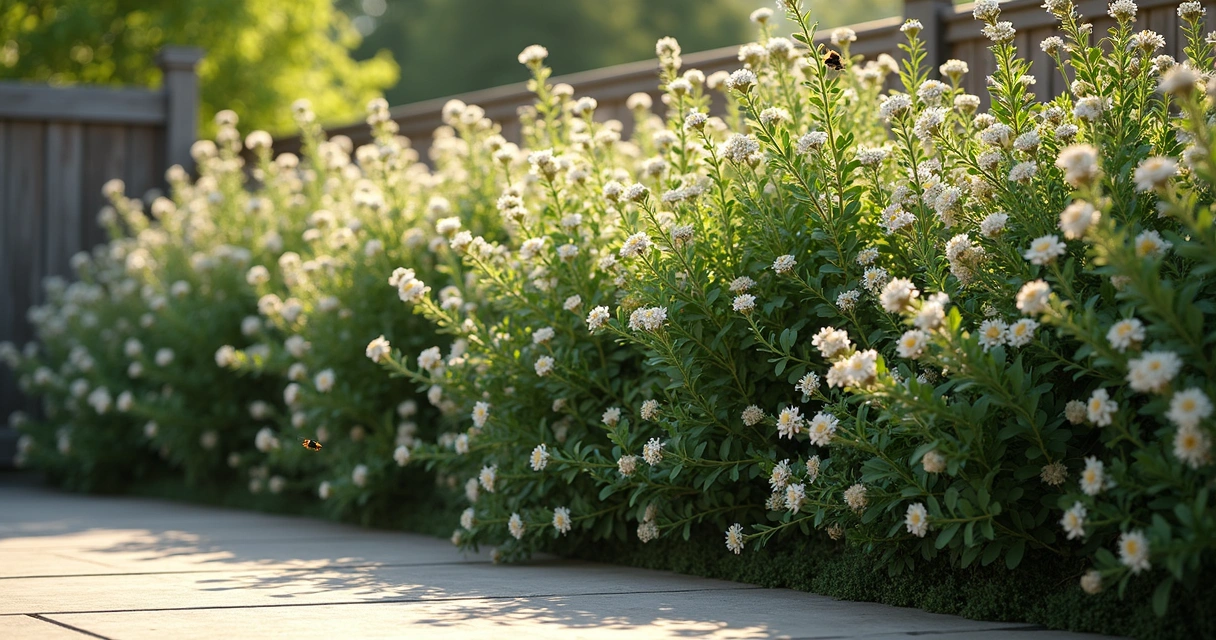 Ornamental grasses: subtle powerhouses for dust
There’s an easy elegance to grasses. Miscanthus, fountain grass, and their relatives move with the breeze, softening the hard lines of fences and paths, and, quietly, they capture and hold dust at ground level. For anyone looking to add function without losing a relaxed garden feel, ornamental grasses fill gaps in hedges, line driveways or walkways, and even buffer patios from open fields or lots.
They are also easy to care for. It’s not quite “set and forget,” but it’s close. Some examples, such as Miscanthus sinensis ‘Morning Light’, grow impressively tall and dense. Their fine leaves act like a net, intercepting particles carried by wind or passing traffic.
Grasses do the quiet work of cleaning the air.
Best practices for planting green barriers
- Spacing: Keep plants close enough to form a solid barrier, but give them space to grow full and healthy.
- Depth: Double rows or staggered layers work much better than single straight lines.
- Height: Go taller where needed, especially next to major dust or wind sources.
- Year-round coverage: Blend evergreens and deciduous species for season-long effect.
- Maintenance: Prune regularly so air filtration stays high.
For those who don’t want labor-intensive setups, low-maintenance gardening guides are a helpful resource, offering seasonal checklists and tips. Regular trimming isn’t always fun, but it’s worth it in how much cleaner your yard and patio can feel.
Urban Oasis solutions for cleaner outdoor living
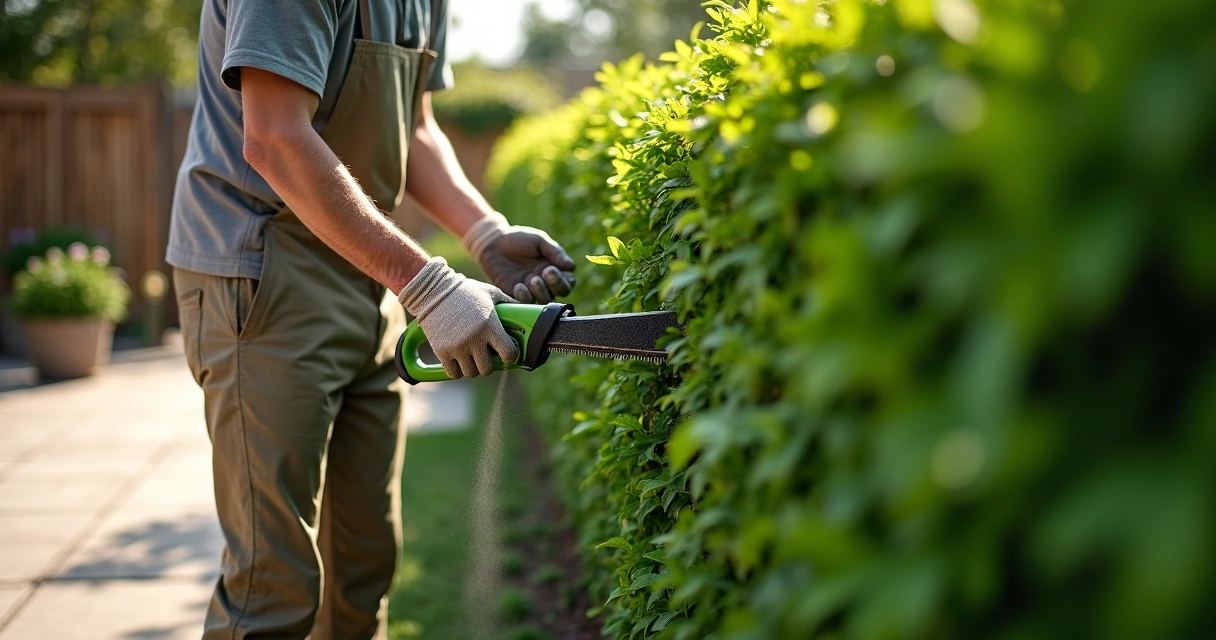 Urban Oasis solutions for cleaner outdoor living
Urban gardens and entertaining spaces don’t just happen—they need considered choices, personal style, and practical advice. Urban Oasis works with clients from the first meeting to the finishing touches, helping transform even challenging sites into relaxing and healthier escapes. For many projects, the conversation often ends where it began: with clients telling us that family gatherings, quiet mornings, and garden parties feel better when they see less dust and breathe easier.
If you feel unsure where to start, or your space has unique challenges, looking through examples in our lawn and gardening project gallery can be helpful. Gardens are, after all, both personal and practical. The goal is never perfection—it’s real improvement, and gardens that adapt (sometimes slowly, sometimes suddenly) to your needs.
Cleaner air starts on your side of the fence.
Is it worth the effort?
It might seem like a lot—choosing the right plants, layering, maintaining, planning for the future. But the rewards don’t take long to show up. Outdoor furniture looks better, garden colors seem brighter under the fine layer of dust they used to wear, and you notice your own breath in a new way. Less sneezing, less coughing after mowing, more time spent lounging with friends—all from shrubs and grasses doing quiet work where the wind meets the greenery.
Whether your goals are aesthetic, practical, or both, integrating lush hedges and resilient grasses into your landscape can create lasting improvements. Many find, after a season or two, they wouldn’t want to live without these “green filters.”
If you’re ready to make your outdoors cleaner, greener, and more enjoyable, now is a good time to see what tailored solutions might look like for your space. Urban Oasis brings expertise in sustainable garden design, and our personal process puts your needs first. See how custom plantings could work for you—fill out the contact form and let’s create a healthier, more beautiful outdoor space together:
Frequently asked questions about garden dust barriers
What are the best plants for dust barriers?
Some of the most effective plants for blocking dust are Cotoneaster franchetii, known for capturing up to 20% more particulate matter than average hedges. Dense evergreens like Taxus baccata (Common Yew), Thuja plicata (Western Red Cedar), and Elaeagnus × submacrophylla (Oleaster) all provide great year-round dust capture. For softer, layered solutions, tall ornamental grasses such as Miscanthus sinensis and Pennisetum alopecuroides work well combined with shrubs. Mixing these with native hedges creates a barrier that is effective and visually appealing.
How do dust barrier plants work?
Dense hedging and grasses act like a filter. Their leaves, stems, and branches trap airborne dust, pollen, and other particles. As wind moves through these barriers, more dust settles out on the plant surfaces rather than entering your living space. Some species, especially those with small, rough, or sticky leaves, are particularly efficient at catching and holding fine dust. The denser the planting and the more layers you create, the more effective your natural barrier becomes.
Can dust barrier plants reduce allergies?
Many people find a reduction in allergy symptoms after installing green barriers. These plantings can filter out not just dust but some pollen, mold spores, and urban pollutants known to irritate sensitive respiratory systems. While not an all-in-one solution, combining dust-trapping hedges with good landscape design does create a noticeable difference for many allergy sufferers, especially near high-traffic roads or during windy seasons.
Where can I buy dust blocking plants?
Most local nurseries carry a selection of dust-filtering shrubs and grasses, including those mentioned above. For more unique or native species, specialty garden centers or landscape professionals—such as those at Urban Oasis—can provide advice and sourcing specific to your region and soil type. Always consult about the best planting times and combinations for your site.
Is it worth planting a green dust barrier?
For most homeowners and business spaces exposed to traffic, building, or windswept open ground, a planted barrier offers real improvement. It looks attractive, increases privacy, attracts wildlife, and, most of all, can reduce visible dust and airborne pollutants. While it takes a little effort up front, regular maintenance is low, especially when working with hardy native plants. Over a few months, the results are often easy to see—and feel—making the investment worthwhile for many garden lovers.