

There’s something quietly arresting about a sunset in July. When Saharan dust settles across the sky and softens the sun’s sinking arc, the ordinary transforms. Outlines blur, colors get complex, and – for a brief time – the world goes sepia-toned. If you’ve ever stood in your garden at dusk during one of these dusty evenings, you’ll know the sky isn’t the only thing changed. The right garden plants make the sunset glow last, extending that ephemeral sky drama into the foliage and flowers at your feet.
But here’s the honest quirk of it: not every plant can thrive or even look appealing during a haze-rich summer dusk. Some wilt, colors dull, and others fade to nothing against the sandy light. So, which garden flora meet the challenge? Which ones don’t just survive dusty airs, but actually look their best in that moody twilight?
This article looks at summer’s haze-tolerant flora and the kinds of sunset blooms that echo or amplify the dramatic hues overhead. Some are surprising, even a little out of the ordinary. All bring something unique to the palette of a sunset garden. Urban Oasis has guided countless projects through similar challenges – tailoring outdoor environments that flourish even when nature throws a curveball or two. Maybe, after reading, you’ll find a new favorite for your own evening sanctuary.
Gardens change when the light grows low and the dust paints the sky.
Why July sunsets feel different
It’s more than just Instagram talk: July sunsets in many regions really are more intense. When Saharan dust travels across the Atlantic, it filters and refracts sunlight. This shifts the color spectrum, bringing out pinks, golds, and purples that can stop anyone in their tracks. You notice it most at dusk – that dusty, soft focus warmth.
But this beautiful phenomenon isn’t just for gazing at. It’s also a curious inspiration for garden design. Sunset hues aren’t only above us. They can be coaxed from the leaves and petals below if you know what to plant.
How dust, light, and plants work together
What happens in the summer air directly changes our gardens. During Saharan dust events, airborne particles diffuse sunlight, making it less direct and more scattered. This favors plants with silvery foliage, dusk-toned flowers, and anything with a bit of textural interest. Golds and reds pop against hazy backdrops; pale greens and whites seem to glow.
Haze also means less harsh sun, which is oddly a blessing for certain flora. The light is gentler, colors look richer, and foliage isn’t fried by direct rays.
But here’s a twist: these conditions can dry the top layer of soil quickly and reduce the visibility of some blooms, making plant choice nuanced. The trick is finding flora that look intriguing, almost radiant, in diffused light. That’s where a bit of garden storytelling begins.
 Color palettes that echo sunset hues
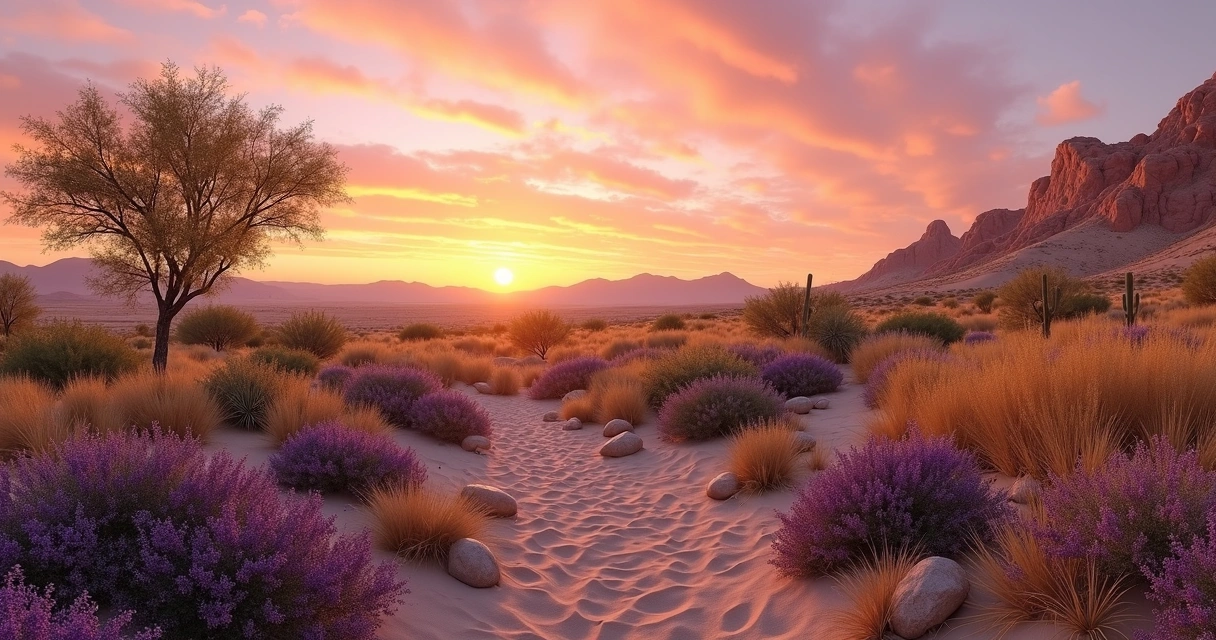 Color palettes that echo sunset hues
Think about the last time a sunset took your breath away. Chances are, you noticed:
- Gold, peach, and apricot tones low on the horizon
- Pinks, mauves, and dusty lavender streaking the middle sky
- Deeper blues and purples fading upward
Echo these effects in your planting. Use plants that produce these same tones as dusk falls. Some species even seem to shift their color as the sun sets, thanks to changes in light quality or reflective leaf surfaces.
Warm earth tones
Rusty reds, burnt oranges, sandy yellows – all give gardens a sun-soaked mood. Look for flora with bronze leaves, coral flowers, or gold-tipped plumes.
Romantic pinks and purples
These hues work especially well on petals and small-leafed shrubs. Near dusk, blues and magentas mix in the air; flowers with similar shades seem to glow.
Cool accent greens
Don’t overlook foliage. Blue-green and silvery grasses, or sage-brushed leaves, reflect more twilight and bring a quiet elegance to sunset gardens.
Desert bloomers that love the haze
The best dust sunset garden plants often come from arid climates. These tough performers don’t just handle dryness; they also come alive in hazy, muted light. Many bring movement and shadow, vital for an evening garden.
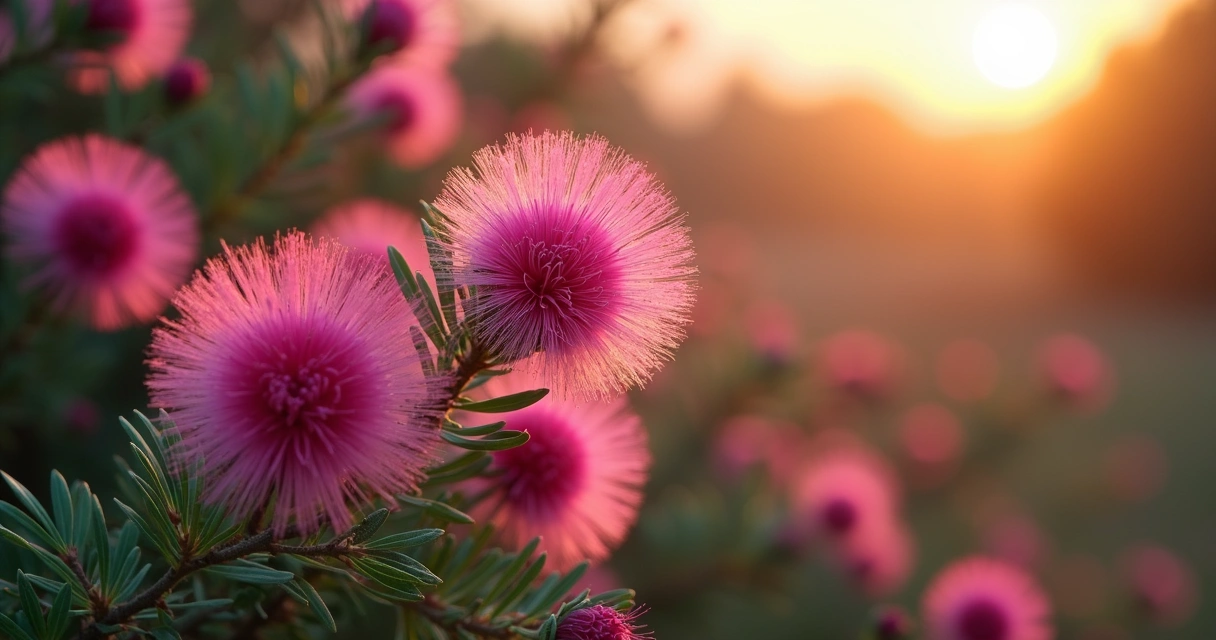
Calliandra eriophylla (fairy duster)
Known for its soft, powdery puffs of magenta-pink, Fairy Duster is practically designed for sunset scenes. Native to the southwestern US and Mexico, this shrub doesn’t mind a dry spell and often stays low to the ground.
- Bloom period: late spring through mid-summer
- Looks best in: rocky, sandy soils; full sun to partial haze
- Why it works: The unique blossoms stand out against dusky light, while the soft foliage picks up even subtle changes in the color of the sky
Panicum turgidum (taman grass)
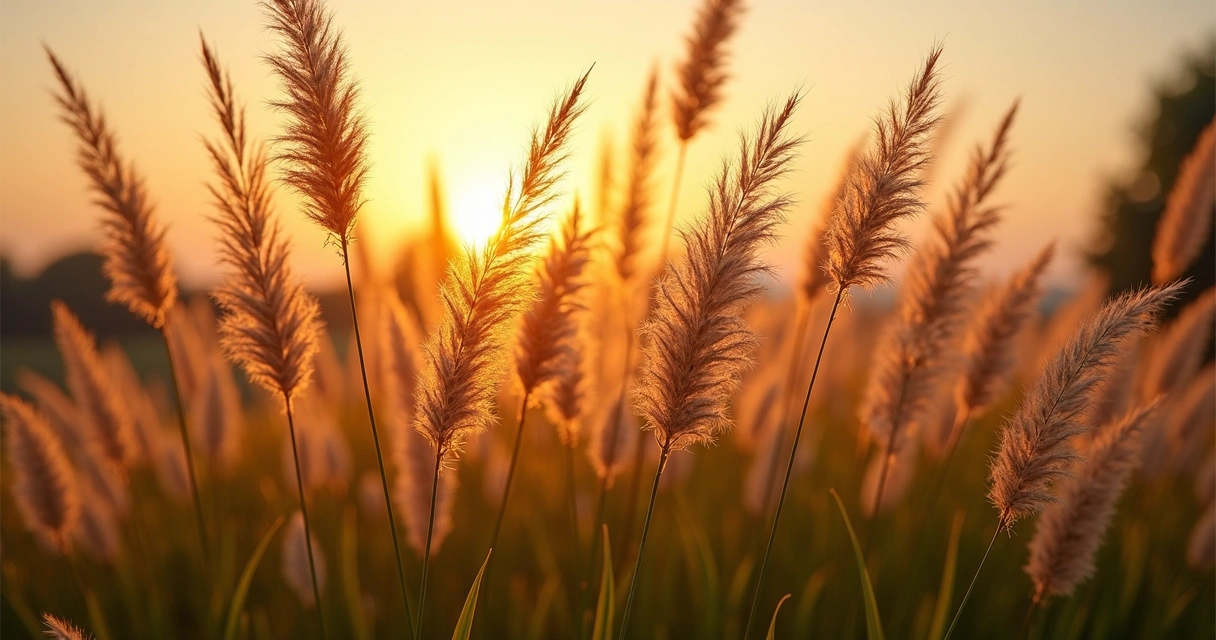
Described as feathery and almost bamboo-like, Taman Grass brings kinetic interest to the garden. Its plumes wave gently in the evening breeze, their pale yellow tones echoing sun-faded hillsides.
- Thrives in: arid, salty, even compacted soils
- Looks best when: grouped with other grasses or as a soft border
- Why it fits: Feathery details light up around sunset, silhouettes create delicate movement against the sky
Brassica tournefortii (sahara mustard)
 Brassica tournefortii (sahara mustard)
Not often found in traditional settings, Sahara Mustard forms clumps of green, rounded leaves that offer contrast to more structured planting. The tiny yellow flowers aren’t just a nod to golden hour – they almost melt into the sunset itself.
- Survives: poor soils, intense sun, and heavy drought
- Visual value: subtle warm flowers, lush foliage for a desert plant
- Bonus: leaves add a pop of matte green under evening dust
Ephedra alata (saharan ephedra)
Called “desert horsetail” by some, Saharan Ephedra is all about texture. Its thick, jointed stems create shadows and silhouettes that seem almost otherworldly as darkness falls. There’s a reason it’s survived ages of sand and wind.
- Stays: evergreen, even in the harshest conditions
- Impact: vertical lines, muted green stems, odd architectural beauty
- Great for: containers, arid borders, low-maintenance corners
Nitraria retusa
This odd, low-growing shrub may not be a showstopper at first glance, but Nitraria retusa is famous for stabilizing sand dunes and surviving the harshest winds. As dusk settles, its rounded forms mimic the undulations of desert sand.
- Mounds form soft garden “waves”
- Tolerates heat, salinity, drought
- Creates habitats for beneficial insects late into the evening
Not every flower needs to be bold to steal the sunset.
Unexpected sunset allies: local options
Sometimes, the most effective way to lure magic from a dusty sunset is to pick flora adapted to your own region. While desert and Mediterranean plants steal most of the glory, there are local perennials and annuals that shine as daylight fades.
- Coreopsis – Their golden blooms seem to turn peach at dusk. Easy to grow and happy in dry soils.
- Mexican Feather Grass (Nassella tenuissima) – Wispy tufts look silvery as the sun dips. Moves gracefully in the breeze.
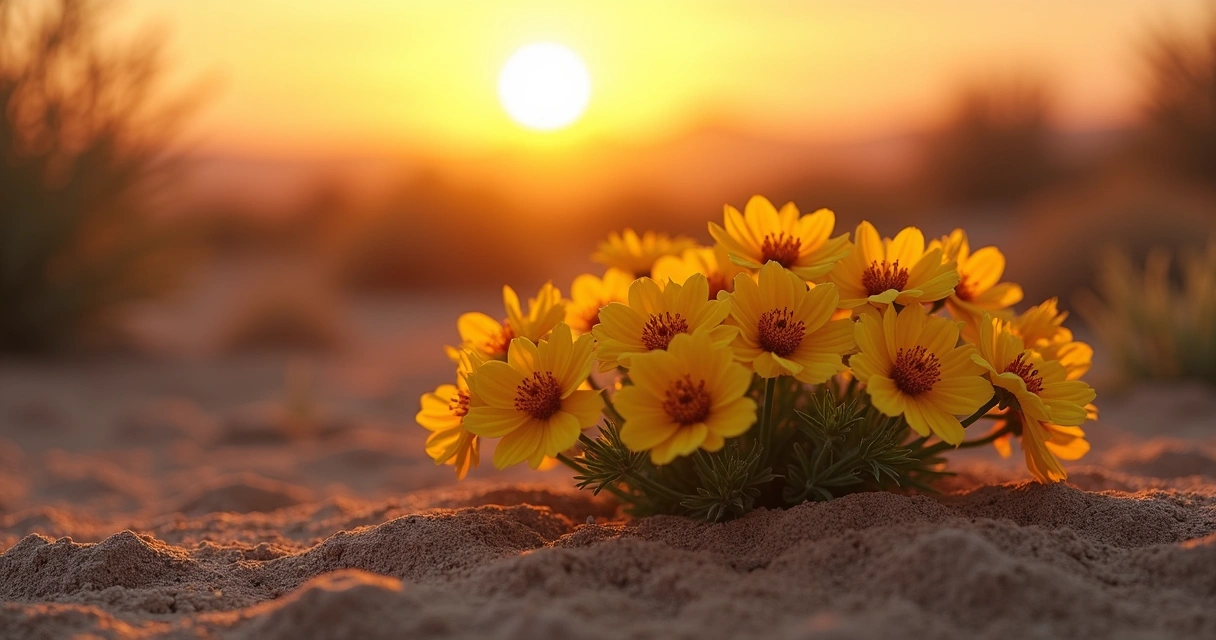
- Desert Marigold (Baileya multiradiata) – Yes, they’re yellow, but at sunset? They echo every shade between buttercream and topaz.
- Russian Sage (Perovskia atriplicifolia) – Lavender-blue spikes pair well with pink dusk light.
Building structure and movement
Although colors matter, movement and texture keep sunset gardens interesting when the wind picks up or the light gets patchy. Go for:
- Grasses: Look for plume-like, not-too-tall species; their shifting forms can draw the eye across the garden as dusk approaches.
- Rounded shrubs: These mounds catch the last light and throw soft shadows, accentuating the low sun.
- Vertical accents: A few upright plants interrupt horizontal lines, letting you “catch” the sunset in unexpected places.
The key, if there is one, is not to over-plan. Sometimes a wild, meadow-like rhythm works best—nature’s way of ensuring every evening feels a little bit different.
Combining sustainability with sunset beauty
Drought- and haze-tolerant flora don’t just look good; they use far less water and need hardly any pampering. This lines up naturally with the push for sustainable outdoor spaces that is at the core of many Urban Oasis projects.
Even a few haze-loving plants can lower your yard’s maintenance level. Less watering, less fertilizing, less pruning – more time to simply exist as the sun goes down.
You don’t need to go full desert, either. Urban Oasis has worked with clients to blend local pollinator plants, tough Mediterranean shrubs, and small succulents, creating a layered look that withstands the tests of summer dusk, year after year. If you want more on mixing these elements, the article on low-maintenance, high-impact landscaping might be worth a glance.
Urban oasis: blending art and comfort outdoors
 Urban oasis: blending art and comfort outdoors
Urban Oasis specializes in transforming garden concepts into functional, beautiful realities. Whether it’s a large commercial patio or a cozy residential deck, the company’s focus is to make outdoor living spaces as appealing during golden hour as they are all day. Years of experience tailoring projects to sunlight patterns, soil conditions, and seasonal haze means that these landscapes are built to hold their character in every kind of weather.
With a process that includes clear communication, personal preference, and careful material selection, Urban Oasis helps clients choose flora that thrive under summer haze and amplify the emotional mood of sunset. For more context, read stories about year-round landscape success and see how planning can make each nightfall memorable.
A flexible garden feels alive every hour, every season, every sunset.
If you’re ever curious how haze and sunset color affect the health of your foliage, or wonder why some plants seem “shocked” when July arrives, bounce over to a resource like the guide on recognizing plant shock. Being ready to adapt is all part of the process.
How to plan your own sunset-ready border
If you want a dusk-friendly bed or a pocket of sunset surprises, here’s one rough framework that Urban Oasis often recommends:
- Pick a “backdrop” grass or shrub—something tall or mound-shaped, preferably with gold or blue-green tones. (Like Panicum turgidum or Russian Sage.)
- Add mid-sized, haze-loving species like Fairy Duster or locally adapted perennials.
- Fill in gaps with low, spreading plants—Nitraria retusa and Sahara Mustard add unique texture.
- Scatter bold “pop” flowers in sunset shades so there’s always a new focal point as light changes.
- Let space exist. Patches of gravel, pebbles, even bare sand can make the color story more striking.
Getting these layers right doesn’t have to be scientific. It’s closer to “painting with plants” than following a strict rulebook.
Mixing pots, paths, and wild corners
 Mixing pots, paths, and wild corners
Not every dusty sunset garden needs open ground. Containers work wonders on decks, patios, and terraces where light bounces off hard surfaces. Try tall ornamental grasses in large pots, grouped for maximum silhouette. Add a few trailing, sunset-toned flowers to spill over the sides.
Paved paths or gravel walks, especially those that wind, reflect sunset hues and make a small yard feel like a vast, open plain. Leave space for “wild corners”—tiny spots where a seed might wind up, and something unexpected blooms only at dusk.
There’s a subtle magic in letting your garden be a little undone, a little unpredictable. Urban Oasis’ projects often leave intentional breathing room for spontaneity. This isn’t just functional; it’s emotional. Every dusty sunset feels like it could be a little different from the night before.
The maintenance sweet spot
Of course, you’re probably wondering – does a haze-tolerant, sunset-inspired garden mean endless effort? Not really. If you want the most impactful result for the least fuss, read more about this on our plant-focused resources.
- Mulch deeply to reduce dust on soil and lock in moisture.
- Water in the morning or after dusk to maximize uptake and reduce evaporation.
- Cut back dead stems, but leave interesting shapes for evening silhouettes.
- Accept imperfection. Some fading and seeding are part of the process.
The truth is, the plants discussed above don’t need coddling. In many cases, the less you do, the better they perform under dusty summer skies.
Some of the best gardens are just a little wild.
Every garden tells its own sunset story
At its heart, a sunset garden is more than a collection of species. It’s an intention. It’s the desire to catch something fleeting – color, quiet, possibility – and bring it a little closer to home. Whether you want to simply enjoy a glass of something cool as dusk settles, or you’re hoping to host sundown gatherings, your choice of bloom and foliage sets the tone for every evening.
Urban Oasis brings years of hands-on experience shaping spaces that thrive in every kind of sunset. If you’re ready to transform your outdoor area into a twilight retreat or want inspiration tailored to your light and climate, this is the moment. Take a few seconds to share your dreams and restrictions using our project form below. Let’s bring a little dusk magic to your story.
Ready for your own sunset garden?
Fill out our quick form and connect with the Urban Oasis team today. Every great evening begins with a simple step.
Frequently asked questions
What are the best plants for dusty sunsets?
Some of the best sunset garden plants for dusty evenings include Calliandra eriophylla (Fairy Duster), Panicum turgidum (Taman Grass), Brassica tournefortii (Sahara Mustard), Ephedra alata (Saharan Ephedra), and Nitraria retusa. These species bring texture, color, and resilience during Saharan dust events. Regionally adapted options like Coreopsis, Mexican Feather Grass, and Russian Sage also stand out as the light shifts. Blending drought-tolerant shrubs and grasses with sunset-hued flowers gives the most captivating garden effect.
How do I create a sunset-inspired garden?
To create a sunset-inspired garden, choose flora with petal and foliage colors that reflect dusk: golds, peaches, pinks, purples, and silvery greens. Prioritize haze-tolerant and drought-resistant plants that thrive in diffused light. Arrange in layers—a tall, softly colored backdrop, mid-height blooms, low-growing ground covers, and some wild spots. Use ornamental grasses for movement and texture. Group pots strategically if ground space is limited. Mulch well, minimize water use, and leave areas for organic “imperfection.” For more on this style, Urban Oasis has shared insights on high-impact landscaping with minimal fuss.
Which flowers give a sunset color effect?
Flowers that deliver a sunset color effect are typically those with gold, orange, coral, pink, and lavender shades. Standouts include the powdery pink bursts of Calliandra eriophylla, the yellow blooms of Desert Marigold, orange-red Zinnia varieties, peachy Echinacea, and golden Black-eyed Susan. Grasses with gold tips or silvery tones, like Taman Grass and Mexican Feather Grass, also enhance the sunset illusion and reflect warm dusk light.
Can I grow sunset-colored plants in pots?
Yes, many sunset-tinted plants thrive in containers. Choose large pots for ornamental grasses like Panicum turgidum, and smaller ones for Coreopsis or Fairy Duster. Make sure containers have good drainage, use light, sandy soil mixes, and position them where they’ll catch the late-day sun. Grouping several containers of different heights adds shadow play and slows down the sunset experience on decks or patios. Add a layer of mulch and water when the topsoil dries out. Urban Oasis often includes potted arrangements in outdoor room designs for flexibility.
Where to buy sunset garden plants online?
Online sources for dust sunset garden plants include specialist nurseries focused on arid and Mediterranean species, as well as native plant suppliers and some large gardening platforms. Look for credible sites that list the plant’s growing needs, regional adaptations, and shipping details. Be sure to cross-check the correct species names to avoid substitutes. If you’re unsure of the best flora for your zone or want a custom planting scheme, Urban Oasis can help source or recommend trusted providers—and even organize installation as part of a broader landscape transformation.