

The middle of summer in Texas paints a vivid picture. Sun sears down, colors sharpen, and the world seems to shimmer. Patios are awash in sunlight, potted plants line up like brave sentinels — and for many gardeners, the real test begins. How do you keep a patio looking alive when each July brings heat that cracks tiles and thunderstorms bold enough to upend light furniture?
If you’re thinking, “Is it even possible?” — you’re not alone. Many in Texas, and frankly across the southern United States, have resigned to wilted blooms and weary foliage at this time of year. But it doesn’t have to be so. Through years of experience designing sophisticated outdoor spaces with Urban Oasis, I’ve watched people transform even the most exposed patios using the right hardy plants, resilient choices, and clever design.
This isn’t about wishful thinking or hoping for a cooler day. It’s about grounded choices, plants that are proven, and a touch of imagination to bring texture, shade, and long-lasting greenery to patios — come drought or gale.
Plants can beat the heat. It’s a matter of the right pick.
What makes patio plants really climate-proof?
Let’s dig in here before leaping to plant lists. A plant’s survival on a Texas patio depends on a few things — heat tolerance, wind resistance, and adaptability to storms. These aren’t just words on a tag grown in some distant greenhouse.
Heat resistance goes beyond not wilting at noon. It’s about plants thriving when concrete radiates warmth even after sunset, when pots dry out within a day, when there’s little shade to offer grace.
Wind resilience is just as honest a need. Some plants handle gusts with the flexibility of a dancer, others snap and crumble. Sturdiness matters — so does the shape and structure of leaves and stems.
Storm adaptability is somewhat of a moving target. Sometimes it’s torrential rain, sometimes hail or erratic temperature swings. Plants that survive here tend to shed water well, resist root rot, and bounce back after damage.
And container life? Well, container plants get no deep roots to chase down water. They must be more independent, more self-reliant, in a sense.
July exposes the winners and weeds out the rest.
Plant selection basics for the Texas patio
Before the plant list, let’s get personal. Every patio is unique: facing north, blasted by southern sun, sheltered, tiny, sprawling, paved in bright terra-cotta, or softened with wooden decking. Pick plants for your light, wind, and moisture. But above all: aim for longevity. A patio full of plants you replace every month is the opposite of restful.
Traits of survivors
- Thick leaves: Fleshy and waxy leaves hold moisture, slow transpiration, and bounce back from wind burn.
- Deep or fibrous roots: Help plants anchor during storms, and reach water deep in containers.
- Flexible stems: Sway without snapping when summer storms roll in.
- Small, narrow foliage: Evaporates less water, resists shredding by wind and hail.
- Native adaptation: Plants that evolved in Texas or similar climates prove, year after year, they belong here.
Materials matter
Choose containers that breathe, drain, and insulate. Thick ceramic, fiberstone, or even double-walled resin can buffer roots from temperature spikes. Avoid thin metal or dark plastic. Watering is both a science and an art — more on that in a bit.
 Top-performing shrubs for Texas patios
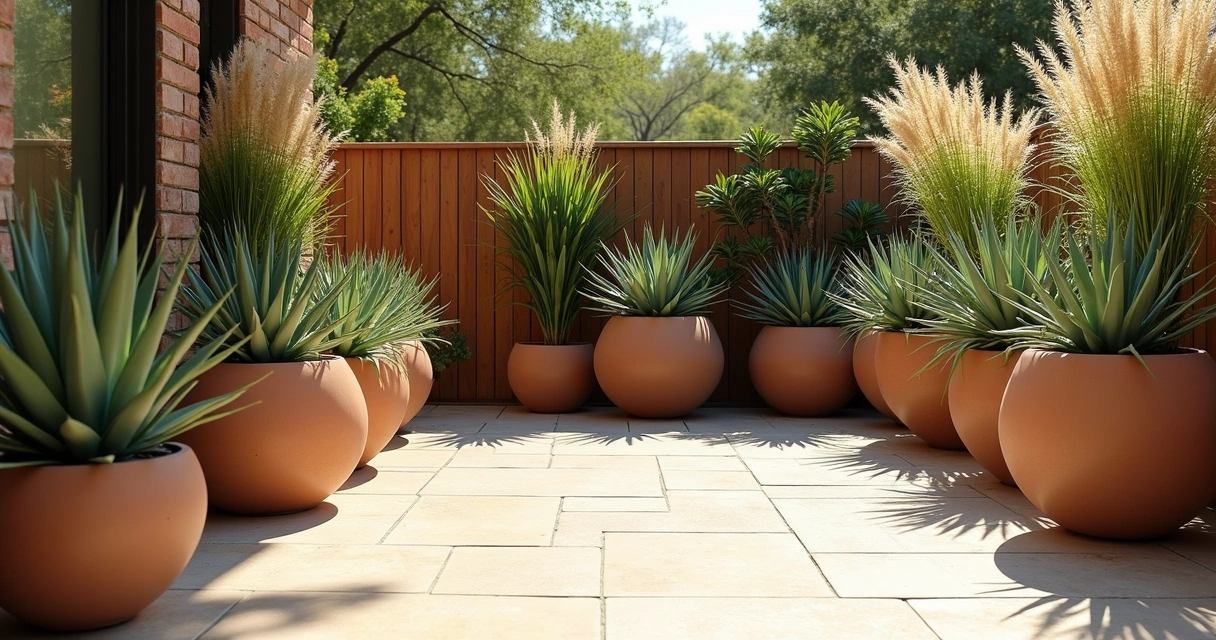 Top-performing shrubs for Texas patios
If you want structure, longevity, and vivid green that rarely lets you down in the summer, hardy shrubs formed the backbone of many patios I’ve seen. Let’s talk about a few.
- Texas sage is a workhorse for sunny patios. Its silvery leaves shrug off heat and wind, while violet blooms flash after summer rains. Studies confirm its ability to thrive in well-drained conditions, even with erratic water.
- Abelia delivers arching branches and delicate, trumpet-shaped flowers. It’s an old stand-by, quietly reliable. Once established, it tolerates heat, sun, and wind better than most other flowering shrubs, and maintains a graceful look through months of tough weather.
- Pride of Barbados (Caesalpinia pulcherrima) is, perhaps, a feast for the eyes. Its fiery red-and-yellow blossoms bring drama and heat — without fading or drooping. Loves sun and can take a beating if wind whips through.
- Dwarf yaupon holly is compact, evergreen, and forms mounding shapes that almost look sculpted. It’s unbothered by heat or storms, and a great option as a low border or for accent consistency.
A small hedge or even a single shrub in a large pot provides height, wind-break, and, if you like, privacy. Don’t forget: You can underplant with succulents or trailing annuals to soften the container’s edge.
Structure comes first. Color and texture follow.
Tough succulents for bold summer displays
There’s a special ruggedness in succulents that goes beyond their appearance. These plants are engineered, quite literally, for extremes. Some might say succulents are a bit overdone, but if I’m honest, the right species are still worth their weight on any patio — and Texas patios in particular.
- Agave species shine with their bold form and strength. According to recent horticultural advice, thick, fleshy leaves make agaves nearly immune to drought and sun. Place them alone in dramatic pots or group as a focal point. Some varieties get large, so pick carefully.
- Sedum, sometimes called stonecrop, is almost ridiculously easy. Low-growing, forgiving, and mostly evergreen, these succulents have been proved in numerous garden settings as reliable for containers and bright patios, storing water for the worst heat spells.
- Ponytail palm is an oddball — technically a succulent — with a bulbous base and flowing green leaves. It’s more forgiving than it looks, adapting to wind and erratic watering.
- Aloe vera doesn’t just heal sunburns; it handles the burn, too, and stays fresh after summer rainfall. Its foundation-like base keeps it stable and unharmed by wind.
Sometimes, less is more. One well-grown agave in a large, shallow bowl can command attention, while dense clusters of sedum can chill at the base for texture. The mix is up to you.
Ornamental grasses — movement, texture, resilience
I think people tend to underestimate grasses. Maybe it’s because they’re not as flamboyant as some blooms, or maybe patio gardeners think “grassy” means “messy.” But the truth is, a strong grass is the secret weapon against wind and heat.
- Muhlenbergia lindheimeri isn’t shy. This tall, native Texas grass delivers vertical drama and airiness, and handles direct sun and drought like a champ. Its root system is strong, which prevents pot topple in summer gusts. If you want movement and a little softness, look no further.
- Bouteloua gracilis, more commonly called blue grama, is a compact accent with bent, eyelash-like seed heads. According to advice in container gardening resources, it flourishes in full sun, rarely needing more than occasional water.
- Purple fountain grass offers a splash of color, arching foliage, and will sway with every breeze. Its sturdy stems mean it almost never breaks, while the fountain shape feels elegant.
- Gulf muhly may be over-discussed, but for good reason — it lights up in autumn with cotton-candy plumes and takes little harm in summer heat.
Try one or two grasses in oversized containers behind smaller succulents or annuals for a living “backdrop” that also blocks harsh sun and diffuses wind.
Flowering perennials that handle heat and storms
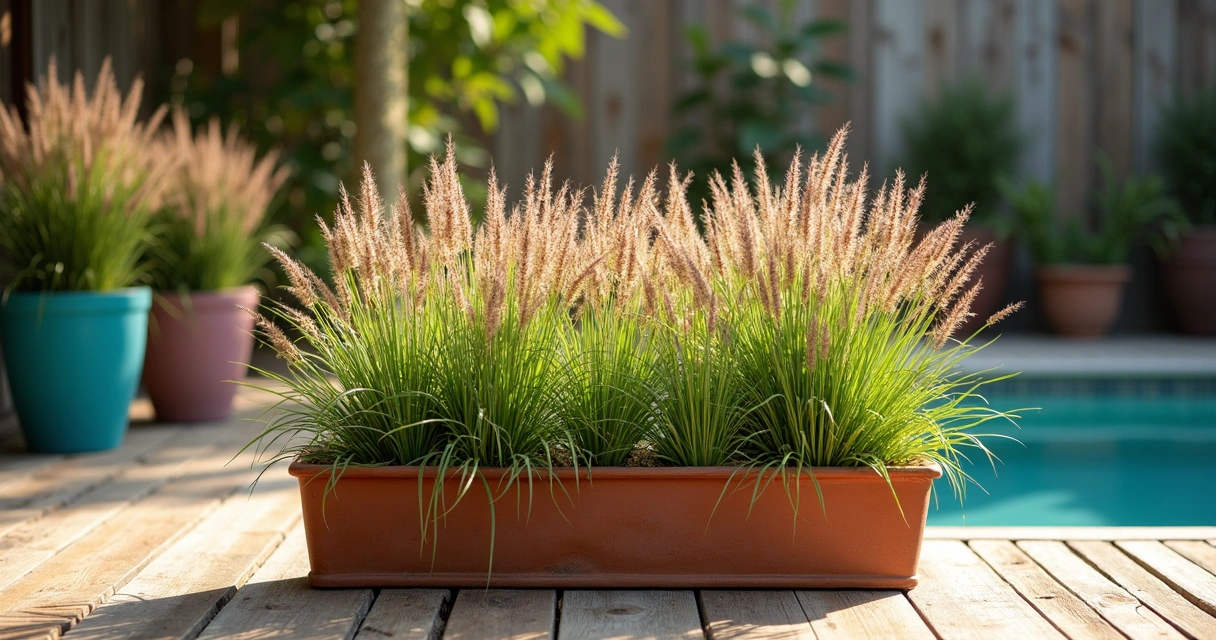 Flowering perennials that handle heat and storms
Structure and foliage matter, but for many of us, patio life is all about that pop of summer color. Maybe you don’t want a stuffy, green-only patio. I get it — so here are some summer survivors with real bloom power:
- Salvia types like Salvia greggii bloom steadily from spring to frost, withstanding relentless sunlight and sudden downpours. Their tough stems rarely break, and they spring back from wind damage.
- Lantana is a classic, celebrated for small clusters of flowers and cheerful colors. Drought, heat, wind — it seems oblivious to almost everything.
- Coreopsis gives a golden-yellow glow through the hottest days. Its delicate look is misleading — these are real workhorses.
- Verbena forms tumbling trails of pink, purple, or red, spilling over pot edges. It appreciates drying out between rainstorms, but bounces back each time.
Selecting the right perennials is part science, part luck. Sometimes an oddball will become your favorite, sometimes “foolproof” picks disappoint. That’s part of the fun.
Tips for patio plant success (July and beyond)
You might be thinking, “If these plants are so tough, do I even need to care for them?” Well, yes and no. The right species take half the work out of summer gardening, but a few finishing touches make the difference between survival and real beauty.
Picking containers wisely
- Heavy enough to resist wind. Choose broad-based pots for top-heavy plants, and cluster containers for stability when storms threaten. Lightweight pots will tip.
- Drainage always matters. No plant in Texas likes sitting in hot, soggy roots. Drill extra holes if needed.
- Color and material. Light-reflective containers keep root zones cooler, and terracotta or ceramic adds a little insulation.
Watering habits for the Texas patio
- Water deep but less often. Let soil dry slightly, then soak to the bottom. Frequent, light watering leads to weak roots and encourages rot.
- Place saucers under pots only ahead of storms, then empty them within a few hours. Standing water is not a friend during heatwaves.
- Consider wetting the patio floor early morning in heat spells. This cools the microclimate a bit and relieves some stress on roots.
Maintenance and problem-solving
- Inspect for sunscald or stress after intense afternoons. Some temporary leaf drop is normal — but check for pests or root problems if plants look exhausted every evening.
- Feed sparingly. July heat makes most plants grow slow; too much fertilizer causes more harm than help.
- Protect new plantings. Try to plant or repot early in the morning, not in the blazing sun.
You might notice that sometimes, despite best efforts, your cherished plant suddenly collapses. Sudden storms or dramatic temperature swings can cause plant shock, but there are signs and remedies for plant shock if you know what to watch for.
Sustainable practices for extreme summers
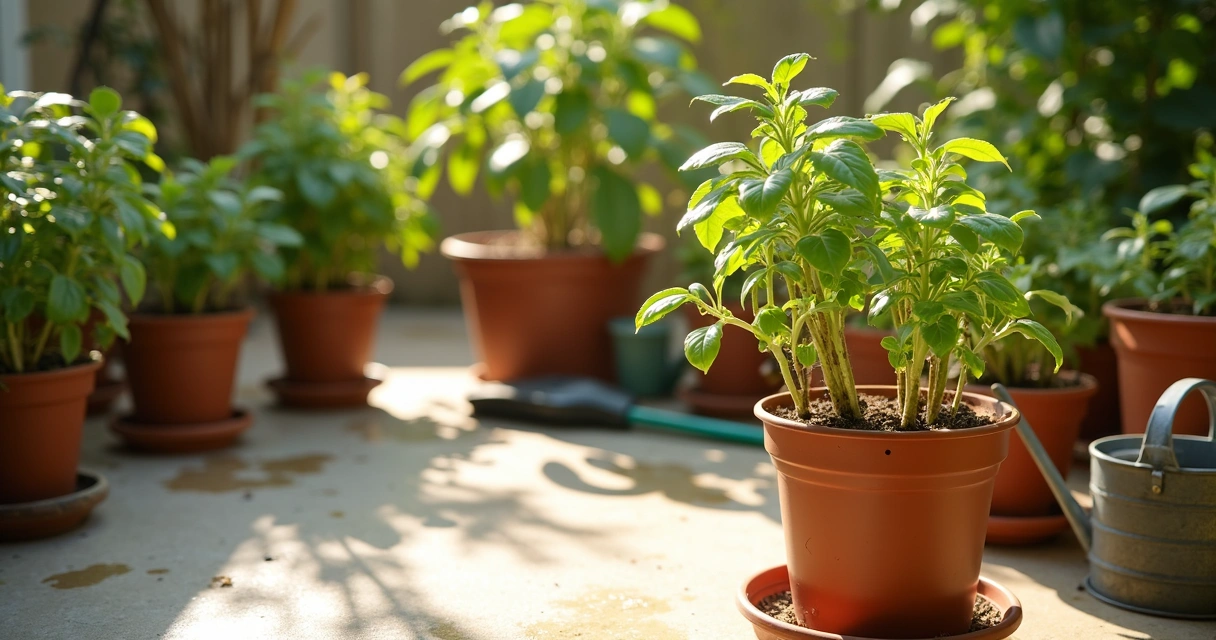 Sustainable practices for extreme summers
Hardy, climate-resistant plants naturally align with sustainable landscaping in Texas. Drought-tolerant choices mean less irrigation is needed, and wind-loving shrubs act as living fences, reducing reliance on artificial shade or barriers.
If you’re interested in reducing water use further, consider integrating your patio pots with low-water landscaping ideas for Texas — mixing native shrubs, groundcovers, and strategic hardscape elements.
Compost mulches inside containers slow evaporation and insulate roots, and grouping pots together creates cooler, more stable microclimates even in open patios.
In Texas, sustainable can mean simpler… but never boring.
Design inspirations from Urban Oasis projects
Sometimes, seeing is believing. At Urban Oasis, many of our patios combine tough plants and clever design to turn ordinary spaces into stylish, relaxing spots — even in tough months like July.
- Combining grasses like Muhlenbergia with massed succulents in oversized ceramic bowls — it brings movement and a hint of drama.
- Using a large, architectural agave as an anchor, framed by trailing lantana and Salvia for layered color.
- Shading delicate herbs or annuals under the slight canopy of dwarf yaupon or abelia — simple but effective.
- Creating “plant islands” on paved patios for softness and natural shade, using resilient coreopsis and verbena at the forefront for a wild, meadow-like feel.
Every project aims for lasting comfort, minimal maintenance, and the subtle luxury of real, living green. For more inspiration, our plant guides and case studies might spark an idea or two.
Changing with the seasons
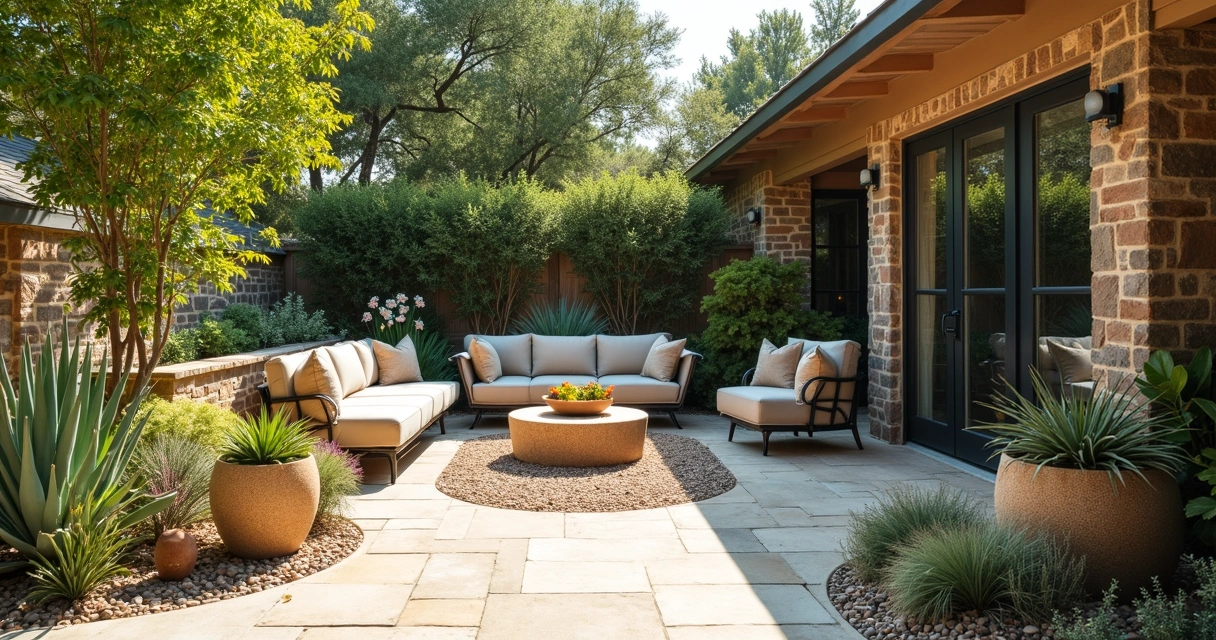 Changing with the seasons
July isn’t forever. Autumn brings relief, and sometimes even new challenges. But the plants and design you pick now shape your patio’s backbone year-round. If you’re planning for year-long success, there’s value in reading up on tips for every season and options that thrive even as temperatures fall.
Patios are personal, living spaces. Each planter holds a story, and every season tells a chapter. Sometimes, that includes a failed experiment — and that’s okay. The garden, much like life, is about returning again with a new idea once the storms pass.
The patio is an oasis, if you plant it right.
If you want an expert hand or a little guidance, or just wish to get inspired for your summer patio upgrade, Urban Oasis is always ready to help turn your ideas into a thriving outdoor reality. Your dream patio is waiting for you to start. Why not fill out the form below, and let’s create something enduring together?
Frequently asked questions
What are the toughest patio plants for Texas?
The hardiest plants for Texas patios tend to be those adapted to local climate extremes. This includes heat-tolerant shrubs like Texas sage and Abelia, sturdy succulents such as agave and sedum, and native ornamental grasses like Muhlenbergia lindheimeri. Flowering perennials like lantana, salvia, and coreopsis also stand up well to both sun and storm. These plants were selected because they survive in containers, handle heat, and keep going after wind or heavy rain.
How to care for heat-resistant patio plants?
It’s actually simpler than most think. Use containers that insulate roots and always provide drainage. Water deeply but infrequently, letting pots dry out a bit between soakings. Avoid mid-day watering; early morning is better. Mulch the surface of the containers to keep roots cool and reduce evaporation. During extended dry spells, wet the surrounding patio occasionally to lower ambient heat. Remove dead or damaged leaves promptly and feed plants lightly so they don’t grow too quickly in the heat.
Which plants survive Texas summer storms best?
Plants with fibrous or deep roots, thick or flexible leaves, and strong stems survive best. Shrubs such as Pride of Barbados, dwarf yaupon holly, and Texas sage recover quickly from wind and rain. Ornamental grasses like Muhlenbergia and Bouteloua keep their shape even after storms, while succulents like sedum and agave shed water swiftly. These choices are less likely to break, uproot, or rot after intense weather.
Where can I buy hardy patio plants locally?
Many local nurseries, garden centers, and some home improvement stores carry a selection of heat- and wind-resistant plants suited for the Texas climate. Always look for plants labeled as native, drought-tolerant, or heat-hardy. Choosing a reputable local supplier means the plants have likely been grown in similar conditions and will adapt better to your patio. For more plant recommendations and ideas, you can always check with landscape professionals or browse our latest plant features at Urban Oasis.
Is it worth growing drought-tolerant patio plants?
Absolutely. While even tough plants appreciate a little attention, drought-tolerant choices mean you spend less time worrying, watering, or replacing stressed out plants each summer. Plus, they support sustainable gardening by reducing water use, lower your bills, and still look beautiful all season. They’re well worth the initial pick.