
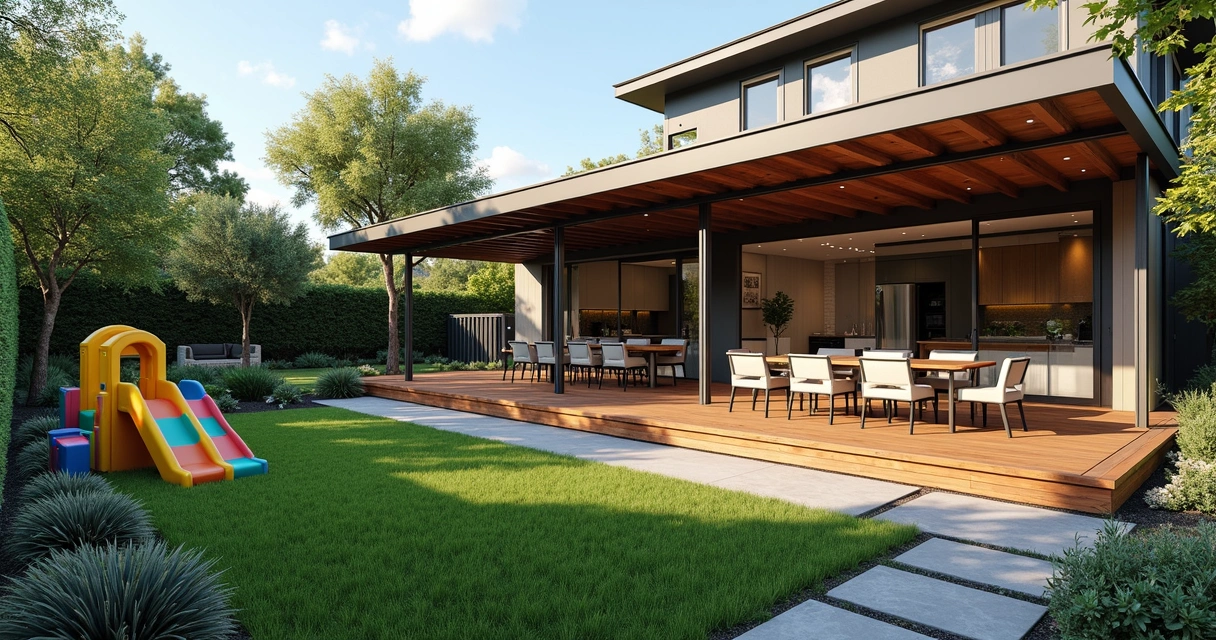
Some backyards feel like a compromise. Toys scattered across the lawn. Hard surfaces that look good, yet feel harsh for little knees. In Austin, sun and heat add one more twist. You want a yard that invites family play without losing the clean lines and mood you love. It can happen. In fact, it can look even better than you pictured.
I have seen it many times. A sleek patio holds a shaded lounge. A narrow path loops kids through a tiny bike circuit. A hidden storage bench swallows clutter. The space reads modern and calm, yet it hums with kid energy. If you aim for a thoughtful plan, the pieces click. Urban Oasis works from that mindset every day, shaping residential and commercial outdoor spaces that look refined and feel safe for children. I think that mix speaks to Austin life pretty well.
This guide walks you through practical steps, materials that hold up, and small design moves that keep things stylish. You get ideas for shade, play, and dining that fit the way your family moves. The result is not a child zone dropped into a grown-up yard. It is one landscape that adapts to both.
Beauty works harder when it serves a purpose.
Start with a simple plan that fits your family
Before you pick swing sets or tiles, sketch a light plan. It does not need to be polished. It just needs to capture your life. For a family backyard in Austin, I suggest three core zones that link like a small loop.
- Active play: room for running, climbing, and rolling, even if it is compact.
- Quiet play and reading: a shady corner with a bench, chalkboard wall, or sand-and-water bin.
- Grown-up living: dining, cooking, and lounging with clear views to the play area.
Decide how you want to supervise. Place the play area where you can see it from the kitchen or the main seating spot. Sightlines matter. A small shift in location can save you from constant back-and-forth.
Think about flow. Kids move in loops. Add a path that lets bikes and scooters circle without cutting across cooking or fire features. It sounds tiny. It changes everything.
 Safety that blends into the design
 Safety that blends into the design
Good looks are not lost when safety leads. Often, the opposite is true. Clean lines, simple forms, and smart materials make a space safer and better to use. A few points carry a lot of weight.
Pool and water features
If you have a pool or plan to add one, a fence around all four sides is non-negotiable. Guidance from Nationwide Children’s Hospital points out that more than a thousand children drown each year, and many of these losses could be prevented with a four-sided barrier at least 4 feet high that has a self-closing, self-latching gate. Go for a clean black powder-coated steel fence, or a modern cable system, and match it to your palette. It can even look like part of the architecture.
For shallow water features, like rills and reflecting pools, use grates and child-height edges that are blunt, not sharp. Keep the water moving to reduce algae and heat build-up. That is helpful in Austin summers.
Fall zones and surfacing
Falls are common in childhood play. The same hospital guidance also notes that a 12-inch layer of wood chips or mulch under play equipment reduces risk. Rubber surfacing, engineered wood fiber, or turf with shock pads can work too. Pick one or combine them so the area reads like a designed garden, not a playground dropped from a catalog.
For climbing walls or balance features, keep fall heights low. Small challenges, often repeated, are better than big ones that are used once and scare younger kids. It is a calm path to confidence.
Sightlines and boundaries
Use low walls, planters, and hedges as soft barriers. They guide kids away from grills and pizza ovens without shouting it. A painted steel edge flush with turf keeps wheels off fragile beds. Subtle cues work.
Materials that look refined and handle family life
Materials do a lot of the heavy lifting. They set the tone and set the rules of use, almost without words.
- Composite or hardwood decking: warm underfoot, clean lines, and easy to sweep. For construction and finish ideas that match modern homes, see the approach in Urban Oasis’s deck installation service.
- Concrete with a sand finish: soft texture, not slippery, and looks sharp with steel planters.
- Large-format porcelain pavers: crisp joints, high durability, and light color to reduce heat gain.
- Artificial turf with a shock pad: no mud, fast drainage, and a clean look. This is a workhorse in high-traffic play zones, and the details on infill and base prep in Urban Oasis’s artificial turf service explain why it stays nice for years.
- Powder-coated steel and aluminum: for railings and pergolas, with rounded edges where small hands grip.
Finish colors shape mood. Rich wood, soft gray concrete, matte black metal, and a few plant textures give you a modern palette that still feels warm. You can add color through outdoor cushions or kid art panels. When a piece fades or ages, it is easy to swap without redoing the whole space.
Under the Austin sun
Heat and drought can be tough on lawns and edges. Good design respects climate. I think it makes spaces more honest too.
- Shade: pergolas, shade sails, and trees placed to cool play and seating at mid-day. Slatted roofs throw lovely patterns and cut glare.
- Plants: natives and adapted species like Mexican feather grass, cenizo, rosemary, and agaves. They thrive with less water and give that sculptural look.
- Turf decisions: mix real grass in low-wear zones with synthetic in high-traffic loops. That balance cuts maintenance. For more ideas on easing upkeep without losing impact, read about low-maintenance, high-impact landscaping.
Water wisely. Drip irrigation for beds and smart controllers help you keep plants healthy through the hottest weeks. It is practical and keeps the garden looking fresh.
Play features that double as design
 Play features that double as design
The best kid areas feel like part of the landscape. They read as sculpture or furniture. They invite all ages to sit, climb, and linger.
- In-ground trampoline: placed level with turf and ringed with a rubber transition strip. Clean and safe.
- Balance logs and steppers: cedar rounds or precast concrete pads set in mulch add a natural path.
- Climbing wall panel: one wall of the house or a freestanding frame with holds and a thick fall zone.
- Sand-and-water play bin: a lidded cabinet that flips open, easy to tidy when guests arrive.
- Sensory garden: herbs, textured leaves, and a small gravel rill that trickles during playtime.
- Loose-parts kit: crates with blocks, ropes, and fabric. They feed imagination without wrecking the look.
Diversity helps children feel at ease. Findings from research in Frontiers in Public Health show that more fixed features, more seats, and varied surfacing correlate with lower social anxiety in kids. A well-equipped yard can nudge shy children to join in. That is a lovely bonus.
Adult space that still watches the kids
You deserve a grown-up place to unwind. Yet you also want eyes on the action. There is a sweet spot where both happen without fuss.
- Dining near the kitchen door: less carrying of plates, more time at the table.
- Outdoor kitchen or grill island: set just outside the main traffic loop, with heat guards and a prep surface that faces the play area.
- Lounge with shade and fans: the best seat in the house for supervision, with comfortable cushions and a side table for drinks and books.
If you like to host, draw ideas from Urban Oasis’s guide to designing outdoor spaces for entertaining in style. Features that serve guests also serve families, like flexible seating and lighting you can dim during movie night.
Shade, breeze, and comfort
 Shade, breeze, and comfort
In our climate, comfort is design. Shade by noon, air movement by late afternoon, and a cool surface underfoot make the yard usable longer through the year.
- Pergolas and trellises: slats oriented to catch the high summer sun.
- Trees placed with care: deciduous species that cast deep shade in July and let winter light in.
- Misters and fans: low-profile lines integrated into beams, plus quiet fans over seating.
- Light-colored finishes: on pavers and walls to reflect heat, with darker accents for contrast.
Lighting that sets mood and improves safety
Low-voltage lighting turns the yard into a night room. It guides steps, marks edges, and makes the garden feel calm.
- Path and step lights: keep scooter loops visible and stairs safe.
- Downlights in pergolas: soft pools of light on tables without glare in eyes.
- Motion sensors: at side yards and gates to catch late play or curious pets.
Do a quick test after dark. Walk as a child would. Do the corners feel safe? Do you spot any tripping hazards? Small tweaks go a long way.
Storage that makes cleanup fast
Clutter kills the vibe. A few built-ins save the look and your patience.
- Bench with lift-up lids: balls and blocks vanish in seconds.
- Wall cabinets in the side yard: for paint, chalk, and garden tools, locked when needed.
- Planter-height cubbies: that double as side tables for the lounge.
When things have a home, the yard resets. Guests arrive, and it looks like a resort again. Well, almost.
Grow-with-me design
Kids grow. Their play shifts from digging to climbing to gathering with friends. Your design can keep up with light touches.
- Modular elements: freestanding panels for art or climbing that you can swap for a bench later.
- Multi-use lawns: open enough for games, with anchor points for a future net or movie screen.
- Paver layouts: designed so new features can plug in without redoing the whole surface.
Build in the bones that last. Allow the details to change. I think that is the smartest path in a family backyard in Austin.
Simple routines that keep kids safer
Design helps, but habit helps more. Quick routines keep play healthy and calm.
- Check gates and latches before kids head outside.
- Scan for tripping hazards, like hoses and stray toys.
- Rake or fluff mulch under play spots every week or two.
- Confirm your pool fence self-closes every time.
- Set a few ground rules that fit your yard, and post them near the door.
When parents feel good about safety, kids move more. A study published in the National Library of Medicine found that children in neighborhoods perceived as safer get more days of physical activity and use recreational spaces more often. A well-designed yard can feed that perception. It shows care in a very visible way.
Budget, phasing, and value
Budget is real. You can still reach a strong result. Think in phases and put your money where it shows every day.
- Phase one: safety and structure. Fencing, gates, primary surfaces, and shade.
- Phase two: play features and storage. Pick a few flexible items first.
- Phase three: kitchen upgrades, fire features, and lighting layers.
Homes with thoughtful outdoor living tend to draw more interest. If you like to keep an eye on resale, take a look at how Austin yards gain ground in this overview of top outdoor living trends that are boosting property value in Austin. Even small moves, like shade and low-maintenance planting, can add appeal.
How Urban Oasis ties everything together
 How Urban Oasis ties everything together
Every family and lot is different. Urban Oasis starts with a clear talk about how you live, then shapes a plan that fits your style and budget. The team lays out zones, picks materials that look good and hold up under play, and maps sightlines so you can relax while kids roam. The process runs from concept to revisions, approval, and construction, with steady updates along the way. If a deck or patio needs a smart tweak for safety or an Austin code requires a specific pool fence, that gets handled in stride. Sustainability shows up in plant choice and water-wise irrigation, not as an afterthought.
If you want to host, the design accounts for guests. If you want a quiet morning with coffee, the bench sits where light reaches, just so. It sounds small. It is the difference between a yard you visit and a yard you live in.
Conclusion
Kid-friendly and stylish do not fight each other. A modern family yard can look polished and still invite wild games, chalk drawings, and lazy reading in the shade. Start with clear zones, set safety into the design, pick honest materials, and plan for growth. Austin sun and heat will test your choices, so lean on shade, airflow, and drought-tolerant planting. The rest is rhythm and routine.
If you want a hand shaping that plan, Urban Oasis can help you map it, build it, and keep it looking new. Share your wishlist, and we will turn it into a yard that serves every age without losing the look you love.
Ready to talk about your space and goals? Send us a quick note and we will reach out to schedule a friendly call.
Frequently asked questions
What is a kid-friendly backyard design?
It is an outdoor layout that blends safe play with adult living in one cohesive space. You get clear zones for active and quiet play, materials that cushion falls, shade for comfort, and sightlines so adults can supervise without hovering. In Austin, it also means planning for heat, choosing drought-tolerant plants, and using surfaces that stay cooler. The style can be modern, rustic, or minimal. The key is that every choice supports both form and function.
How can I make my backyard safe for kids?
Start with barriers around water. A four-sided fence at least 4 feet high with a self-closing, self-latching gate is recommended by Nationwide Children’s Hospital. Add impact-absorbing surfacing where kids climb or jump, such as 12 inches of wood chips, rubber, or turf with a pad. Keep grills and fire features outside the main play loop. Add step lights for night use, and choose soft edges on furniture and railings. Finally, place play zones where you can see them from your main seating area.
What are the best backyard features for children?
Great picks include an in-ground trampoline, a scooter loop, balance logs, a chalkboard wall, and a lidded sand-and-water bin. A small sensory garden with herbs and textured plants adds calm. Research in Frontiers in Public Health links varied features and surfacing with lower social anxiety in kids, so mixing elements helps. Keep fall heights modest and focus on spaces that invite repeated use rather than one oversized structure.
How to keep a stylish backyard with kids?
Choose a simple material palette and repeat it. Think warm wood, smooth concrete, matte black metal, and green planting. Hide clutter with built-in storage benches and wall cabinets. Use play features that read like sculptural pieces. Reserve a clean dining and lounge area for adults, but give it clear views to play. Good lighting helps the yard feel calm after dark, even when toys are tucked away moments before.
How much does a kid-friendly backyard cost?
Costs vary with size, materials, and features. As a loose guide, basic safety upgrades, a simple patio, and a small play corner might start in the lower tens of thousands. Adding a pergola, outdoor kitchen, in-ground trampoline, and custom storage can push higher. Many families phase projects over time. Begin with structure and safety, then add play features and lighting later. Urban Oasis can outline a phased plan so you can build in steps without losing the cohesive look.