

Texas summers aren’t quiet. They start with a long, hot breath that lingers over yards and cityscapes. You can almost feel the sun bearing down, especially in July when heat domes settle over Central Texas. Even the hardiest gardeners might hesitate, their sprinklers sputtering against drought’s persistence. And yet, beneath that blazing sky, something unexpected happens in certain landscapes: native succulents and cacti continue to thrive—unfazed, unhurried.
This is not just nature stubbornly refusing defeat. It’s a carefully balanced strategy—one built across millennia, visible today in gardens and commercial spaces that embrace these plants as low-water champions. With the right selections and care, these local succulents and desert cacti not only endure oppressive heat but actually seem to celebrate it.
Projects like Urban Oasis have seen firsthand how smart use of succulents can bring both luxury and sustainability to modern outdoor living. But before diving into transformations, it’s worth understanding how and why these native wonders are wired for Texas’s toughest months.
What exactly is a heat dome?
A heat dome arrives when a strong ridge of high pressure forms in the atmosphere. Imagine an invisible lid pressed down over the region, trapping warm air below. Under this lid, temperatures rise quickly, and rainfall becomes scarce. While everyone notices the discomfort, plants feel it even more intensely. Grass yellows, moisture-loving ornamentals wilt. Water restrictions become a reality in neighborhoods across Austin, San Antonio, and beyond.
Some plants only survive. Others thrive—no matter how relentless the heat.
That’s where the real magic of Texas-adapted succulents begins.
How succulents and cacti survive Texas heat
The secret isn’t glamorous, but it’s powerful. Native succulents and cacti are distinguished by how their bodies function. Their leaves, stems, or roots harbor specialized water-storage cells, letting them bank moisture for the long dry spells ahead. These plants are shaped by evolution to live in extremes, with efficient photosynthesis and waxy surfaces that slow water loss.
According to research on drought-resistant plants in Texas, native cacti and succulents not only hoard water, but also regulate evaporation and resist sunburn through tough, sometimes spiny, skin. It’s almost as if the plants have read the weather report.
Why native over imported succulents?
There are global succulents, but Texas’s own species have something extra. They’re genetically tuned for the region’s seasonal punches. By their nature, they sync with local rainfall, temperature swings, and soils. Imported succulents might look appealing at first sight, but they’re more prone to rot or sunburn under the punishing Central Texas summer.
Choosing species that are native (or hyper-adapted) to the Lone Star State isn’t trend chasing. It’s practicality wrapped in beauty—a philosophy Urban Oasis embraces for both private and commercial projects.
Benefits of using native succulents and cacti
- Conserve water: Even during strict water restrictions, they require minimal irrigation.
- Support local wildlife: Many attract pollinators like bees, butterflies, and hummingbirds.
- Minimal maintenance: They shrug off pests, disease, and the need for constant attention.
- Sustainable: Reduce your landscape’s environmental impact and align with modern green-building priorities.
- Reliable beauty: Their shapes, colors, and seasonal blooms create visual interest, even when everything else looks tired.
Meet the low-water legends of central Texas
With so many species across the state, it’s easy to get lost. But a few stars truly shine during the suffocating heat domes of July and August. Whether you crave silvery spikes, sculptural silhouettes, or the surprise of bright desert blooms, there’s a local drought succulent or cactus for your scene.
Agave
- Parry’s Agave (Agave parryi): This slow-growing succulent looks like living art. Its thick, blue-green leaves form tight rosettes, and the entire plant may reach three feet across. According to studies of drought-tolerant perennials in Central Texas, Parry’s Agave endures both blistering summers and bitter winter lows. Once mature, it sends up a dramatic flower spike—then gracefully bows out, replaced by smaller “pups” it leaves behind.
- American Agave (Agave americana): Instantly recognizable for its massive, arching leaves edged with yellow or white. While often seen in public places, it works beautifully in residential gardens that need a focal point. You can almost forget it’s there, except for when you catch its sculptural form backlit at sunset.
Prickly pear cacti
Several species call Texas home, but Engelmann’s Prickly Pear (Opuntia engelmannii) stands out. Its blue-green pads and bursts of yellow flowers every spring sound like celebration to pollinators. The fruit, or “tuna,” is not only edible—it’s surprisingly sweet. The plant asks for almost nothing: gritty, fast-draining soil and an occasional drink, even during the harshest periods (see details on Texas-native cacti).
 Texas sotol
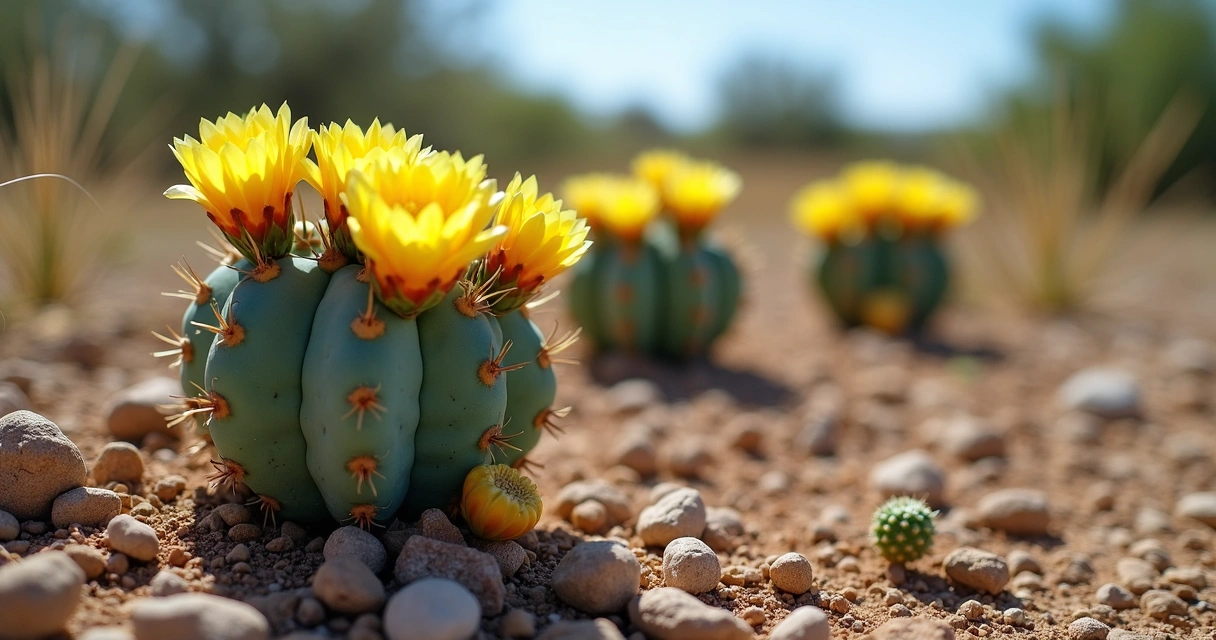 Texas sotol
Dasylirion texanum is more than just a pretty accent. Its grass-like leaves, edged with small teeth, arch in every direction to form fountains of silver-green. It’s remarkably cold-hardy and can be a year-round highlight in xeric or cacti landscapes. This plant is ideal for those who want a Southwestern look with durability to match (reference on cold-hardy succulents).
Red yucca
Hesperaloe parviflora often surprises people: despite the name, it isn’t a true yucca, but it delivers all the architectural flair. Each rosette pushes out long, rigid leaves. In summer, tall spikes erupt with red or coral, bell-shaped flowers that attract bees, butterflies, and especially hummingbirds. This perennial starts blooming in May and continues into October, asking for almost no help in return (reference for landscape succulents).
Yucca species
A few common types thrive in Central Texas’s intense sun:
- Twistleaf Yucca (Yucca rupicola): Short, with curly-tipped leaves and ivory blooms each spring or early summer.
- Spanish Dagger (Yucca gloriosa): Stiff, sword-like leaves and a loyal tolerance for rocky, dry ground.
Sedum
The name might sound dainty but Sedum is one of the toughest groundcovers you’ll find. Low, spreading, and dense, its leaves come in varied shapes and colors. Some develop pink, yellow, or white flowers that hover over the mat-like foliage. Plant them where nothing else seems to survive, and they almost always rise to the challenge.
Portulacaria afra (elephant bush)
Native to South Africa but well-adapted to Texas, Portulacaria Afra can handle temperatures well over 100°F and contributes softness to otherwise spiky landscapes. It’s fleshy, upright, and deep green—making it perfect for commercial installations and lush-feeling yet dry spaces (see study on heat-loving succulents).
Pointers for thriving succulents during heat domes
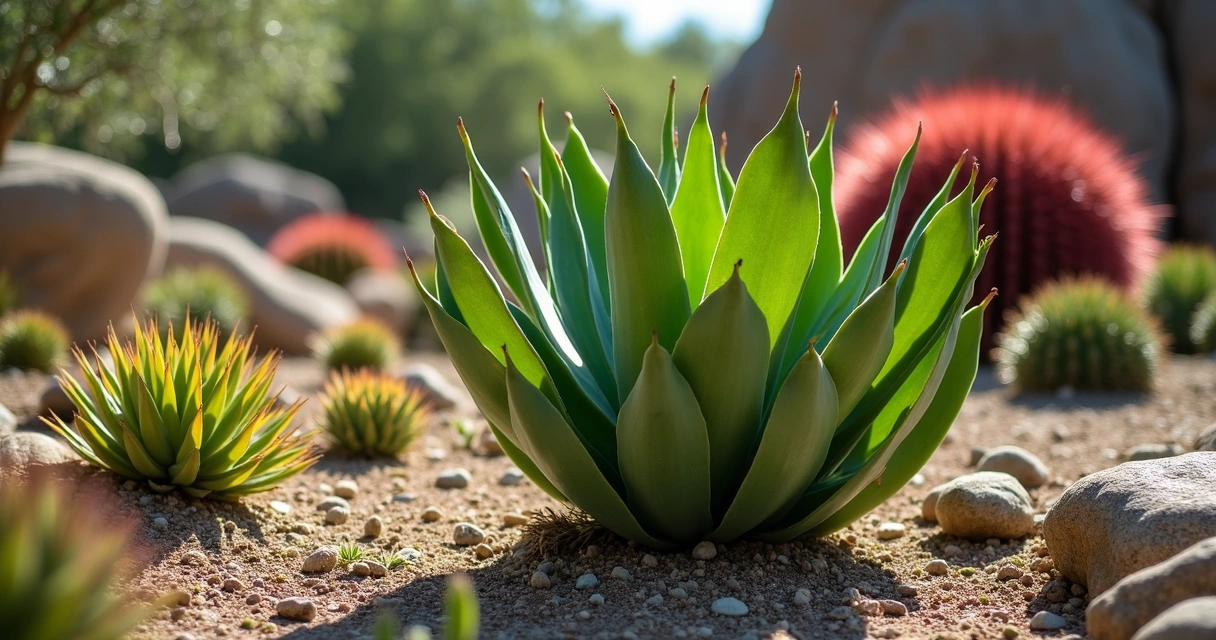 Pointers for thriving succulents during heat domes
Even native succulents and cacti can flounder if neglected or misplaced. Success in Texas summers involves a simple, almost stubborn, adherence to a few basics.
- Soil first: Use gritty, fast-draining soil. Heavy clay holds water that spells doom for most succulents. Consider raised beds or mounds to improve drainage, especially if you’re working with tough subsoil.
- Planting: Give each plant space to breathe and stretch. Crowded roots are a recipe for disease. Plus, spacing accentuates their sculptural shapes.
- Watering: Deep, infrequent watering is best. Let the soil dry out completely between sessions. Overwatering is, arguably, the main killer for cacti and drought succulents (watering recommendations for succulents).
- Sunlight: Most Texas-native succulents crave full sun. Young or recently planted specimens sometimes need afternoon shade until they’re established, but don’t baby them for too long.
- Mulch lightly: Avoid thick, moisture-retaining mulches. Instead, opt for a rocky or gravel surface—this mirrors their natural habitats and prevents rot.
- Watch for stress: If leaves shrivel, turn yellow, or pads look sunburned, you might need to adjust placement or explore short-term shading. Sometimes a period of plant shock is normal. There’s extra reading on this at how to recognize and help your plants in shock.
Design ideas: blending style and survival
With their bold outlines and subtle color shifts, drought succulents can be both practical and beautiful. But I think, sometimes, their reputation for looking “harsh” is undeserved. People imagine piles of rocks and the occasional forlorn agave. The reality? With a layered approach, succulents can look lush and intentional.
Native Texas succulents turn heat and drought into a canvas for creativity.
If you’re looking for inspiration, check some of Urban Oasis’s plant-centered transformations and projects that highlight low-water landscaping beauty. You don’t have to start with a blank slate. Small changes—replacing struggling shrubs with cluster plantings of sedum and red yucca, adding a raised bed with variegated agaves, or simply swapping lawn sections for cacti—can have a dramatic impact.
Visual strategies that work
- Sculpture through plants: Use yuccas, agaves, and sotols as living statues. Clump in odd numbers and offset heights for rhythm.
- Fill space with color: While many succulents favor subtle tones, their blooms—yellow, coral, even deep magenta—offer surprise. Plan for flower “waves” to provide ongoing interest.
- Play with textures: Fine-leaved sotols against broad prickly pears, or spiny agaves in line with soft, mound-forming sedum, keep the garden dynamic.
Overcoming common problems
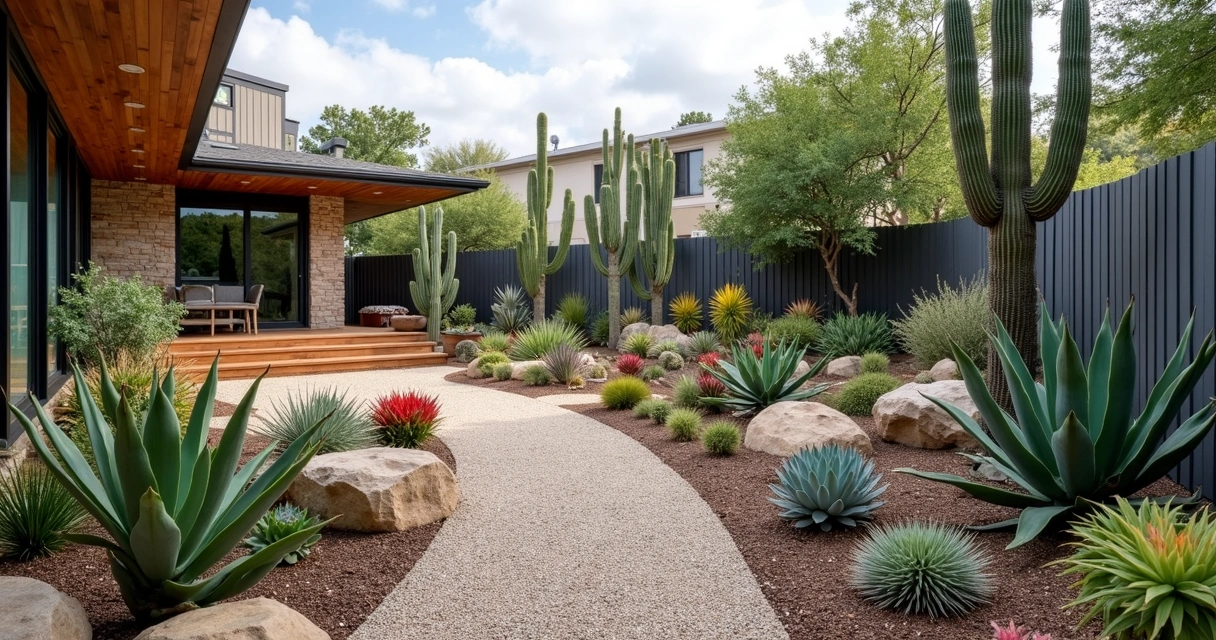 Overcoming common problems
While the promise of set-and-forget gardening is appealing, it’s not always that straightforward. Sometimes there’s trial and error—succulents might be too shaded, overwatered, or exposed to winter’s worst when young.
- Sunburn: New transplants may need shade cloth for their first summer. Even a seasoned cactus can scar in a record-breaking heat wave.
- Root rot: If the plant wilts despite dry surface soil, its roots are likely sitting in moisture. Check drainage, and remember: heavy downpours still require the soil to dry quickly.
- Pests: While drought succulents are rarely bothered, occasional scale insects or mealy bugs can appear—usually on stressed plants. Remove by hand or rinse with water at the first sign.
For more seasonal guidance, here’s a resource on keeping landscapes thriving year-round. After all, Texas summers are only one chapter in a much longer story.
Urban, commercial, and residential projects
Drought-tolerant landscaping with native succulents isn’t only for private homes. Urban Oasis has brought these plantings to office parks, boutique hotels, condos, and public spaces. Their resilience pairs well with high-activity areas, needing only minimal ongoing maintenance, and still looking fresh after long weekends without irrigation. Plus, the Texas landscape, with its natural drama, becomes an appealing backdrop for outdoor gatherings or a private retreat for relaxation.
For broader insights, the landscaping knowledge base covers a variety of approaches—blending native plantings with decks, pools, pavers, and modern architecture.
Transforming your outdoor space with Urban Oasis
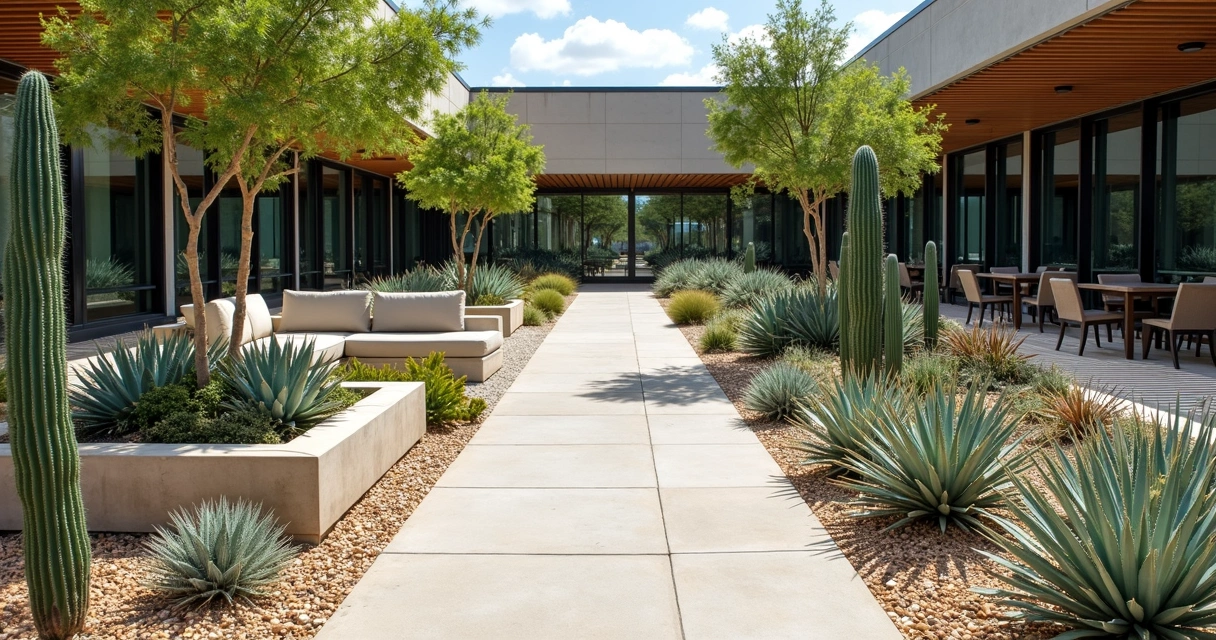 Transforming your outdoor space with Urban Oasis
Maybe this feels overwhelming—a lot of Latin names, a dizzying number of varieties, and no obvious place to begin. Take a breath. There’s no real need to memorize botanical differences or commit to a full landscape overhaul today.
Sometimes all it takes is a single prickly pear or silvery agave to start the story.
Urban Oasis focuses on simplifying this process, whether you’re looking to refresh a front entry or create an outdoor entertainment area where guests can gather even as the thermostat surges past 105°F. Every step—from the first sketch of a design to the final drop of water on a new plant—is crafted to fit your needs, your space, and your budget.
If there’s a lesson in all of this, it might be: Nature doesn’t ask for perfection. It rewards patience and the right choices at the right time. Your dream landscape can stand strong even under the hottest, longest heat dome.
Ready for more? Take the first step toward a water-wise, beautiful, and climate-ready landscape. Fill out our consultation form below to begin a conversation with Urban Oasis and see how your outdoor space can thrive—no matter what the Texas summer brings.
Frequently asked questions
What are the best native succulents in Texas?
Some of the top-performing succulents and cacti in Texas include Parry’s Agave (Agave parryi), Engelmann’s Prickly Pear (Opuntia engelmannii), Texas Sotol (Dasylirion texanum), Red Yucca (Hesperaloe parviflora), and native yucca species like Twistleaf Yucca. These choices are well-suited to intense heat and can handle long dry spells with little extra water.
How to care for Texas native succulents?
Provide well-draining soil (avoid heavy clay), and plant in full or mostly full sun. Space them apart for air flow. Water deeply but not often—let soil dry completely between waterings. Don’t use thick, moisture-holding mulch. Watch for early signs of stress and avoid frequent handling. For extra tips, consult information on helping plants recover from stress and keeping your landscape healthy year-round.
Where can I buy Texas native cacti?
You can find native Texas cacti at local plant nurseries and garden centers that focus on regional or drought-tolerant plants. Sometimes, county extension sales or local botanic gardens offer direct sales or advice. Be sure to purchase from reputable sources that grow plants sustainably—avoiding wild-collected or imported stock.
Are native succulents drought-resistant in Texas?
Yes, most native succulents and cacti are extremely drought-resistant for Texas. They have evolved structures to store water and reduce evaporation, thriving in heat with very little irrigation (more info about drought resistance). Always remember, newly planted specimens need a little more water until their roots are established.
What makes Texas succulents good for heat domes?
Native succulents and cacti in Texas manage vapor loss, tolerate scorching sun, and store ample water for weeks at a time. Their physiology is adapted to both sudden drought and rapid temperature changes. Architectural forms and waxy coatings protect them—even when temperatures soar under a persistent high-pressure heat dome.