
I have seen firsthand how the idea of having a versatile outdoor activity space has captured the imagination of many homeowners. Especially here in Texas, where the sun shines generously and time outdoors brings people together. But what happens when your backyard space feels tight? Is it possible to fit a full-featured multi-sport court where land is at a premium? I believe it is, and I’ll tell you how I approach this challenge step by step.
Why a multi-sport court makes sense in 2026
Backyard courts aren’t just for shooting hoops anymore. In my experience, families and business owners alike want spaces that adapt quickly: pickleball in the morning, basketball in the afternoon, and even a mini soccer or volleyball match in the evening. The mix of flexibility and fitness is driving a strong trend toward multi-use surfaces in both residential and small commercial settings, something that Urban Oasis has prioritized for years in our projects.
I think it’s more than a fad. Instead, multi-sport courts are answering real needs: increased activity for kids, social gatherings, new sports like pickleball, housing value boosts, and, of course, pure fun. Many clients want their backyard to transform from a tranquil escape to an active playground, often within a matter of minutes.
Create more memories with less space.
Evaluating your backyard: the starting point
Before anything else, I always suggest standing in your backyard with a fresh eye. Don’t worry about what’s there now, imagine the possibilities. Grab a tape measure, note every tree, fence, and slope. How close are you to your neighbors? Is there an old shed or a landscape feature you’d be happy to move? Jot everything down.
- Measure the length and width of the clear, usable yard space (in feet and meters, if possible)
- Look for obstacles or chronic issues (soggy patches, large tree roots, slopes)
- Determine where sunlight falls (south-facing yards stay warmer, but also get more direct sun)
- Consider how your family or group currently uses the yard
Knowing your actual available square footage will determine what type and size of court you can install.
Often, what looks “too small” might fit a court if the space is efficiently used. I have helped clients see potential where everyone else saw dead grass.
Understanding space requirements for multi-sport courts
Small Texas backyards often range from 600 to 2,500 square feet. Of course, you won’t squeeze a full tennis court into most lots, but you’d be surprised what fits when designed with flexibility in mind. Here’s what you can expect to fit in a limited area:
- Pickleball: Minimum recommended court is 20 feet x 44 feet (doubles court size); with buffer zones, it can reach around 30 x 54 feet, but tighter spaces are possible for casual play.
- Basketball (Half Court): A simple key and hoop can fit within 25 x 25 feet, but a more versatile half-court is 30 x 50 feet.
- Mini soccer/futsal: Fun versions fit within 16 x 27 feet up to 33 x 66 feet.
- Volleyball: Recreation-grade courts fit in about 30 x 60 feet. With creative design, slightly smaller is passable for informal games.
- Multi-use markings: You can combine basketball, pickleball, four square, hopscotch and more on a single court, especially with clever painting and dividing nets.
Combining two or more sports on the same surface is absolutely possible with the right planning.
If you need some creative ideas, I recommend checking the sports field concept showcases from Urban Oasis, where you’ll see how adaptable layouts work in real life.
Designing for flexibility and maximum use
I never treat two families or backyards the same. Every client brings their unique sports interests and style. The best backyard courts, especially smaller ones, come from designing with flexibility, so you get the most activities out of the same square footage.
Multi-use line markings
I find that using different colored lines for each sport is a smart way to help everyone play their game without confusion. For instance:
- Red for basketball (key, 3-point line, free throw line)
- White for pickleball
- Yellow for volleyball boundary
- Small blue squares for four square or agility drills
You’d be surprised how little the markings distract from the look if chosen well. Painting the court with UV-resistant colors is a must for the Texas sun.
Clever equipment choices
“A hoop is just a hoop” isn’t something I say. Depending on the sports you want most often, I’ll recommend adjustable basketball goals that fold or lower, removable pickleball nets, portable soccer goals, or combo poles that let you swap between basketball, pickleball, and volleyball setups in a few minutes.
A flexible court grows with your family’s interests.
Retractable and modular accessories
It always impresses my clients to see a pickleball net that clicks away or storage that keeps balls and rackets tucked out of sight. Modular surfaces with drainage and quick-swap court tiles can reduce maintenance and adjust for future sports as needs change.
Choosing the right court surface
Surface selection makes all the difference for performance, safety, and maintenance. In Texas, it’s not just about playability, the right surface keeps heat at bay and stands up to wild temperature swings and the yearly pollen season.
Concrete vs. modular sport tiles
- Concrete: Durable, cost-effective, and easy to paint; can get hot but is easy to clean. Requires proper drainage and might need resurfacing over time.
- Modular sport tiles: Snap-together tiles offer shock absorption and fast drainage. Cooler surface in summer, less fatigue, and many colors. Slightly more cost but easier to repair and swap for different sports.
In my own work, I’ve often seen families choose a modular surface for comfort and slip-resistance, especially if younger kids use the court often. Still, concrete remains a popular choice for those who want a low-budget solution or already have a prepped slab.
Artificial turf integration
I appreciate the trend of adding artificial turf borders or even hybrid turf-court surfaces, as seen in Urban Oasis installations. Turf reduces the heat, gives safe landings, and creates areas for warm-ups or bocce ball. Maintaining natural grass near a court is tough, so I normally advise on either mulch or artificial turf transition areas. For more on these options, I recommend reading about artificial turf solutions and how they boost year-round playability.
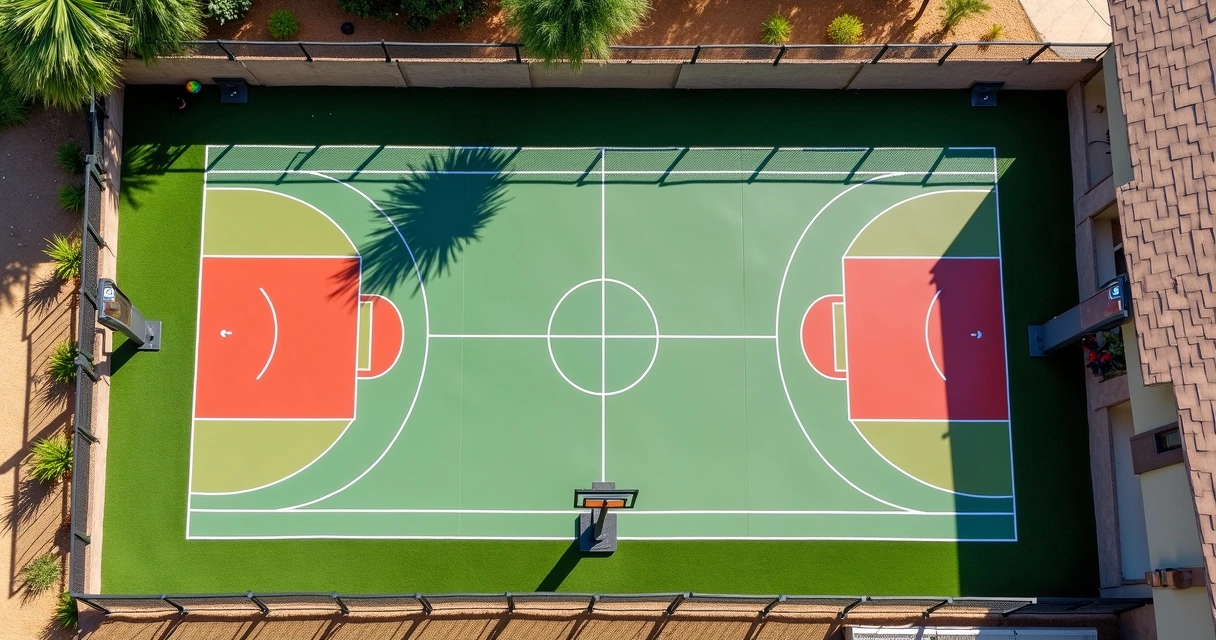
Smart orientation and layout tips
The way you lay out your court will affect everything from glare to usability. Through my experience, these layout choices boost court quality in small yards:
Sunlight and wind
If you can, orient the main play axis north-south. This reduces the risk of direct sun in players’ eyes at peak times. I try to tuck the court into the side of a building, a fence, or shade trees for late-afternoon relief, but always making sure visibility stays clear and debris (like oak leaves) stays out of play.
Access and safety
- Provide a clear and safe pathway from your main house or gate, ideally with slip-proof pavers or LED lighting for evening play.
- Fencing should be high enough to keep balls in, but not so enclosing that it feels tiny, 8 ft mesh or netting tends to work.
- Consider a safety zone around the edges, even just 2-4 feet, so no one crashes into a fence after a fast play.
Blending with the landscape
A sports court does not have to look disruptive. I love using native Texas plants, mulched beds, and decked seating nooks to soften the border of the court. Sometimes I’ll design a small pergola for shade or add low-voltage landscape lighting, so the court is inviting even at night.
For more landscaping inspiration that requires less maintenance but gives high impact, the Urban Oasis article on smart low-maintenance landscaping is a valuable read.
Good design makes a court feel like it’s part of the backyard, not just placed in it.
The court construction: permits, prep, and timing
No matter how small, every court needs careful preparation and (sometimes) permits. What you’ll need will depend on your local Texas city or county, but here’s what I recommend checking early:
- Is your home in an HOA? Their rules may cover court placement, height, and even colors.
- Property line setback: Most Texas towns require courts or sheds to be at least a few feet from fences or property lines.
- Height limits: Fence or netting height often has a cap (often 8 feet in residential areas).
- Drainage: Don’t block the flow of water. Your new court must allow rain to drain away from your house and neighbors.
- Permits: A concrete slab may need a small construction permit; modular tiles rarely do, but always check first.
In my projects, the average timeline (from the first consultation to opening the “new court” for play) is 4–8 weeks, depending on weather and surface selection. The initial site prep, like grading, debris removal, or prepping a sub-base for tiles, is key. Water pooling can ruin even the most expensive court, so I never cut corners here.
Solid prep means years of trouble-free play.
Customizing your court: features, colors, and extras
Small doesn’t have to mean plain. I love adding custom touches that let your court reflect your family’s style or your company’s brand. Here are ways to make your court pop:
- Custom center logos or initials
- Your favorite pro team colors
- Integrated lighting: LED strips for nighttime games or coach-style tall lights for full-court visibility
- Benched seating (using composite decking for durability)
- Performance accessories: courtside ball racks, water bottle holders, or mobile device charging stations
If you’re especially interested in pickleball, Urban Oasis specializes in custom pickleball court designs to fit even compact backyards.
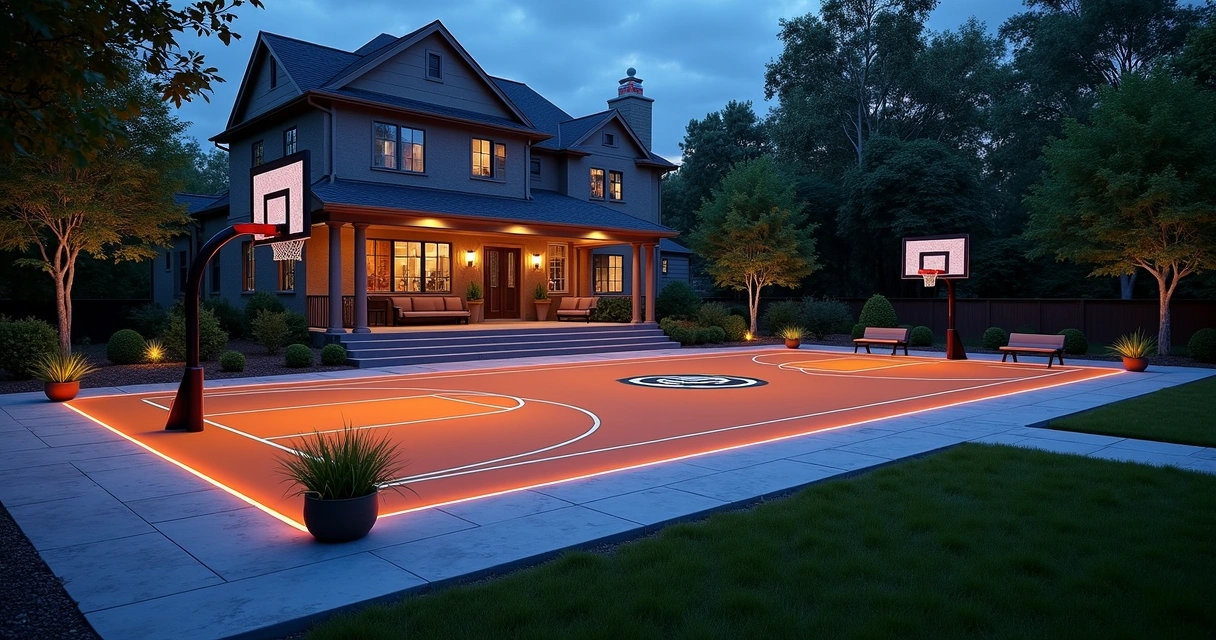
Don’t forget safety when customizing: all surfaces must be non-slip; lighting must be glare-free, and storage kept clear of play areas. In Texas, I often add UV-resistant shade sails over one corner so players rest comfortably even in July.
Maintenance: keeping your court in top shape
Texas weather is fun but fierce: wind, pollen, dust, sun, the occasional hailstorm. I always give my clients a clear maintenance plan. It’s straightforward when you plan ahead:
- Sweep surfaces weekly to avoid dirt buildup and water pooling.
- Hose down (not pressure-wash) modular tiles or painted concrete every few weeks.
- Inspect hardware, like hoops and nets, every season. Tighten bolts and replace nets stretched or damaged by sun and play.
- Check artificial turf edges or mulch barriers for windblown debris.
- Clean lines gently, UV-protected paint keeps colors crisp.
- Plan seasonal checkups: After storm season, confirm the surface is even and fences upright.
Simple habits will keep your multi-sport court inviting and safe year after year.
If you ever need ideas on making the rest of your yard just as easy, the Urban Oasis collection of outdoor living resources has some great pointers.
Planning for the future: adapting as needs change
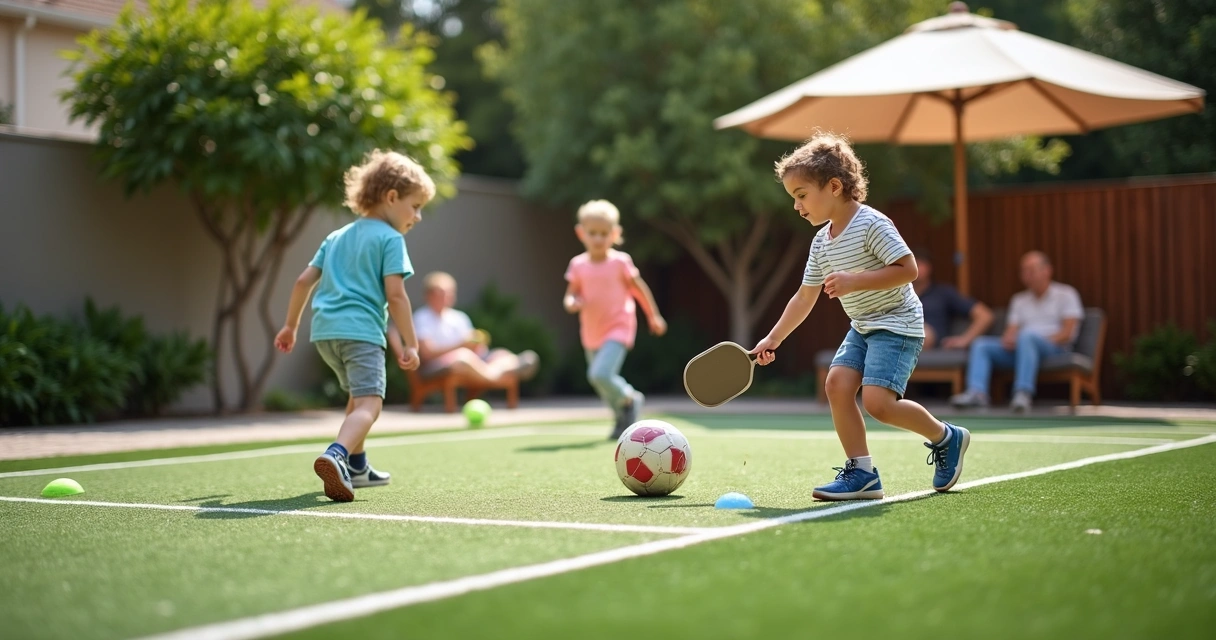
I always remind people that their needs today may not be the same in a few years. Kids grow out of basketball, parents might want a space for stretching or yoga, and a new interest in pickleball can pop up overnight. That’s the beauty of a flexible multi-sport court, and why I prefer removable or adjustable equipment, modular tiles, and general-purpose fencing.
Whenever I speak to new clients at Urban Oasis, I encourage them to think about how their lives will change and design with flexibility. Swap in new net types, paint fresh lines, or turn a half-court into a shaded patio if desires change. Keeping the base infrastructure sound allows for years of easy refreshes.
Budgeting and cost considerations
One of the questions I hear most: how much will this cost? The answer, of course, is “it depends.” But in 2026, I have found the range to look a little like this:
- Basic painted concrete half-courts (with lines, basic hoops): $8,000–$15,000
- Modular sport tile multi-courts (with lines, adjustable nets): $12,000–$22,000
- Custom lighting, fencing, logos, shade features: Typically adds $3,000–$7,000, depending on scope
- Artificial turf sidelines: $5–$15 per square foot (depends on type and prep needed)
Always budget for long-term value, not just installation. I urge people to focus on what they’ll use every week, not just the “cool factor” at the start. Modular and well-drained courts need far less upkeep than cheap surfaces, saving frustration over time.
Urban Oasis can work with you to create a phased plan, starting with the essentials and leaving open future enhancements as you see fit. That’s usually what creates the happiest families and the smartest investments.
Making your Texas multi-sport court a reality
When I look at the benefits, health, fun, property value, memories, there are few upgrades that rival a well-planned multi-sport backyard court. Even tight spaces, with thoughtful design, can surprise you in what they achieve. Urban Oasis stands for transforming outdoor areas, not just for now but for everything your family, friends or clients will enjoy in the years ahead.
Ready to see what your backyard can become?
If a multi-sport court interests you or if you want your own custom plan tailored to Texas living, fill out the form below. I’d be happy to help you design an outdoor space that maximizes every inch—and every moment.
Conclusion
I’ve seen small Texas backyards turn into impressive multi-sport zones that become the heart of the household. With the right planning, clever design, and a bit of imagination, your outdoor space can serve any need, from pickleball mornings to basketball weekends, all within the comfort of your own home. Urban Oasis believes in turning visions into realities, no matter the space. Reach out if you want to discover how.
Frequently asked questions
What is a multi-sport court?
A multi-sport court is a specially designed surface that supports a variety of sports on a single, shared area, usually with custom markings and movable equipment. Typical combinations include basketball, pickleball, volleyball, soccer, and other activities, offering flexibility for changing needs.
How much does a backyard court cost?
The cost can vary based on the materials, size, and features you choose. In my experience as of 2026, most backyard multi-sport courts in Texas range from $8,000 to $22,000 for the main build. Add-ons like custom lighting or artificial turf may increase the total, but planning the essentials usually keeps things affordable.
How to fit a court in small yards?
I recommend measuring the usable area, choosing the sports you want most, and selecting adaptable layouts with multi-use lines and removable equipment. Compact courts often feature modular tiles, creative line markings, and clever accessories so even yards under 1,000 square feet can have a spirited sports area.
What sports can I play on it?
You can usually play a wide variety: basketball, pickleball, volleyball, mini-soccer, futsal, badminton, four square, and even creative kids’ games. The exact mix depends on your chosen court dimensions, surface, and equipment, but most small Texas backyards accommodate at least two or three main sports comfortably.
Is it worth it to install one?
For many, installing a multi-sport court adds value, fun, and more reasons to enjoy being outdoors. It encourages active lifestyles, builds family memories, and can raise property appeal. When designed to fit your actual needs, I see clients use their courts year-round, and tell me it’s the upgrade they enjoy the most.