

There’s something different about dining outdoors. The air changes, and meals somehow stretch a little longer under the open sky. But to make a truly memorable outdoor dining experience—one that people linger at—a little bit of light goes a long way. Or perhaps a lot, but it needs to feel just right.
Designing the atmosphere for outdoor dining in 2025 is more than picking a few string lights and hoping for the best. Trends, technology, and tastes are shifting. Whether you are refreshing your patio at home or working with a project like Urban Oasis to transform a commercial space, careful planning and awareness of what’s changing will help make your evenings unforgettable.
And sometimes, the best dinner conversations aren’t under the brightest bulbs, but rather in the subtle glow of thoughtful design. Let’s see how you can bring that magic to life.
Why outdoor lighting matters for dining
Lighting outside isn’t just to help you see the salad. It softly shapes shadows and moods. It welcomes people to linger or even makes them feel safe after sunset. Poor lighting—too harsh, too dim, or simply in the wrong place—can ruin even the best table setting. But when it’s good, it feels almost invisible, like it was always there.
In a world overflowing with options, a thoughtful approach remains the difference between a plain backyard and a destination. Urban Oasis understands that the right lighting design can turn a backyard dinner into an event, or a restaurant patio into a favorite spot.
Trends shaping outdoor lighting in 2025
Outdoor spaces are getting smarter, more connected, and surprisingly, a bit more natural. Here’s what stands out this year.
- LED dominates. According to Gitnux lighting industry statistics, LEDs now account for over 70% of global lighting industry revenue, and their energy savings (up to 80% compared to incandescent bulbs) make them a clear favorite—for the environment and your wallet.
- Smart control is the new standard. Outdoor lights that integrate with apps and voice assistants are up and coming. You can now schedule, dim, and even change the color temperature from your phone, following advice from reports on connected lighting systems.
- Integrated landscape lighting. Rather than see the light fixtures, the trend is to highlight the environment itself. Lights built into steps, walls, or even the edge of a patio give a clean, sophisticated feel. Trends in landscape lighting designs show sleek integrations everywhere you look.
- Biophilic and tunable lighting. Lighting that mimics natural daylight benefits the body’s own rhythms. Trends in illumination for well-being explore LEDs that shift color throughout the evening, creating healthier, more comfortable spaces.
- Less light pollution. Outdoor lighting in 2025 is more conscious of its impact beyond just the property. Fixtures that direct light downward and reduce spillovers are gaining popularity, as articles on 2025 outdoor lighting discuss.
First steps: imagining the experience
Before you even touch a light bulb, pause and picture the kind of night you want to create. Who’s there? What’s on the table? How do you want people to feel—energized, relaxed, playful? Maybe you want laughter floating across a pergola, or a cozy dinner for two.
Write it down. Sketch the area. Walk around at dusk and at night. Every outdoor space has its own personality, shaped by shade, architecture, foliage, and how people move through it. This is true for the most sprawling backyards and the smallest balconies.
Sometimes, the best ideas come after dark—when you just sit there and imagine what could be.
Understanding different types of outdoor lights
Outdoor lighting isn’t one-size-fits-all. Each kind of fixture creates a different feeling.
- String lights. These add instant festivity. Drape them over a pergola, zigzag above a table, or string through a tree. Urban Oasis often recommends warm white LED bulbs for a soft glow.
- Path lights. Low posts or ground spots mark walkways, making moving around after dark safer—and giving structure to the garden.
- Under-table and step lighting. These are subtle, often built right into hardscape edges or stairs—one of the most popular details among modern integrated layouts.
- Wall sconces and lanterns. These frame doors or patios, casting pools of ambient light outward.
- Spotlights and uplights. Use these carefully. A well-placed uplight can highlight a tree or architectural detail, but too many and it feels stark.
- Portable lamps and candles. Handy for moving the glow wherever needed, and ideal for intimate or flexible arrangements.
Setting the mood: the science and the art
Choosing color temperature
This is the warmth or coolness of the light. Warm lights (think 2200–2700K) are soft, gentle, and inviting. A little like the hour before sunset. Cooler lights (3000K and above) can seem brighter or a bit harsh for dining. Most modern LED outdoor fixtures offer a range—some “tunable” types let you adjust during the evening, matching the biophilic trends in wellness lighting. Try to stick with a consistent family of warmth for cohesiveness.
Balancing brightness
Too much light ruins intimacy, too little and you’re searching for the salad fork. Layering—combining ambient, task, and accent lighting—lets you adjust as needed. Ambient light gives an overall glow, task makes the table bright enough for eating, and accent points out trees or sculptures. Smart systems, as discussed in new lighting market trends, allow for easy dimming and scene changes.
The best light is the one you barely notice—but can’t imagine being without.
Practical planning: layout and installation
- map your zones.Divide your space: dining, cooking, paths, lounging. Sketch each spot’s traffic flow. Will you need different levels of light in each area? For example, a pergola might need cozy, focused lighting, while the grill zone needs clear task lighting. Urban Oasis specializes in these layered approaches—you can spot more such designs in their pergola inspiration gallery.
- pick the right fixtures for each area.Match function and vibe. Use lanterns or sconces near entryways, string lights above the dining zone, and subtle footlights along steps. Save the dramatic lighting for architectural or landscaping features you want noticed, following ideas from popular outdoor living styles.
- control options.Will you flip a switch? Want voice or phone control? In 2025, it’s common for spaces to have smart hubs or sensors. Zoned lighting—where different parts can be brightened or dimmed independently—is easier than ever with today’s technology, as described in smart lighting analyses.
- think about power and weather.Outdoor-rated lights are a must. Solar options have improved but check their brightness and battery runtime for evening dining. Modern low-voltage LEDs also bring safety and efficiency, as shown in the latest lighting industry data.
- reduce glare and pollution.Limit uplighting, angle fixtures down, and pick shielded designs. These choices help preserve the night sky and ease neighbors’ concerns, mirroring growing outdoor lighting preferences. It’s a win for the environment—and for a relaxing meal.
 Greener outdoor dining spaces
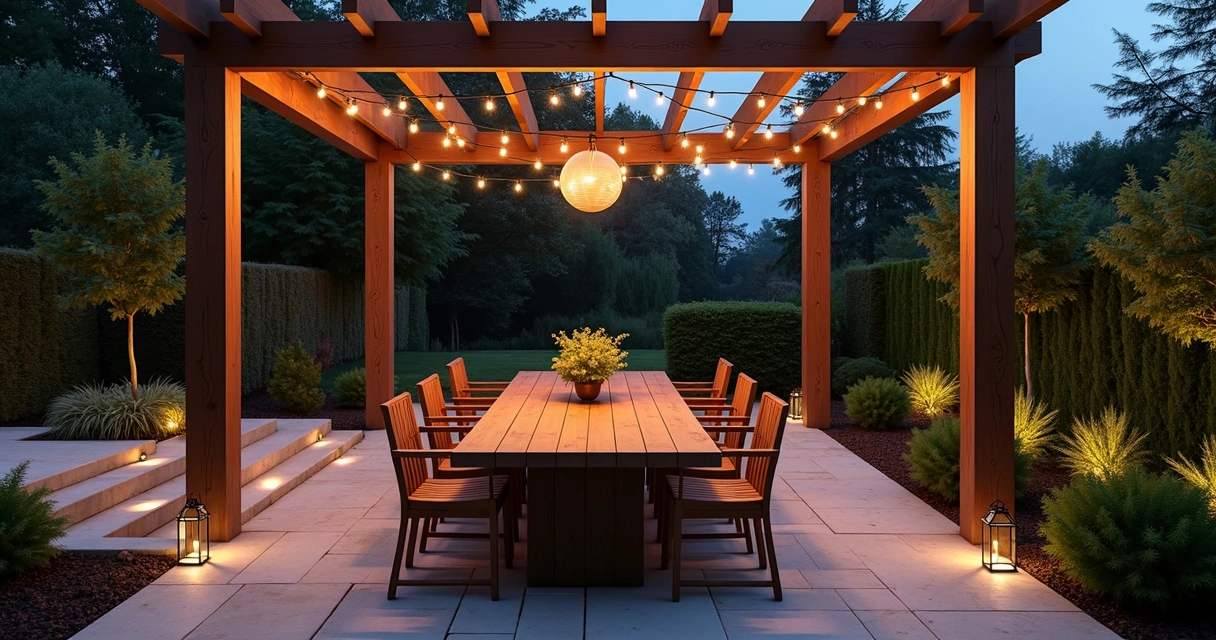 Greener outdoor dining spaces
People today care more about the environment, and outdoor lighting is part of that conversation. LEDs dramatically reduce energy use, and solar-powered options are common on paths and in gardens. Many new designs, including those used by Urban Oasis, allow for lower wattages and automatic shut-offs or dimming when not occupied.
Shielded fixtures and careful placement prevent excess light from washing out the stars or disturbing wildlife. If you’re interested in this approach, explore stylish, sustainable outdoor entertaining concepts for even more ideas.
Lighting and outdoor structures
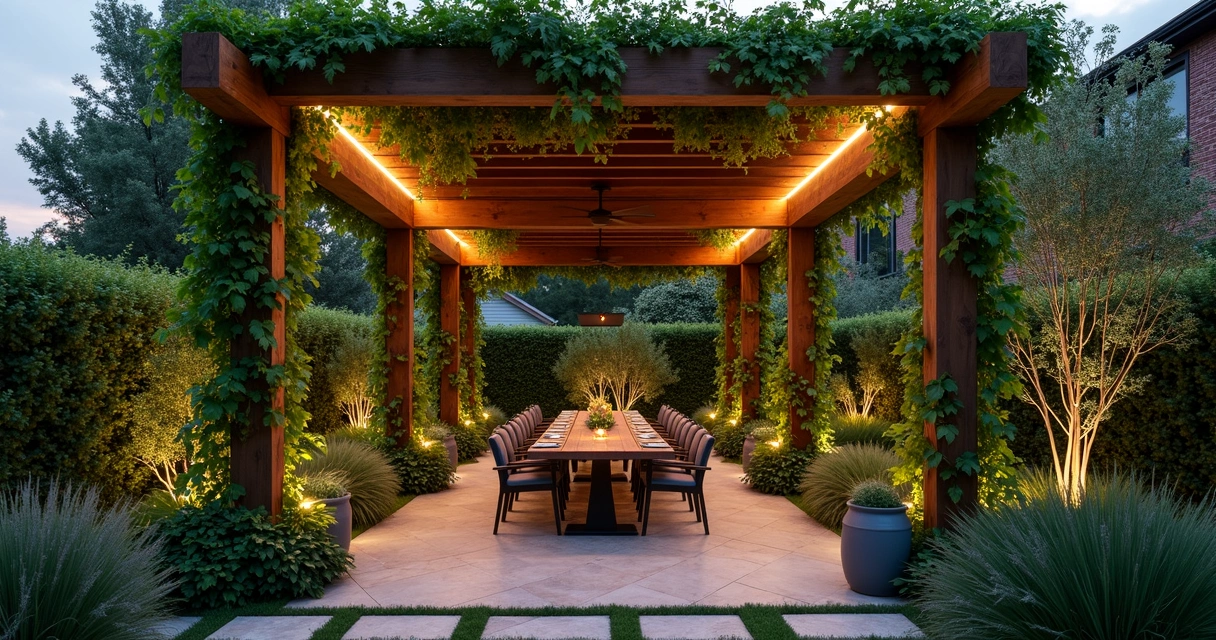 Lighting and outdoor structures
A pergola, patio cover, or even a simple trellis changes everything about how light works outside. Overhead structures are perfect for string lights, pendant fixtures, or slimline integrated LEDs—sometimes you barely notice the source, only their effect.
Urban Oasis, for example, regularly incorporates lighting directly into their outdoor builds. This is especially true for custom pergolas and pavilions, where hidden channels or grooves disguise wires and fixtures. The result: nothing dangles in sight, and the space feels both professionally finished and welcoming.
Using light for comfort, safety, and style
- Comfort: Glare-free, indirect lighting around the edge of tables or seating promotes relaxation. Flicker-free LEDs support well-being, especially when dining under the stars.
- Safety: Step and path lights prevent tripping. Sufficient perimeter lighting means guests feel secure, but not exposed.
- Style: Well-lit plants become living sculptures; illuminated water or fire features draw the eye and anchor the table as a focal point.
The best outdoor dinners blend laughter with light.
Planning for flexibility and the future
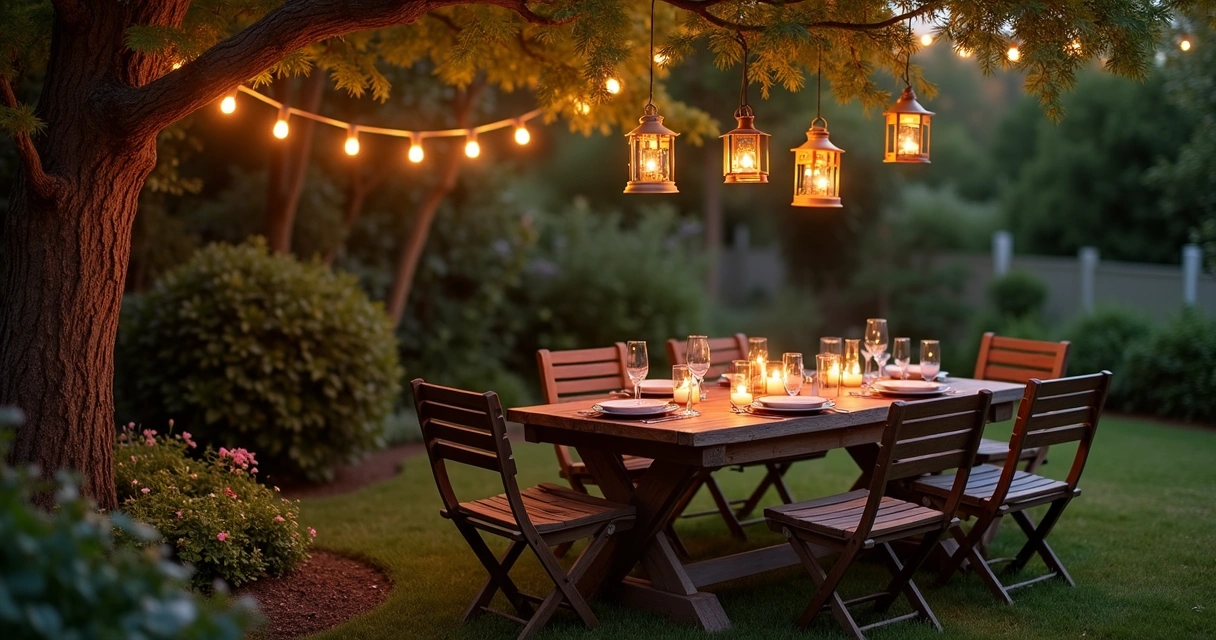 Planning for flexibility and the future
People gather outdoors for everything from solo breakfasts to big celebrations. The perfect lighting plan includes ways to easily tweak the mood: dimmers, changeable colors, and portable lamps. Battery-powered, rechargeable LEDs pop up everywhere, and smart controls—wired or wireless—are more affordable than ever.
As you plan, leave extra space in conduit or power for future upgrades. Styles and technology change quickly. What feels just right tonight might ask for something new next season. Urban Oasis encourages this sort of adaptable design—aim for flexible ideas that keep your space fresh long after the initial install.
Putting it all together: common lighting mistakes to avoid
- Overlighting and creating glare—especially from too many spotlights or overly bright bulbs.
- Underserving key areas like stairs, steps, and paths. Safety and comfort first.
- Poor fixture placement—misjudging shadows, or clashing light colors.
- Ignoring smart controls. Even if you aren’t interested now, a little extra wiring pays off for future upgrades.
- Forgetting about “off” time—schedule lighting to fade late at night or on quiet evenings to reduce energy use and maintain peace.
- Neglecting maintenance—outdoor fixtures need to be weatherproof and easy to clean. Even the best design won’t shine with cobwebs or burned-out bulbs.
Final thoughts: build atmosphere with intention
Outdoor dining in 2025 is about more than lights on switches—it’s about the subtle ways light supports connection, comfort, and nature. Whether you’re building from scratch, upgrading a favorite spot, or working with a professional team like Urban Oasis, your lighting sets the scene for bittersweet goodbyes and long, joyful toasts alike.
Don’t settle for what everyone else has. Let your space reflect the way you want to live and gather. If you’re ready for a transformation or just curious about what’s possible, reach out, discover unique solutions—and let Urban Oasis help you create an outdoor dining ambience that’s truly yours.
Start your design journey by telling us more about your vision. Fill out the form below, and together we’ll build the perfect setting for every outdoor meal.
Frequently asked questions
What are the best outdoor dining lights?
There isn’t one best kind—it’s about what fits your space and how you want people to feel. Warm white LEDs are a frequent favorite for dining. String lights, lanterns, and integrated LEDs in pergolas or landscaping work well for most settings. The new wave includes smart lights and tunable fixtures that adjust color temperature and brightness. Choose lights that are weather-rated, easy to control, and match your design style. For inspiration, check out modern outdoor spaces or solutions used by Urban Oasis in their collection of outdoor living trends.
How to create cozy outdoor lighting?
Use layers: start with soft overhead lighting (like string lights or a pergola-integrated LED), then add subtle accent lighting (candles, lanterns, small table lamps). Choose warm white color temperatures around 2200K–2700K. Dim or shield lights to avoid harsh glare. Highlight natural features—plants, trees, or textures—and keep things adaptable with portable or smart lights. Urban Oasis recommends simple, indirect lighting for an inviting effect that feels almost magical.
How much does outdoor lighting cost?
It depends on the scope. A few string lights or lanterns can be very affordable, sometimes under $100. Professionally designed, hardwired solutions with integrated fixtures and smart controls may range from hundreds to thousands of dollars, especially when including features like dimming, zoning, or biophilic lighting. Labor and complexity (trenching, fixture type, electrical work) affect the budget most. Consider not just the upfront costs, but also the long-term energy savings and durability—especially with quality LEDs.
Where to find stylish outdoor lights?
Many lighting stores, home improvement centers, and online retailers offer a variety of outdoor fixtures. But the most cohesive results often come from working with a design professional or contracting team familiar with your climate and preferences. Urban Oasis, for example, sources fixtures with both style and durability in mind, integrating them with your whole space. If you want more structured ideas, see their pergola lighting projects and outdoor living galleries.
Is solar lighting good for outdoor dining?
Solar lighting has improved a lot, especially for marking paths, accenting gardens, or adding gentle ambiance. For dining areas, solar-powered table lamps or lanterns work well when charged sufficiently. Keep in mind: solar lights are typically a bit dimmer than wired solutions, and their battery life and performance depend on local sunlight. For settings where reliable, brighter light or smart controls are needed, wired or battery-powered LEDs are usually better.