

Summer in Texas feels endless sometimes. The days are long, the ground bakes, and stepping outside in July has that shimmering heat—almost like you’re walking into an oven. Navigating outdoor care, especially for lush lawns or entertainment spaces, becomes a balancing act between wanting a green retreat and not wasting a drop of water. Urban Oasis works with clients who yearn for cool, modern patios and pools, but nothing thrives if irrigation is off track. This is where a discussion on smart rain-sensing technology, practical watering, and those sudden Texas thunderstorms feels timely.
In rain sensor landscaping, it’s rarely about “more is better.” Instead, it’s about “just enough.” But how do you know when to wait after a sudden storm or hold off if only half the yard gets soaked? That’s the puzzle smart tech promises to solve. Still, with the unique blend of drought and flash rain that defines Texas, traditional methods often fall short. The smart rain sensor, and the integrated systems they guide, can make the difference—not just for the plants, but also for your budget, your conscience, and even local regulations.
So, how do these systems work, what options are out there, and are they really worth considering for your own piece of urban serenity? Let’s dig into a detailed, practical look and perhaps find a story along the way.
How Texas heat disrupts irrigation habits
Texas weather gives no favors. If you’ve lived here through one summer, you know that. But the real twist happens during “surprise rains.” You might go weeks with no rain, then a thunderstorm dumps inches across your property in an hour—sometimes skipping half the neighborhood entirely.
- The soil can swing from hard and cracked to muddy in a single afternoon.
- Plants that look thirsty in the morning suddenly have their roots submerged by evening.
- Older irrigation systems rarely know the difference—they just turn on by the clock, rain or shine.
The temptation is to leave the system on and hope for the best, but that’s when overwatering happens. Over time, it gets expensive. Not just on your water bill—wasted water can stress plants, cause fungal issues, and even wash away nutrients you just paid to put in.
Rain doesn’t always mean relief; sometimes, it’s just confusion for your irrigation.
These frustrations set the stage for why rain-activated irrigation technology and moisture sensors are in the spotlight. The old way just isn’t cutting it. That much is clear.
What a smart rain sensor actually does
If you’ve never seen one in action, a smart rain sensor might sound abstract or complicated. The core idea is direct: when it rains, pause the sprinklers. No more, no less. Yet, the details make a big difference in a climate like ours.
Here’s a snapshot of what these systems bring to the table:
- Detect rainfall or moisture levels with a sensor device installed outdoors
- Send a signal to pause or skip scheduled watering cycles if enough moisture is detected
- Resume normal irrigation when the soil starts to dry out again
- Some models combine timers, wireless connectivity, and zone-by-zone monitoring
- Others integrate with weather data, adjusting schedules based on forecasts, heat, wind, or humidity
The key, perhaps, is that these tools “notice” what old-style timers can’t. Smart rain detection means you only water when your yard actually needs it, even if you’re not around to make the call yourself.
According to research referenced by Turf Magazine, these systems can decrease water use by up to 43%. That’s not just small change in a state where summer water restrictions kick in almost every year.
 Why thunderstorms and “flash rain” need a different approach
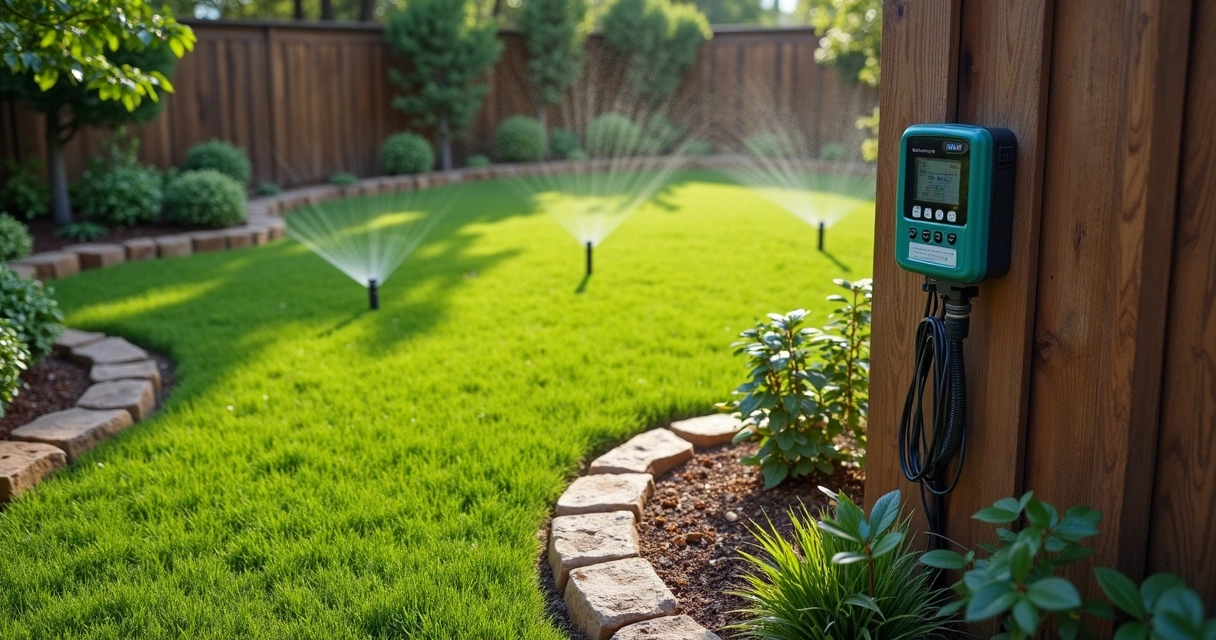 Why thunderstorms and “flash rain” need a different approach
Here’s a scene familiar to many Texans. At 1 p.m., the sun is relentless, and the forecast says nothing about rain. You leave for the day, expecting the irrigation timer to kick in as usual. By 5 p.m., you return to see puddles everywhere and the system still running.
What happened? A local thunderstorm, fast and intense, passes through. In some cases, the average Texas thunderstorm drops more than an inch in less than an hour. Old-school timers are oblivious, and the result is waste.
Flash rain doesn’t check your sprinkler schedule.
This is where integrating local rain sensors saves the day. They can sense fast, unexpected rainfall and prevent the system from watering right after a storm. It sounds simple, but in real life, that’s what stops overwatering—and the mess it creates for your guests or family in an outdoor entertainment space.
In fact, in places like San Antonio, the city requires a rain sensor on all in-ground irrigation systems as part of water-saving rules (SAWS rain sensor guidelines). Urban Oasis helps clients stay ahead of such requirements, making outdoor upgrades easy for both the client and the environment.
How much water (and money) can you actually save?
Smart irrigation tech isn’t just about gadgets—it’s about not paying for water you didn’t need to use in the first place. According to Rain Bird consumer data, typical homes save around 7,600 gallons of water every year just by having a better system in place.
That adds up. If water rates rise or if the city mandates reduced usage during the hottest months, you’re already prepared. Plus, less water means less fertilizer lost to runoff and fewer bills to pay.
- No more watering during storms or directly after
- No over-saturating the soil, which stresses roots
- Lower utility costs and reduction in surprise repairs (caused by root rot, fungus, or run-off erosion)
Saving water can be as simple as knowing when to stop.
Sometimes, the “techy” solution just fits the practical lifestyle.
Blending smart sensors with beautiful outdoor design
At Urban Oasis, creating spaces that welcome friends, family, or clients doesn’t end with the look. A sustainable, functional outdoor oasis works in harmony with the climate.
Choosing rain-driven irrigation gives peace of mind. You can step outside after a storm, enjoy your weekend, and know that your system—whether it’s nurturing a modern deck, a cozy patio, or a sports court—will make the right call. As these systems run quietly in the background, they fit naturally into the design dream of low-maintenance, beautiful yards.
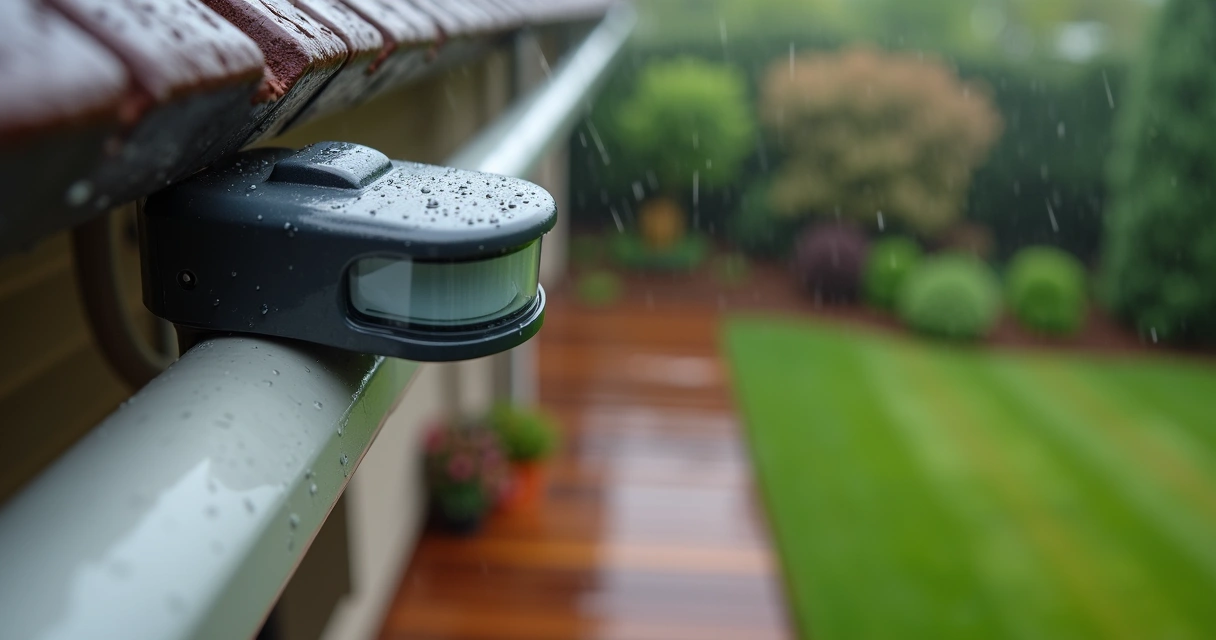
- Minimal visible devices—sensors often hide on the gutter or fence post
- Irrigation runs early or late, based on moisture, not just hours
- No wasted water; no muddy, soggy corners to step in
As covered in the Urban Oasis guide to low-water landscaping, blending technology and design can bring out the best in any Texas yard, making each outdoor space both smart and inviting.
What the data says about water savings and climate
 What the data says about water savings and climate
If you want reasons beyond convenience, the statistics speak for themselves. Regions that have pushed for smart irrigation, as seen in Texas cities, report big gains:
- On average, using a rain-triggered or moisture-based controller can cut residential outdoor water use by roughly 20-45%, based on studies published on smart irrigation.
- These savings translate to less pressure on city water supplies during droughts.
- The drop in cost means homeowners and business owners see faster return on their investment—sometimes in a single year.
For people like me—who have watched lawn care costs creep up every summer—these numbers aren’t abstract. They’re proof that something simple, almost background, really can create change.
And, as Urban Oasis often mentions to clients, the right system means fewer plant losses during abrupt heat waves or unexpected rainfall.
Integrating flash rain sensors: a step-by-step view
For those who have never installed or upgraded a system, the process usually goes like this:
- Walk the property and identify irrigation zones—lawns, flower beds, trees, hardscapes.
- Choose a sensor location (often gutters or fence posts) that will best collect real rainfall, not just mist or sprinkler splash.
- Install the device and wire or pair it with the main irrigation controller; many newer systems use wireless communication.
- Test with a simulated rain—sometimes just pressing on the moisture pad or pouring a cup of water to trigger a pause.
- Program the system to “hold” irrigation based on moisture detected, not just a scheduled clock.
Maintenance is simple: clear debris from the sensor every few weeks (especially if autumn leaves collect) and check the batteries or wiring once a season.
The payoff is less stress and less hands-on adjustment during the hottest or wettest spells. You don’t lose weekends turning the timer back and forth.
Common mistakes in smart irrigation and how to avoid them
- Installing sensors in the wrong spot: Placement matters. A sensor covered by eaves may never get wet, so the irrigation never stops. Always put it where rain falls freely.
- Ignoring routine checks: Even smart tools falter if neglected. Dead batteries or blocked sensors lead to old problems creeping back.
- Overriding the system too often: Trust your tech. Manually starting cycles undoes the eco-friendly benefits.
- Failing to adjust for plant needs: Not every area has the same thirst. Fine-tune zones so moisture sensors help rather than hinder healthy growth.
Knowledge and consistency beat fancy equipment every time. For more advice, see the tips on year-round landscape planning from Urban Oasis.
How rain-responsive irrigation helps plant health
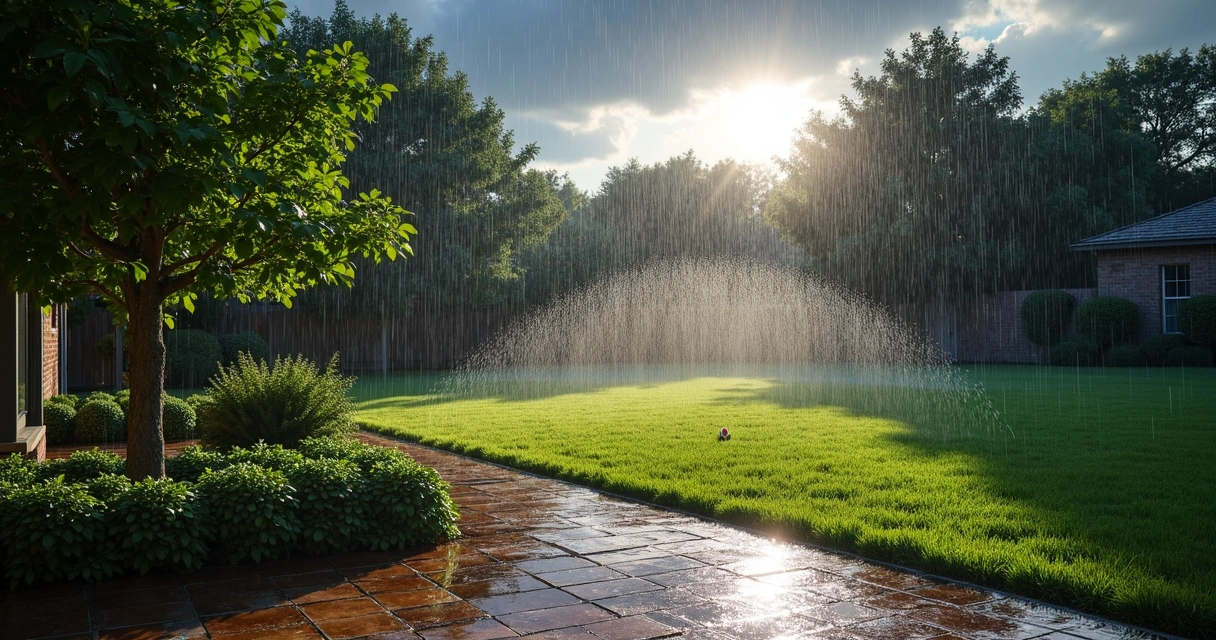 How rain-responsive irrigation helps plant health
Watering isn’t just about quantity, but timing. When soil is too wet, plant roots can suffocate—something even drought-tolerant Texas species don’t handle well. With flash rain sensors, irrigation holds back until conditions improve.
This practice prevents common issues:
- Yellowing leaves after summer storms
- Root rot in heavily mulched beds
- Mushy soil under trees or play areas
- Frequent lawn fungus outbreaks
- Loss of soil nutrients due to runoff
Every time the system skips an unnecessary cycle, you’re moving closer to a balanced, resilient yard. For plant recovery and shock tips during extreme swings, the Urban Oasis post on plants in shock and recovery is worth a look.
The big picture: sustainability and daily life
Surrounding yourself with shade, grass, and lively spaces is as much about routine as design. Smart rain sensor landscaping isn’t just about one less thing to manage; it’s about protecting water as a shared, finite resource.
Water is precious—and, often, invisible until it’s gone.
In dense urban areas, even small savings have ripple effects. Less groundwater pumping, lower stress on city systems, more robust plants for years to come. Urban Oasis has seen spaces transform with minor updates like sensors, timers, and zone controllers. Sometimes that’s all it takes to reset the balance.
For those curious about the up-front process of organic, water-wise care, the organic lawn care guide and additional resources in the Gardening Insights Section offer local insight you can trust.
And every step—every small adjustment—creates homes and commercial spaces you’ll want to use. You’ll invite people over. The landscape won’t keep you stressed or guessing.
Is it for everyone? Honest thoughts as a homeowner, not just an expert
 Is it for everyone? Honest thoughts as a homeowner, not just an expert
After months of fielding questions, installation calls, and even a few complaints, my honest take is that no system is “set and forget.” Even the smartest rain-sensing timers need a little attention now and then—maybe a reboot, sensor cleaning, or just a few adjustments as plants grow and seasons change.
Sometimes, I hesitate. Tech overload can be real—especially if you already feel you’re running a small command center at home. But the moments when you catch a storm, see the sprinklers pause themselves, and realize you dodged another wasted cycle? That’s the win.
Maybe, like me, you’ll still have the urge to double-check. Maybe you’ll spend a few weekends fine-tuning. But over time, the system will just work. And your yard, your bill, and your local water supply will be better for it.
Conclusion: ready for outdoor simplicity, savings, and smarter irrigation?
Texas heat will always challenge how we manage our landscapes, especially when surprise storms blow through. But smart irrigation, guided by rain and moisture sensors, isn’t a passing trend. It’s a practical adjustment for healthier plants, lower bills, and peace of mind—a shift that Urban Oasis brings to every outdoor transformation, from private homes to public lounges and entertainment spaces.
If you’re done guessing when to water and want more time enjoying your outdoor space, it may be time to connect with a team that understands both the science and the art of outdoor living. If you’re ready for the next step, fill out the contact form below, and Urban Oasis will help you build the perfect balance of beauty, function, and water-smart simplicity.
Find your oasis—even in the Texas heat.
Frequently asked questions
What is a rain sensor for landscaping?
A rain sensor for landscaping is a device that detects rainfall or high moisture and communicates with an irrigation controller to pause or skip watering cycles. This prevents your sprinklers from running during or right after a rainstorm, helping you avoid waste and making sure you only water when your lawn or plant beds truly need it.
How do smart rain sensors work?
Smart rain sensors usually have a sensor pad or device placed outdoors where rain naturally falls. When enough rain or moisture is detected, the sensor triggers a signal that tells the irrigation system to stop or hold watering. Many modern rain sensors connect wirelessly and even use weather forecasts, allowing zone-specific adjustments based on local rainfall and plant needs.
Are rain sensors worth it in Texas heat?
Yes, especially in Texas. Rain sensors make sure you’re not overwatering right after the sudden thunderstorms common here. They save money by preventing waste and often comply with city rules. Many studies show water use drops as much as 43% when rain-triggered controllers are added—a sensible choice for Texas gardens and yards.
How much do landscaping rain sensors cost?
Most basic rain sensors start around $25-50 for wired models, and can go up to $150 or more for advanced wireless or weather-sensing options. Installation costs vary based on the size and complexity of your irrigation system. Over time, most users find that savings on water bills more than cover the initial expense.
Where to buy the best rain sensors?
Rain sensors can be found at most garden centers, home improvement stores, and through landscaping professionals. If you’re looking for expert advice or want to integrate smart irrigation as part of a broader outdoor design, contacting local specialists like Urban Oasis can make sure you select a model that fits your space and needs.