
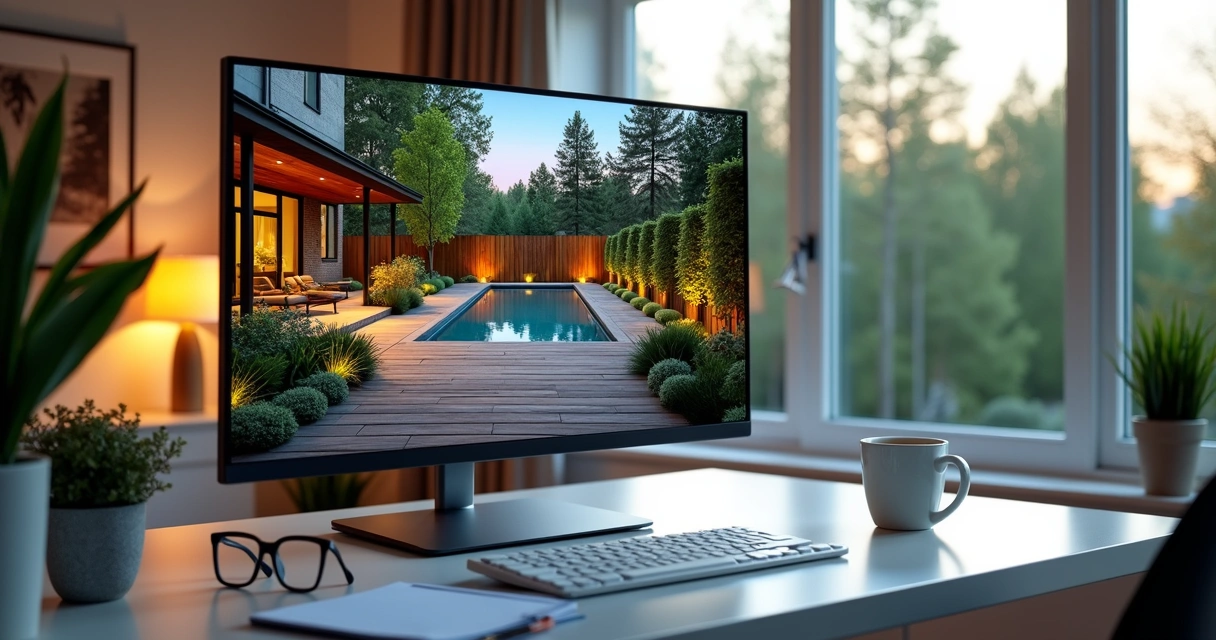
Imagine walking through your ideal backyard before even a single shovel hits the dirt. Picture a vivid online model of your future patio, garden beds lit by golden hour sunlight, the soft riffle of leaves modeled in intricate digital detail.
Today, thanks to advances in remote 3D landscape design technology, this experience is available to anyone. And you don’t have to hire a local contractor to get it.
This article will walk you through what it means to buy a 3D landscape design online, the step-by-step process, and why so many homeowners across the U.S. are choosing this route to shape their outdoor sanctuaries. Along the way, you’ll find data-backed insights, practical tips, and a human touch from firms like Urban Oasis—a company built on transforming outdoor spaces into sophisticated, modern retreats.
Breathe life into your vision before breaking ground.
Why remote landscape design is booming
During the last several years, lots has changed. Digital meetings, online shopping, virtual home tours—remote services swept into our daily lives and stayed. Landscape design is no exception. Americans everywhere are demanding flexibility, cost transparency, and easy communication with designers. The desire to collaborate virtually instead of scheduling multiple site visits has only grown.
In fact, research on 3D visualization methods in landscape projects shows that projects using immersive, interactive design platforms can increase user satisfaction by more than 30% over traditional flat plans. Homeowners want to see and feel their future environment, not just imagine it from a blueprint or a two-dimensional sketch.
- Faster turnaround
- Fewer in-person appointments
- Transparent collaboration
- C
- Realistic visual feedback
Now anyone can connect with design professionals online—submitting details, photos, and dreams from home and receiving a custom 3D model without stepping outside.
What is remote 3D landscape design?
A remote 3D landscape design is a service where a design firm creates a detailed, interactive model of your outdoor space without needing to visit your property in person. You supply information and inspiration online, and experts like those at Urban Oasis deliver a digital version of your plan. From there, you can visualize, tweak, and approve every detail – forms, textures, lights, even shade at different times of day.
This online approach helps homeowners and businesses preview their investments before spending on construction. According to a thesis from Utah State University, digital 3D visualization tools improve the design process, boost communication between client and designer, and often increase public involvement in projects. That’s both powerful and practical.
The basic process: how online landscape design works
If you’ve never used an online landscape design service, the steps might surprise you with their simplicity:
- Contact the remote design team. Usually, you’ll fill out a detailed questionnaire about your space, goals, style, and budget. Clear forms guide you through each question.
- Share your site details. You upload photos, measurements (rough or precise), existing plans if available, and even inspirational images you find online.
- Schedule a virtual meeting. Some services offer a video call with a designer, so you can discuss wants, concerns, and special needs.
- Designers get to work. Then, the magic starts. Using advanced design software and sometimes aerial maps or public 3D elevation data, your designer creates a realistic model tailored to your wishes.
- Review and revise together. You receive draft visuals. Want a different pergola style, or to move the fire pit? Just say so. You’ll get a round or two of revisions depending on the package.
- Receive your final 3D plan. The finished files include walk-throughs, renders, and landscape blueprints. Some firms even provide a video tour, mood boards, and a shopping list for plants and materials.
You control the pace and depth of your project.
Urban Oasis, for example, structures its process this way—from initial consultation to design, revisions, and all the way through to implementation if you choose. Communication and adaptation are at the heart of every stage.
How technology builds your outdoor world
Wondering what powers this modern solution? It’s a blend of design expertise, software, and open data. Proprietary tools are used by professional landscape designers to create models as close to reality as possible, complete with natural textures and accurate scales. Sometimes, they draw on public resources such as the U.S. Geological Survey’s 3D Elevation Program to mirror your actual terrain, slopes, and garden beds. This results in plans that not only look gorgeous but are grounded in the real physical details of your site.
Studies like this on 3D landscape patterns and urban planning highlight just how powerful digital measurements have become. Designers can calculate everything—heights, densities, light angles—so your 3D model feels honest and attainable.
Even more interesting: research on user engagement with immersive 3D experiences suggests that seeing the virtual space before building makes you more invested—and maybe even more excited—about the real-life results.
Benefits of online and remote 3D landscape design
For anyone still wondering “why not just hire someone nearby?” here are a few key reasons U.S. homeowners are making the switch to remote design:
- Access to a wider talent pool. You can work with firms like Urban Oasis, which specialize in sophisticated, high-end projects, regardless of location.
- Transparent pricing and packages. No surprise invoices or hidden onsite fees. Everything is agreed before any modeling takes place.
- Visual confidence. A lifelike 3D preview allows you to “walk” through the finished landscape, freezing the view until it feels just right.
- Faster turnaround. No waiting for someone’s truck to pull up. Your design can often start as soon as you’ve uploaded what’s needed.
- Repeatable and editable workflow. File-based designs are easy to update, adapt, and share. Perfect for those who like to tweak their vision over time.
- Environmentally smart. Fewer site visits mean less travel. Digital design also aids in sustainability choices right from the design phase (such as choosing drought-tolerant plants or planning efficient irrigation).
Your time. Your rules. Your vision.
For more on landscape design techniques and their impact, have a look at in-depth guides about landscape design techniques and benefits.
How to prepare for your virtual landscape project
While professionals can build incredible things from the simplest notes, your end result will be richer with a bit of preparation. Here’s how to get started:
- Gather good photos. Take wide shots from every corner of your outdoor space. More variety gives context—think close-ups of features and panoramic shots for layout.
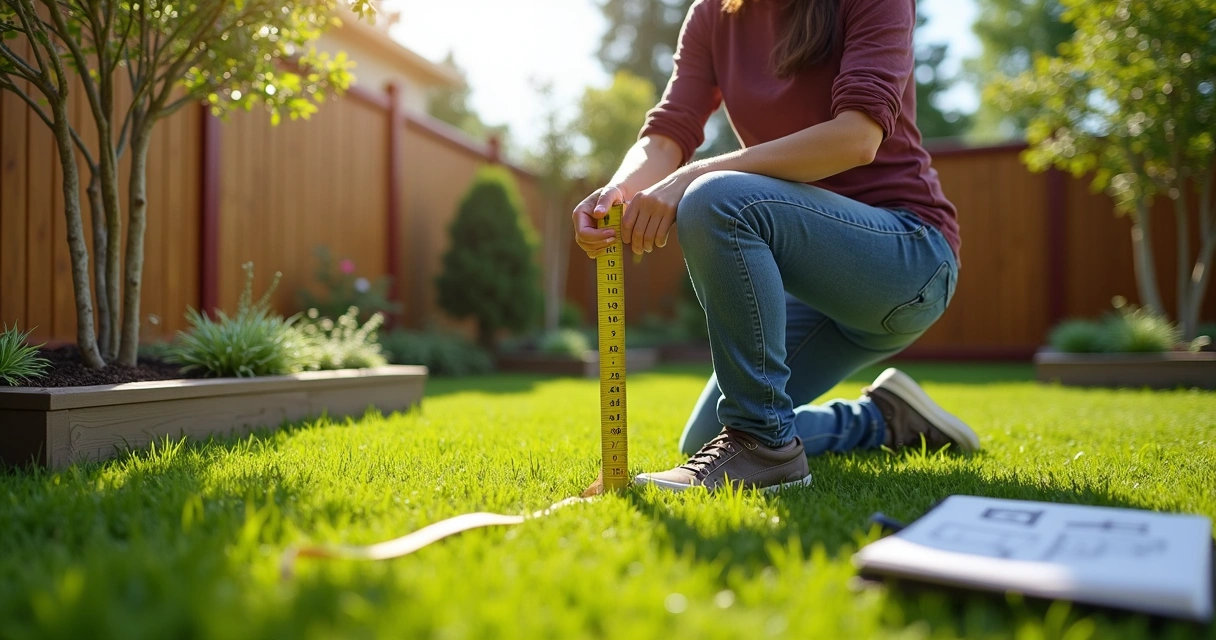
- Measure your space. Laser measurements are ideal, but rough tape or even pacing distances is fine. Sketch a simple map with key structures and dimensions.
- Find your plat or survey. If you have an official drawing, share it. Otherwise, the above will work.
- Get inspired. Save images of gardens, patios, decks, or plant types that appeal to you. Pinterest boards and magazine tears help express style in a way words sometimes can’t.
- Think about use cases. Do you plan to host family barbecues, spend quiet mornings reading, or need play space for kids?
- List your priorities. Must-have pool? Room for a dog run? Knowing your top three wishes can guide your designer quickly.
What kind of projects can be done remotely?
The short answer? Nearly everything that can be designed can be rendered digitally first. People use 3D landscape design services for:
- Backyard overhauls
- Decks, patios, and outdoor kitchens
- Pools, hot tubs, and spas
- Outdoor lighting schemes
- Privacy screens, fencing, and hedges
- Fireplaces, fire pits, and pergolas
- Garden beds and planting plans, including native or low-water plant palettes
- Commercial courtyards and rooftop terraces
- Community or HOA common spaces
- Small urban balconies transformed into oases
The flexibility of property size, regional climate, or current state (bare dirt, mature trees, half-finished projects) doesn’t limit the process. Virtual firms like Urban Oasis specialize in adapting their approach to both residential and commercial needs.
Take a look at some finished projects and transformations for inspiration in the company’s portfolio of completed landscapes.
How many revisions do you get?
Typically, remote design firms offer one or two free revision rounds. That means you’ll receive an initial rendering, then have the chance to tweak elements—move a path, swap plant types, add seating, and so on. It’s wise to be as specific as possible in your feedback for each round. Some services allow you to buy extra revisions if your vision evolves or you want to further customize.
The process is two-way. The more you communicate your taste, the more tailored the result becomes.
Will a remote plan work for your budget?
Remote 3D landscape design can actually save money in several ways:
- Lower fees (no travel time or site visit costs)
- Upfront pricing by service level (basic plan, detailed planting, lighting, or full build-out)
- The opportunity to phase your project, doing some elements now and others as budget allows
- Ability to use your own contractor to build, if desired, or tackle parts as DIY
A great design helps you make every dollar count.
Urban Oasis often works with families and businesses to create complete, professional plans—even for those who want to tackle construction over time rather than all at once. To explore available services and tiers, you can review the full range of outdoor project possibilities.
Who will build your final landscape?
This is where freedom really kicks in. When you buy your 3D landscape design remotely, you own the plan. Some clients choose to bid it out to local contractors. Others use the design as inspiration for DIY elements, or hire their own preferred landscapers to execute the construction phase step by step. In select markets, full-service firms like Urban Oasis even offer remote monitoring or project guidance during the build, keeping quality and vision on track no matter where you are based.
Your experience can be just as polished, and often more personalized, than if you had followed the traditional approach. Plus, digital files mean you always have a record for future upgrades or maintenance. For more on integrating landscape design, construction, and ongoing support, check the pathway outlined in the company’s 2D and 3D design process overview.
What to expect: timeline, output, and deliverables
Online 3D landscape design usually follows this approximate timeline:
- Intake and onboarding: 2-3 days after submitting your form.
- Virtual meeting and feedback: 2-5 business days to schedule and complete.
- Draft rendering: 7-10 days after all info is received.
- Revisions: allow 1-3 days per round for updates.
- Final delivery: full package within 2-3 weeks, depending on complexity.
Deliverables vary by package and provider, but usually include:
- Photo-realistic images of your new space, at different times of day
- 3D model files you can view online, on your phone, or with VR tools
- 2D planting plans and construction blueprints for contractors
- Itemized material and feature lists (decking size, plant types, lighting fixtures…)
- Optional video flyovers of your virtual new yard
The “aha” moment: seeing your new space in 3D
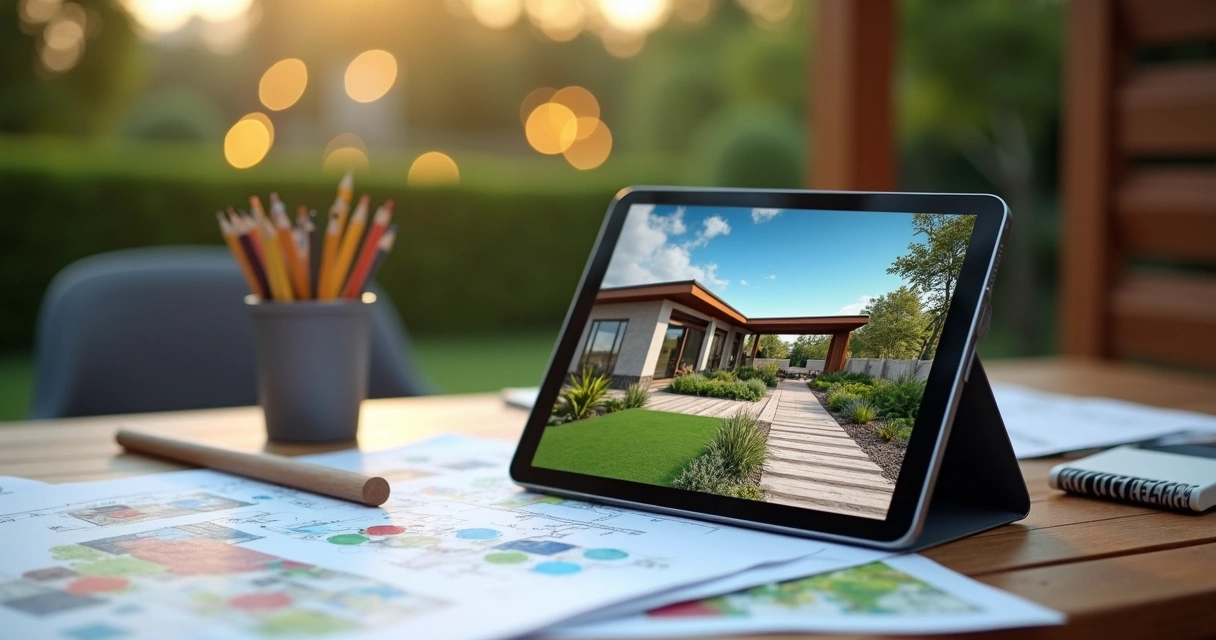
Most people gasp (sometimes literally) when they first view their remote 3D landscape design—a lifelike model they can pan, zoom, or walk through virtually.
The best part isn’t the realism. It’s the possibility.
The sense of ownership and clarity this brings can hardly be overstated. Studies on user satisfaction in digital landscaping even quantify it: high-fidelity 3D previews boost confidence, foster deeper emotional commitment, and reduce costly design changes later on.
It’s not quite like being there, but for most, it’s close enough to erase any doubts.
Tips for a smooth online landscape experience
- Be thorough on your intake forms. More details up front save time later.
- Use clear, well-lit photos for uploads. This makes modeling easier and more accurate.
- Ask questions early. If anything is unclear, clarify before the design phase starts.
- Trust the process. Seasoned design firms guide you at each step. Take inspiration from past client stories and results.
- Be open to suggestions. Your designer may offer smarter solutions or surprising ideas you hadn’t considered.
Case study: an urban oasis transformation
Let’s consider a hypothetical example—a couple in Chicago with a 600-square-foot yard. They want a modern garden, space for entertaining, and sustainable features. Neither partner has time during weekdays to meet local contractors. Instead, they find Urban Oasis online and fill in a questionnaire after dinner.
They use their phones to take pictures of the space from every corner, upload rough dimensions, and compile a mood board from social media. Within days, their designer schedules a virtual call. Through video, the team walks them through ideas, discusses priorities (a pergola, eco-friendly planting, seating around a fire feature), and makes preliminary suggestions.
In a week, their inbox buzzes. Inside: a realistic 3D model showing the backyard fully transformed—concrete pavers winding between grasses, a small lawn for summer games, lights twining through a powder-coated pergola. They suggest a few tweaks. After a revision draft and some color changes, the final plans arrive, complete with a plant buying list, shaded views at different times of day, and printable plans for any contractor to follow.

“We never imagined it could look like this.”
The couple now has everything required to get competitive quotes from builders, or simply take their time choosing the right partners for construction. There’s no rush, no guesswork, just a clear plan—and a bit more excitement for the summer ahead.
Is remote design for you?
If you want an outdoor space that suits your lifestyle, fits your budget, and is built on clear communication, then yes—remote 3D landscape design can be the shortcut to your dream garden. Whether you’re a hands-on tinkerer or prefer to hand off the vision for others to build, the virtual method unlocks more options and puts the creative reins in your hands.
To see what’s possible and meet the team behind Urban Oasis’s vision, don’t forget to explore their service offerings.
Ready to talk about your own project? Share your ideas and we’ll help you map out a personal, functional, and stylish outdoor paradise:
Frequently asked questions
What is a remote 3D landscape design?
Remote 3D landscape design is a service that delivers a digital, interactive model of your outdoor space—without the designer needing to visit your property in person. By sending photos, measurements, and your preferences online, professionals like those at Urban Oasis can create a realistic virtual plan, allowing you to see and adjust the results before starting construction. This approach improves decision-making and collaboration across distances.
How does online landscape design work?
Online landscape design starts with you providing details about your property, site photos, rough sketches, and style inspirations to the design team. After a virtual meeting (if needed), designers use specialized software, sometimes paired with public 3D mapping or elevation resources, to create a digital model. You’ll receive previews and give feedback—then, after revisions, you get final plans, renderings, and material lists to use for building or planning your outdoor spaces.
Is it worth buying a 3D landscape plan online?
For most people, yes. Studies such as research on 3D visualization in landscape projects suggest interactive digital models boost satisfaction, clarity, and confidence in outdoor design. An online 3D plan also lets you try different layouts, save money on site visits, and hire contractors of your choice for construction. The ability to make changes early helps avoid expensive adjustments during the build.
How much does remote landscape design cost?
Costs for remote 3D landscape design can vary widely, depending on the firm, scope, detail, and deliverables. Basic consultation and schematic plans may start a few hundred dollars, while complete, detailed 3D packages with planting and lighting can range from $800 to over $2,500. Most companies publish packages and transparent prices. Urban Oasis, for example, offers several service tiers to accommodate various needs and budgets.
Where can I find trusted online landscape designers?
Look for established virtual design firms with clear portfolios, client testimonials, and a multi-step process that includes revisions and support. Personalized attention—like that from Urban Oasis—ensures your vision is understood and respected. You can view finished work, learn about the firm, and assess their approach through their project gallery and service explanations. Also, make sure they use up-to-date tools and have strong communication channels for a smooth experience.